

Why we don't set homework
We're probably the only class your child attends that sends nothing home. That isn't leniency. It rests on three specific judgements: what pre-learning can spoil, how memory actually forms, and why the volume of homework is the cheapest — and least reliable — reassurance a parent can buy.
When parents first hear that we don't send any homework home, they usually pause, then ask two questions. Doesn't the child need practice problems? Will they revise anything at all?
Both are fair. In most parents' experience, the amount of homework is more or less a proxy for how seriously a class takes its job. So here is our reasoning.
Three reasons we don't set homework
-
What pre-learning can most easily ruin is the appetite for the subject. Learning something ahead of schedule is already a form of pressure. Add repetitive drilling on material beyond a child's age, and the likely outcome isn't faster progress — it's a child who starts to dislike the subject. The same workload would break an adult; there's no reason to assume a child can carry it. Once the appetite is gone, everything learned before it is written off.
-
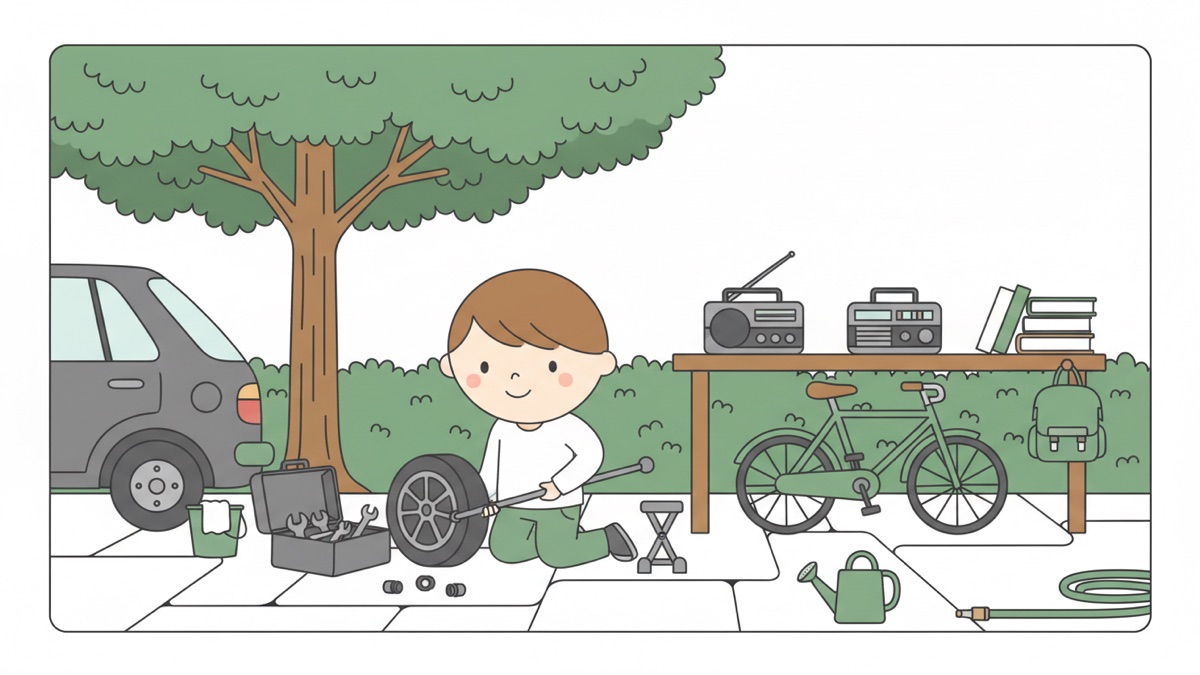
An experiment-based class doesn't lay down memory through repetition on paper. What a child records through their own senses sits far deeper than what they memorise. That may not speed up this month's problem-solving, but it makes an enormous difference to how they think later on. One child, having worked with levers in class, was changing a car's spare tyre with the family by the age of nine — no one set that as homework; he simply carried what he'd done in class into ordinary life. (Why the order runs experiment first, theory second, we covered in running the experiment first and explaining the theory after.)
-
What sticks, sticks; what doesn't will be forgotten after the exam no matter how many times it's copied out. If something only just survives on the strength of heavy repetition, the thing to examine is the teaching, not the workload. Making it stick the first time is the teacher's job.
The volume of homework is the cheapest reassurance there is
A photocopied test paper costs one New Taiwan dollar — about three US cents. A full semester's exercise book comes in under NT$300, roughly ten US dollars. An experiment lesson, by contrast, needs a full set of materials and equipment per child, and because every child has to have their hands on it, we keep class sizes very low — not the twenty or fifty a lecture-based class can take.
This isn't a competition over who spends more. The point is this: the volume of homework is the easiest thing in the world to produce, which is exactly why it's the least reliable signal. Where a place puts its money tells you more about what it believes learning is than how many worksheets it hands out each week.
And once homework exceeds what a child can carry, it usually stops being practice and becomes something else. We've seen children copy answers because they couldn't finish, and we've seen children spend their own pocket money getting a top-of-the-class classmate to do it for them. Every exercise got completed, every parent was reassured, and not one question was actually thought through by the child.
The time we save has to genuinely go back to the child
Not setting homework comes with a condition: the learning has to actually be finished in the room. That demands more of us — but it frees up the child's time, and that time is the thing we really want to give.
A child who spends an extra hour a day on problems they can already do has one hour less to read what they want to read, take apart what they want to take apart, and think about their own things. In why gifted kids have so much free time we wrote that the children who go furthest tend to have more empty time, not less.
We know this approach unsettles some parents, and we know some families have moved to places that send more work home. We've thought about it for a long time, and the conclusion hasn't changed: what matters is what a child retained, not how much they got through.