§ CSR · CORPORATE PARTNERSHIP
For companies investing in the next generation
Let more children
get to run an experiment themselves
The barrier to science education is not a child’s aptitude. It is whether anyone can afford the equipment, the room and the teacher. That is the part a company can close directly.
- Anping, Tainan · founded 2017
- STEM.org accredited
- Taiwan’s only Vernier certification centre
- KidWind Distinguished School
§ 01
WhyWhy Science
Why science education is worth funding
Not a donation — an investment whose destination you can see, and whose trace stays
What separates science from every other subject is that it costs money to happen at all — a set of circuits, a microscope, a room you can actually run experiments in. Without those, a child only ever *reads* science and never once does it.
Which is why the gap in science education is usually not a gap in aptitude. It is a gap in resources. Whether a child has ever handled real equipment is decided less by their interest than by whether such a room exists near them, and whether their family can afford it.
One corporate contribution converts, quite literally, into a year of genuine hands-on work for a group of children. It is one of the few forms of giving where you can say precisely what the money turned into.
§ 02
What we bringWhat We Bring
Not an off-the-shelf course — a programme scoped to your organisation
What must be avoided is an event that would have been identical under any other provider
The same budget may secure either a ready-made experience timetable or a programme that exists solely by virtue of this partnership. We provide the latter.
- 01
Scoped to your organisation’s requirements
We do not schedule from an existing timetable. Planning begins by establishing the objective — alignment with a sustainability agenda, with your own technical field, with a defined age group, or a requirement for visibility at the event itself — and the programme structure is derived from that. Subject matter, depth, duration and the form of the deliverable are all adjustable.
- 02
Content held exclusively, with no market equivalent
We develop our own lesson design, compile our own materials and manufacture our own apparatus, and are therefore able to produce content held nowhere else. What your organisation receives is not generic material already in circulation, but an outcome specific to this partnership — a fact that is, in itself, available to be stated publicly.
- 03
Instrumentation of international grade, apparatus made in-house, deliverable in Chinese or English
We hold professional measurement instrumentation of international grade — we are the sole authorised Vernier certification test centre in Taiwan and hold KidWind Distinguished School accreditation. Materials and apparatus are compiled and manufactured in-house, with corresponding attention to precision and finish. Programmes may be conducted in Chinese or English.
- 04
A full understanding of what an organisation requires
From international competition training to collaborative projects with national institutions, we have undertaken work for which outcomes had to be accounted for publicly. We therefore regard two requirements as equally binding: the programme must be visible, documentable and capable of being described; and the content must withstand professional scrutiny. Neither may be sacrificed for the other.
§ 03
Track recordTrack Record
A long-term partner to national institutions and universities
-
 01
01National Museum of Natural Science
Principal delivery partnerAsia Digital Science Measurement Talent Training Programme
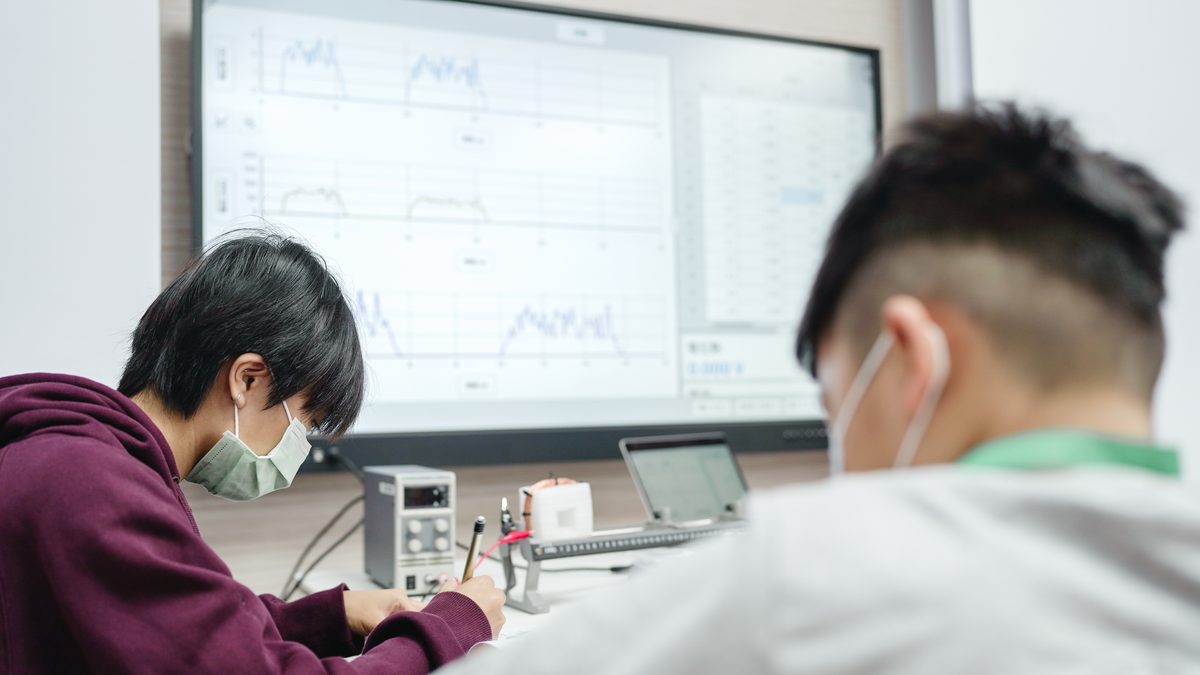
The programme has run since 2024, planned jointly by the National Museum of Natural Science, the National Taiwan Science Education Center and the Science Education Center of National University of Kaohsiung. STARK Lab is its principal delivery partner.
When a national museum lends out its educational resources and its name, what it is judging is not showmanship but whether you can carry the specification. The introductory course packs ten experiment stations into six hours: participants rotate through more than a dozen digital instruments measuring force, temperature, pressure, velocity and acceleration, electrical energy, spectra, magnetic fields and pH, then read their own data in professional analysis software. The advanced course adds problem-based learning, engineering notebooks, and training in presenting and defending the work — so students can not only do the research but account for it.
The 2024 theme was inquiry-based practice in wind renewable energy, matched to Taiwan’s offshore wind policy and to the UN goals on quality education, clean energy and climate action. From equipment to lesson design to running the room, our job was to make sure that specification actually reached each participant’s hands.
-
 02
02Department of Civil Engineering, National Cheng Kung University
Kit development“A Home That Stands” — online course and desktop laboratory kit
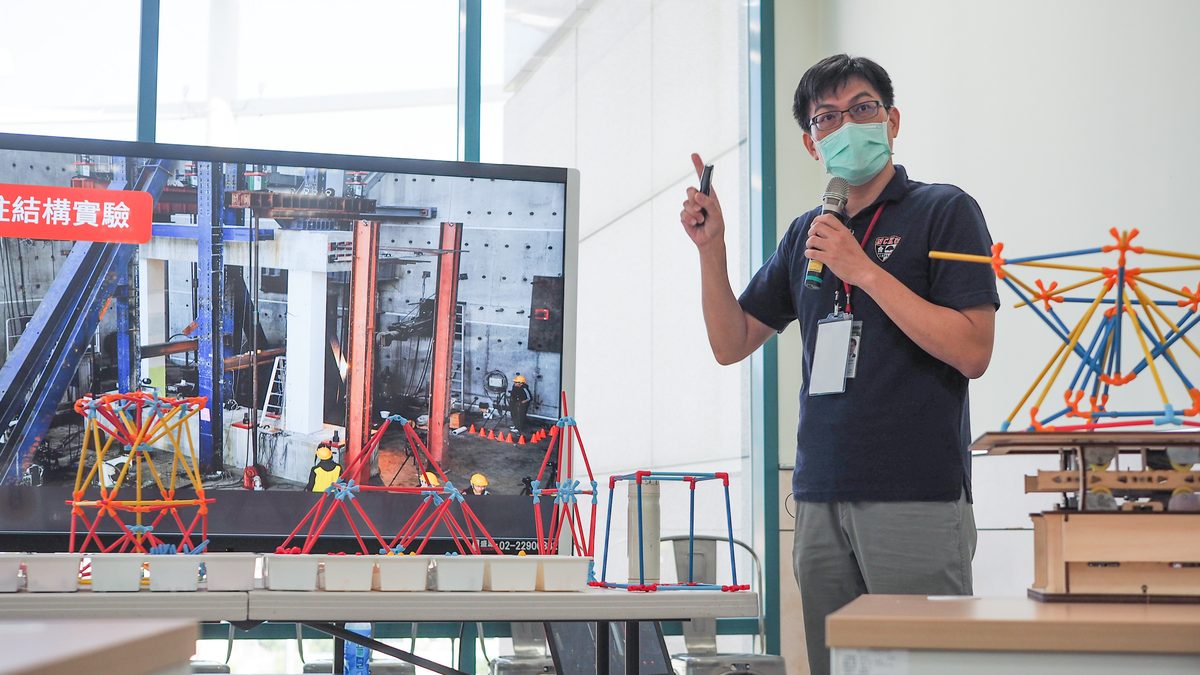
The project was funded by a National Science and Technology Council research grant in science education practice. NCKU Civil Engineering designed the course — statics, mechanics of materials, structural analysis, reinforced concrete, structural dynamics and seismic design — while our founder developed the desktop laboratory kit.
The hard part was never building the apparatus. It was shrinking university content onto a tabletop without falsifying it. Axial deformation, shear, torsion, buckling, a shake table, scale models, base isolation, damping, a tuned pendulum — every piece had to be something a secondary-school teacher could run in their own classroom, while the numbers it produced still had to agree with the theory in the textbook. The whole set sits on top of the elective physics units in the national curriculum and connects upward to university and postgraduate work.
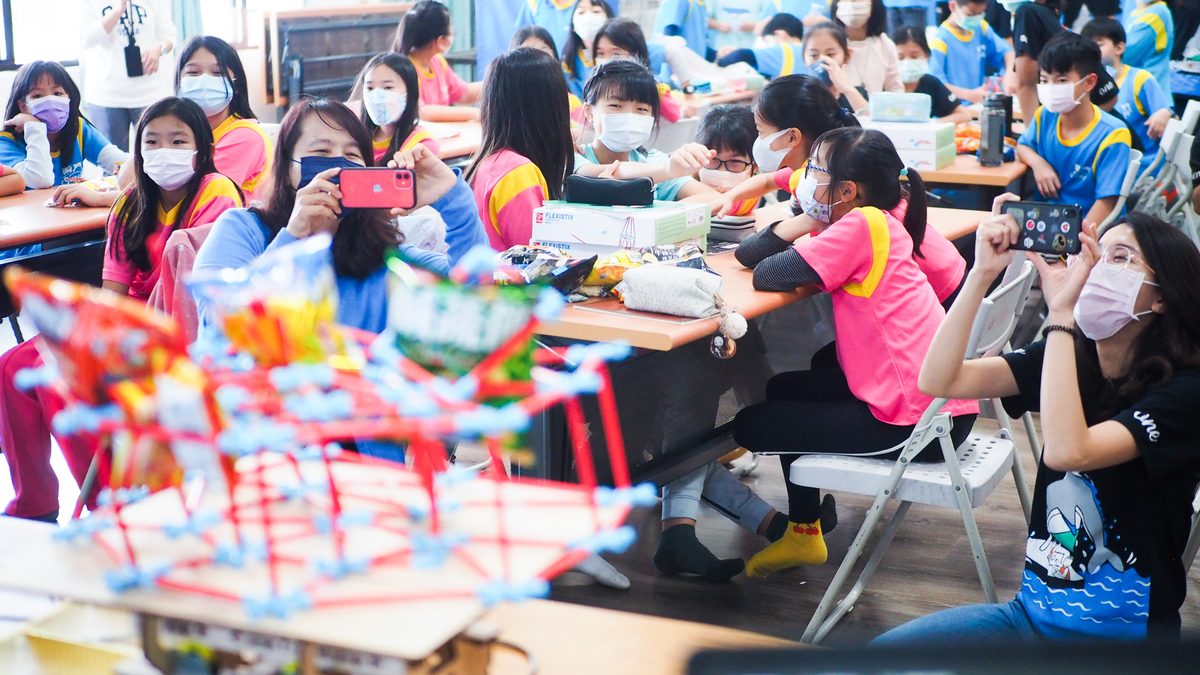
The kit did not stop at the page. After the first teacher workshop we took it into a series of primary schools, so that seismic concepts previously confined to a university laboratory were shaken, by hand, by ten-year-olds.
-
 03
03National Taiwan Science Education Center
Invited partnerTaiwan Science Festival exhibits and teacher training
Invited four years running. For a private outfit based in Tainan, that sentence is more accurate than any adjective — the centre decides afresh each year who to bring in, and each year we have been on the list.
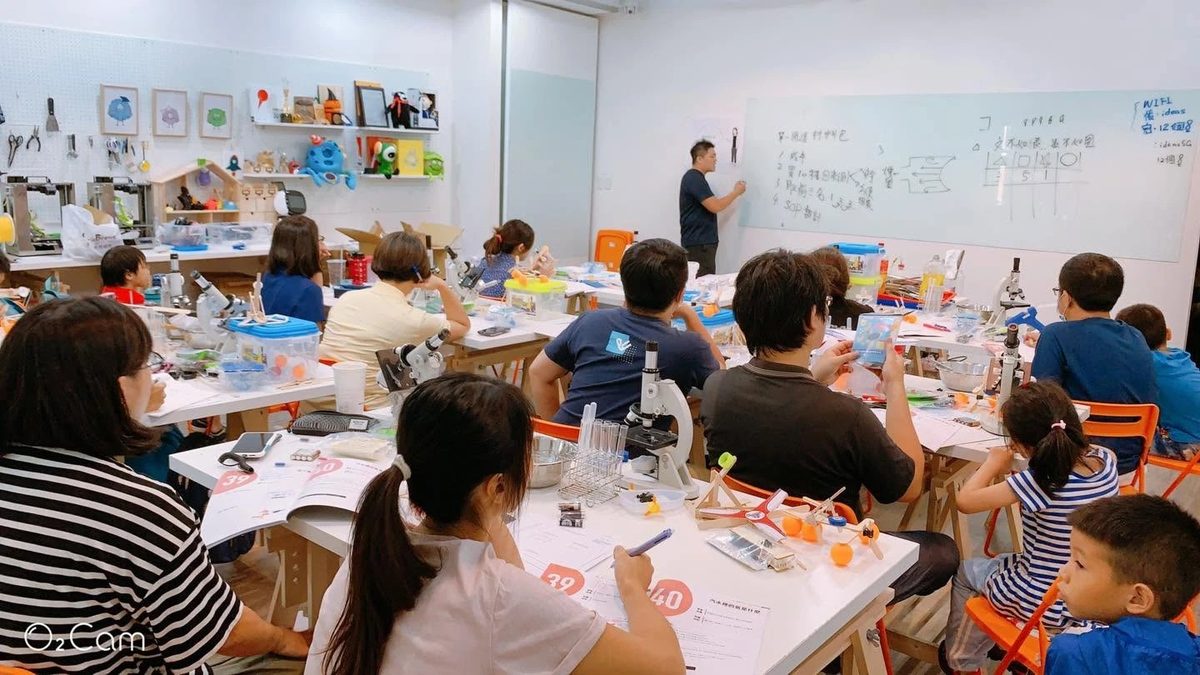
During the 2022 Taiwan Science Festival we exhibited at the Shilin centre jointly with NCKU Civil Engineering, running two formats with almost nothing in common: a home-experiment taster workshop for parents and children, and training for primary, junior-high and senior-high teachers in earthquake education and seismic design. The first had to produce a finished result from one parent-child pair in ninety minutes; the second had to give practising teachers something they could take back to their own classrooms. The difficulty was never the content — it was that one set of apparatus had to serve both audiences.
We have also run seismic isolation and damping workshops inside the centre, and brought digital measurement stations onto the floor more than once. Every audience was different; every lesson plan had to be rewritten.
-
 04
04NCKU Center for STEAM Education and the Maker Movement
Delivery partnerCross-disciplinary science teacher certification course
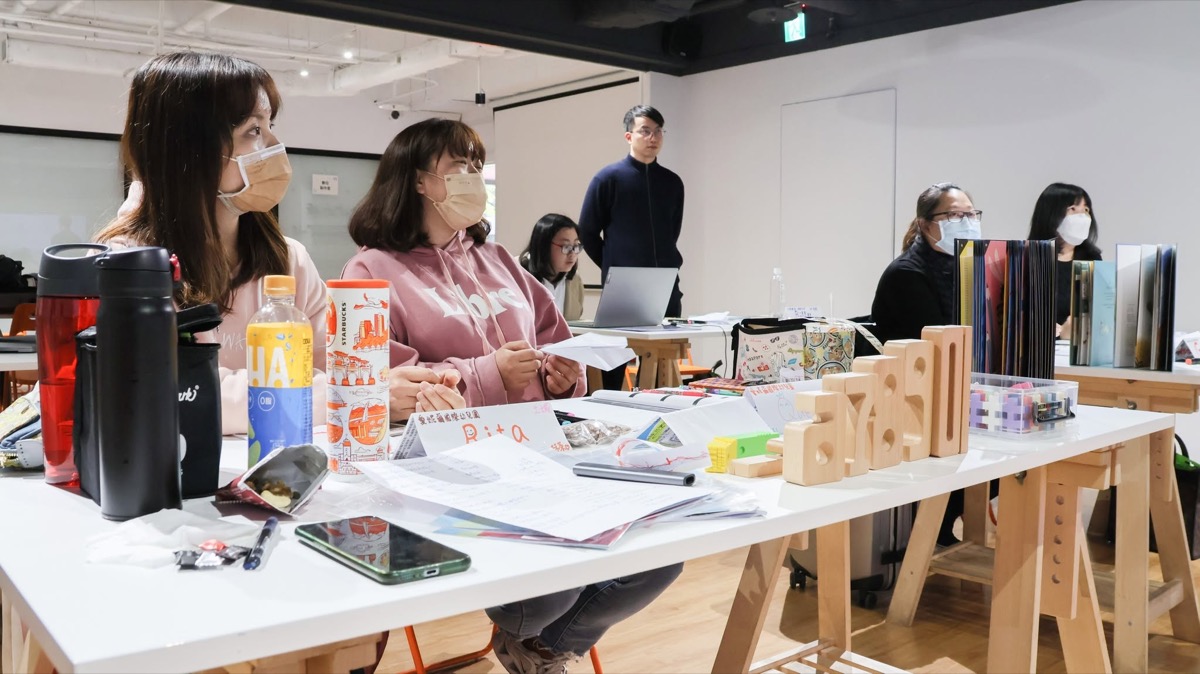
The course is hosted by NCKU’s Center for STEAM Education and the Maker Movement, with our lab named on the prospectus as the delivery partner — not one instructor among several, but the party responsible for designing and running the whole thing.
Certification runs at three levels, for practising teachers and for others intending to work in science education. Delivering a certification course means handling far more than teaching: how the levels are divided, which practical competencies each one demands, how the assessment works, and what happens to those who don’t pass all have to be set out in advance and hold up under scrutiny.
What makes this the sharpest test of us is the direction the work travels. Teach a child an experiment badly and you can put it right next time. Teach a teacher badly and they carry it into their own classroom, where it reaches cohort after cohort. Handing over that position is the most direct form of trust a university can extend.
-
 05
05Asia STEM Education Association (AAES)
Curriculum design · video productionSTEM.org Educational Instructor Certification Program — curriculum structure and unit videos
The STEM.org Educational Instructor Certification Program, run by the Asia STEM Education Association (AAES), is an international teacher-training programme officially authorised by STEM.org: teachers first build their grounding through online unit videos, then move into hands-on workshops to practise lesson design and micro-teaching, with successful candidates referred by the Association to STEM.org in the United States for review and credentialing.
STARK Lab assisted in structuring the curriculum and producing its teaching videos. Teacher-training video differs from ordinary teaching video — every demonstration on camera is one a trainee will reproduce in their own classroom, and any imprecision is copied outward into many more. From how the knowledge map is cut into units, to how long a single video should run, to every shot of a demonstration, we turned years of classroom experience into content that holds up on camera.
-
 06
06SAMSUNG
Technical direction · delivery“Seeing Sound” commercial and the Samsung education programme
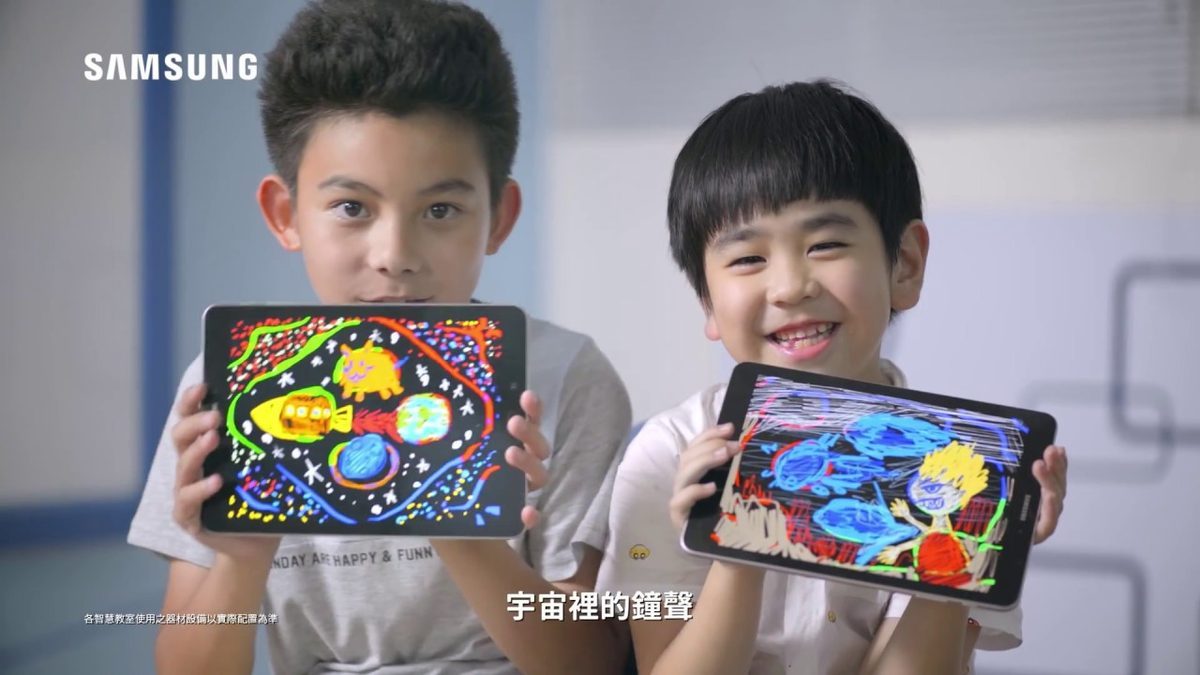
When the agency called, the brief was wide open: design a science lesson around their phones and tablets. What came to mind immediately was the Chladni figure — a metal plate driven by a speaker underneath, where fine sand is thrown clear of the most violently vibrating regions and settles into one symmetrical pattern after another as the frequency changes. Sound is invisible, but it can be made visible.
To read clearly on camera, we doubled the size of the plate. A larger plate is a heavier plate: the speaker had to grow, the amplifier had to be upgraded, and every error in levelling and alignment was magnified with it. A requirement that looked like nothing more than “make it bigger” propagated all the way down the physical chain. The apparatus was finished at the last possible hour the day before the shoot.
The result was released publicly on Samsung Taiwan’s own channel. The follow-on programme, “Seeing Sound”, was taken into primary schools by CCKids, a science-outreach team also founded by our founder.
STARK Lab proposed the Chladni plate apparatus in the film, then rebuilt and scaled it up. SAMSUNG TAIWAN OFFICIAL CHANNEL · 2018 -
 07
07Nani Book Enterprise
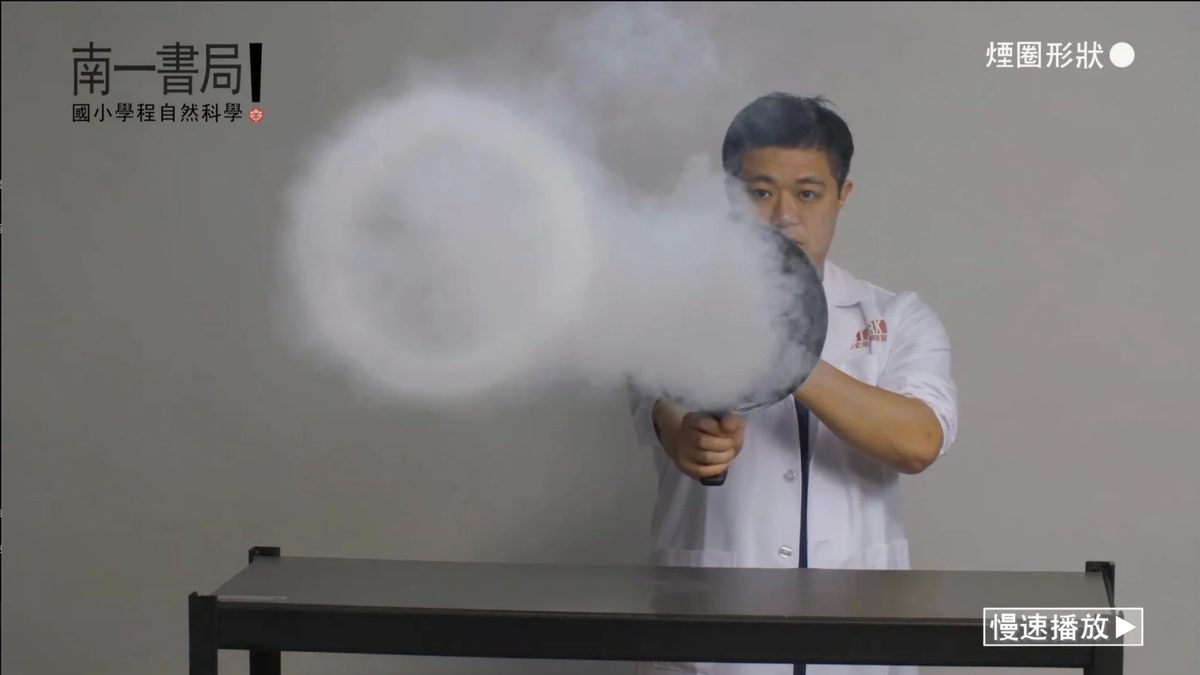
Instructor · scriptingExperiment demonstration videos for school science textbooks
We scripted and presented the experiment demonstration videos that accompany their primary and junior-high science, biology and physical-science textbooks.
The specification here is unlike ordinary teaching video. A textbook reaches every school in the country and an enormous spread of ability, so a demonstration has to land first time: the phenomenon must be unmistakable, the steps must be reproducible, and nothing in the explanation can be left ambiguous — because the person watching is often a teacher preparing tomorrow’s lesson. Every experiment was run many times off camera to confirm it would still work under the most ordinary classroom conditions. What looks like a single clean take is the residue of having failed in every available way first.
For us this was a decade of hands-on practice moving out of one room and into the hands of teachers and pupils nationwide. Having done it, we are under no illusion: an experiment that can be reproduced at scale and an experiment that merely works are not the same thing.
-
 08
08CECI Engineering Consultants Foundation
Co-organiser2022 Bridges: Force and Form summer programme
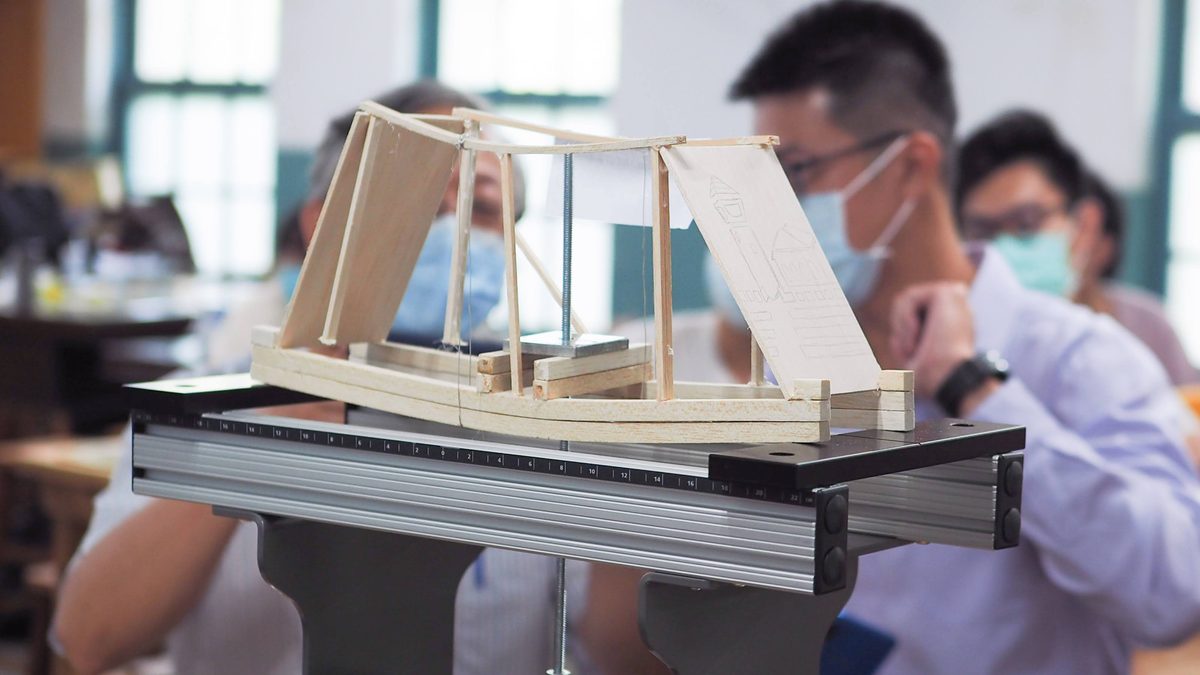
The programme was hosted and fully funded by the CECI Engineering Consultants Foundation, co-organised by NCKU Civil Engineering, Maker Factory Co. and ourselves, for senior-high and first-year university students.
Three days of material, none of it softened: the force and form of bridge structures, bridge inspection and maintenance practice, a site visit to NCKU Civil Engineering’s extended-reality laboratory, hands-on work with structural analysis software, and a bridge model design competition to close. Our part was turning abstract structural mechanics into something you can hold — participants used the desktop kit we developed with NCKU to build a structure, load it, watch how it deformed, and go back and change their own design.
Engineering consultancies apply very practical standards when deciding who to trust with the next generation. Being on that list came down not to a pitch, but to whether the apparatus actually met the precision they required.
Some corporate partnerships are not listed here, as those partners have not yet agreed to disclosure.
§ 04
ProcessProcess
How to start the conversation
Four steps, without a long back-and-forth
- 1
Get in touch
Please outline your budget range and intended objectives by LINE, telephone or email. We will provide an initial assessment of what is feasible.
- 2
We propose
We put forward a concrete configuration: who it reaches, how many sessions, what is taught, the expected outcome and how we report back.
- 3
Confirm and run
Once content and funding are agreed, we schedule it. Payment and receipts follow your own finance process.
- 4
Report back
After delivery you receive a record of what was run and what came of it. Where a child appears in any image, we obtain guardian consent first.
Shall we talk?
Tell us what you have in mind and your budget range,
and we will come back with what is workable
@starklab · +886 6 358 5873
STARK Lab · 417 Guoping Rd, Anping District, Tainan