

Why gifted kids have so much free time
After years of teaching, we've noticed something counter-intuitive: the children who go furthest usually have more empty time, not less. The trick isn't filling it — it's leaving it blank.
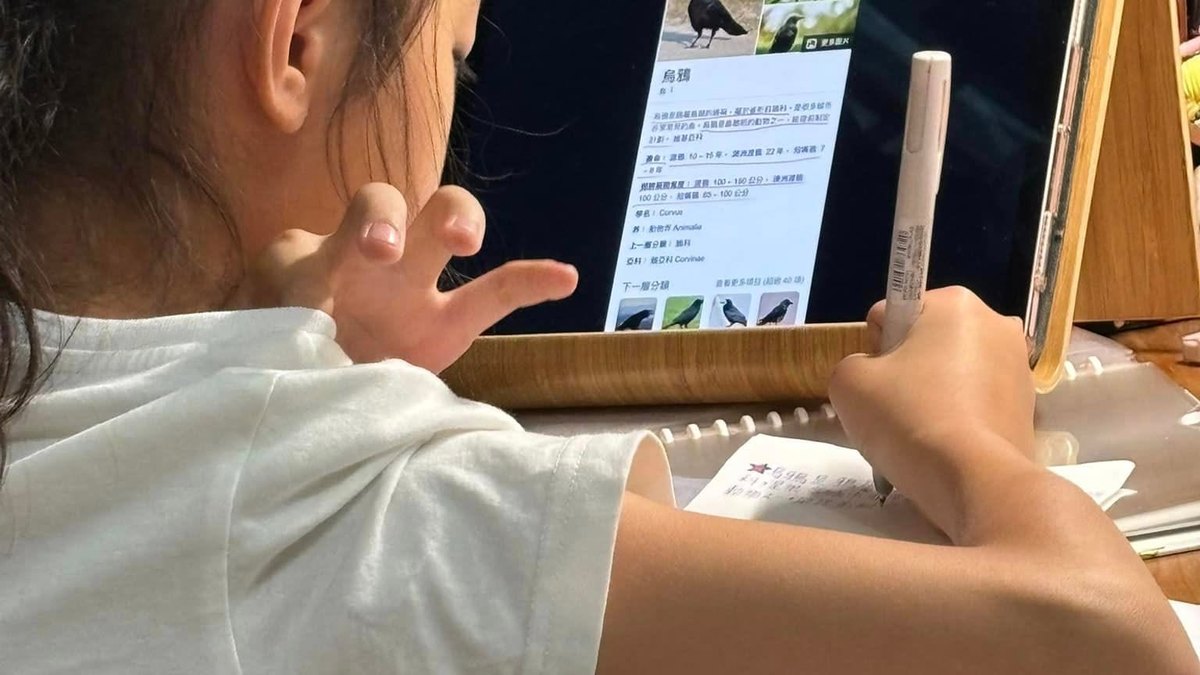
Not long ago, the mother of one of our third-graders shared her daughter's study notes with us. We were floored.
This girl already loved science, art, and making things. At first, her mum simply reminded her to take notes in class. But she felt that words alone didn't stick — she needed pictures to really understand — so she began adding her own hand-drawn illustrations to every page. After a teacher praised them, something switched on. She started not only writing down what she heard in class, but going off to find more on her own and reorganising it, and even jotting and sketching the stray ideas that popped into her head during the day.
In all of this, we were watching a child exercise three surprisingly mature skills at once: the ability to write, the ability to understand, and the ability to turn words into images. It's a textbook case of input, then output — she wasn't passively receiving; she was actively taking what she absorbed and producing it again, in her own form.
What home gave her
We asked her parents what they'd done. It turned out to be just three things:
- A lot of books — some bought, many borrowed from the library.
- Materials to make things with.
- Free, unstructured time.
The first two are familiar to everyone. The third — the rare one, the one most easily overlooked — is the one that matters most.
"Empty time" isn't wasted time
Across all the students we've taught, one pattern is almost counter-intuitive: the children who go furthest tend to have a lot of free time.
Not time spent on a phone, of course — time they can spend reading freely, chasing whatever they're curious about, tinkering, thinking. If possible, it helps to have a dedicated corner they never have to tidy up, even if it's just one desk. There's research suggesting that a fixed, uninterrupted space genuinely supports focus and creativity.
During that time, these parents tend not to interfere. As long as what the child asks for isn't unreasonable, they support it — and they resist the urge to direct.
Why this matters so much
When we help high-schoolers write their learning portfolios, the part almost every student gets stuck on is reflection — writing down their own thoughts. Ask them how they feel, what they think, and the answer is often three words: "I don't know."
Why? Because they've had almost no time to think about themselves.
From a young age, every slot is filled — homework, pre-reading, review, lessons, cram school. A child never gets to sit quietly and ask: What do I like? What do I think about this? So when the day comes that they're asked to reflect, there's nothing there to draw on.
One concrete suggestion
We can't hand you a precise timetable. But if you want a starting point, here's ours:
Give your child at least one continuous, unbroken block of empty time each week — say a full afternoon, around six hours — with no homework, no revision, no plans. Entirely their own.
They may complain of boredom at first. That's completely fine. Boredom is exactly where a child starts asking, "So what do I actually want to do?"
Leaving it blank isn't neglect. It's trusting that a child, when no one is arranging things for them, can grow a direction of their own.