

The engineering notebook: pairing every change with its result
Live data can light a child's motivation, but keeping it burning takes two more things: making the data visible to everyone, and recording the process properly. An engineering notebook isn't a reflection journal — it records the correspondence between what you changed and what happened, which is the only thing that can rescue a project in its later stages.
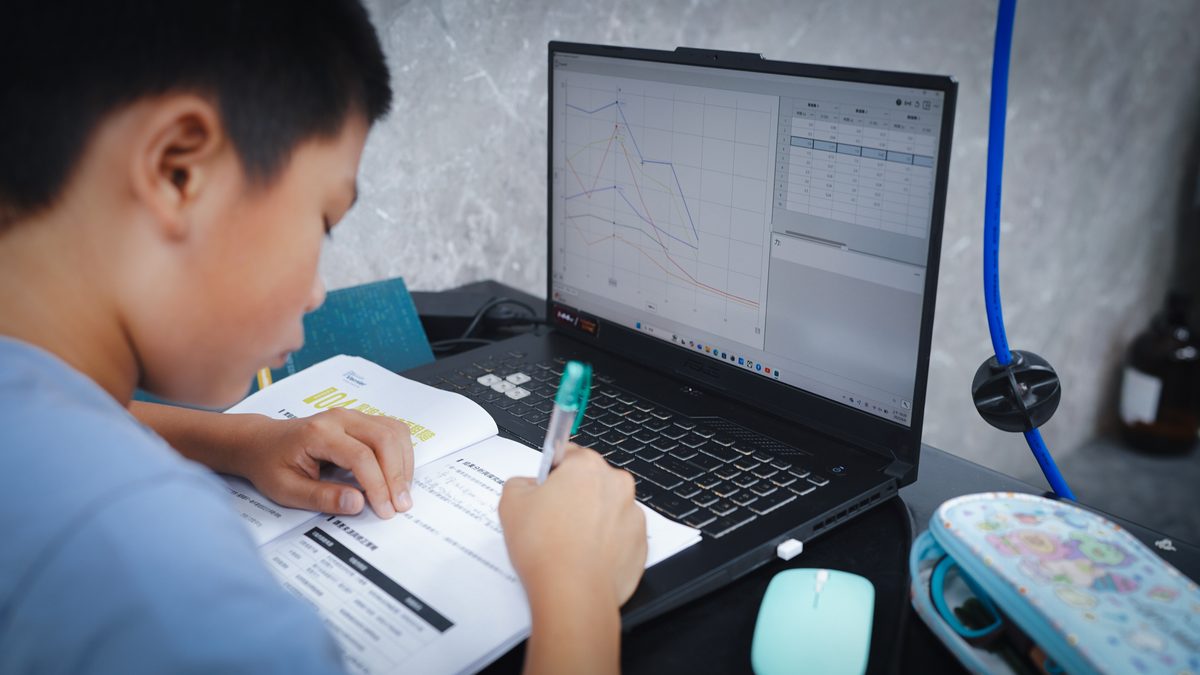
In a five-day wind-power inquiry course, we switched on two things at once: digital measurement instruments on the bench, so every modification immediately became a number, and displays around the room, so everyone's numbers were visible to everyone else.
In when the data starts moving we described how live data feedback lights a child's motivation. This piece is about what comes next: what happens once the data is laid open in front of the whole room, and how to record those five days so the work still has value afterwards.
When the data is laid open in front of everyone
Once the instruments are connected, the first thing a child sees is the power output of their own build. Measure, modify, measure again — the loop is very hard to stop once it starts running.
The real shift happens when the numbers become comparable. Each student's display mirrors the readings from across the room, so the moment someone sets a new high, everybody knows. For the next quarter of an hour, everyone goes back to their own device.
What's worth noticing is what they are comparing. Not marks, not who finished first, but a number they produced with their own hands — and one whose provenance everyone understands, because they are all doing the same task. That kind of comparison does surprisingly little damage, because the person behind knows exactly what to try next.
At this stage the instructor can step back into an advisory role. The pace of learning returns largely to the students, and we intervene only when someone is genuinely stuck. Once motivation is lit, peers are the fuel that keeps it burning.
What goes in the engineering notebook
The other firm requirement in this course is a daily engineering notebook. It isn't a reflection journal and it isn't a photo album. What it records is this:
- which materials went into this round, and to what specification
- the fabrication and assembly steps, including the one that went wrong
- every measurement taken, and the conditions it was taken under
- what was changed, and why that change was chosen
- which way the numbers moved afterwards, and by how much
Photographs matter, and there should be plenty of them — but of the process: the half-built rig, the joint that came loose, the instrument reading at the moment of measurement. Not the finished-object shot.
Why it has to be this granular
Because the real value of a notebook lies in the correspondence between a change and its result.
A notebook that records only outcomes is, when you reopen it, a column of numbers with no causation in it. A line saying "moved the blade pitch from this value to that one; output went from X to Y" is what lets you answer two questions later: why did we settle on this design, and which routes have we still not tried?
The habit pays off in two places. In the near term it pays off in the research itself — without that record, a child in the later stages forgets what they've already tried, wanders down closed paths, and sometimes rebuilds a version that already failed.
Further out, it pays off in the learning portfolio — the record of coursework, projects and self-directed study that Taiwanese universities now weigh in admissions. The section senior-secondary students find hardest is reflection, and when reflection won't come, it's usually not that they can't write. It's that nothing was kept that they could look back at.
An engineering notebook isn't done for the sake of admissions. But it happens to be the habit that research demands anyway — and what it leaves behind is exactly what that later stage needs most.