

Read it, read into it, organise it, say it: a path that usually gets skipped
In the summer before secondary school, most of the time goes on racing ahead through next year's syllabus. We chose to fill a different gap: genuinely understanding a passage, hearing what the writer didn't say outright, shaping it into a view of your own, and finally saying it so that people take it in. These four steps are one path — skip the early ones and the last is just recitation.
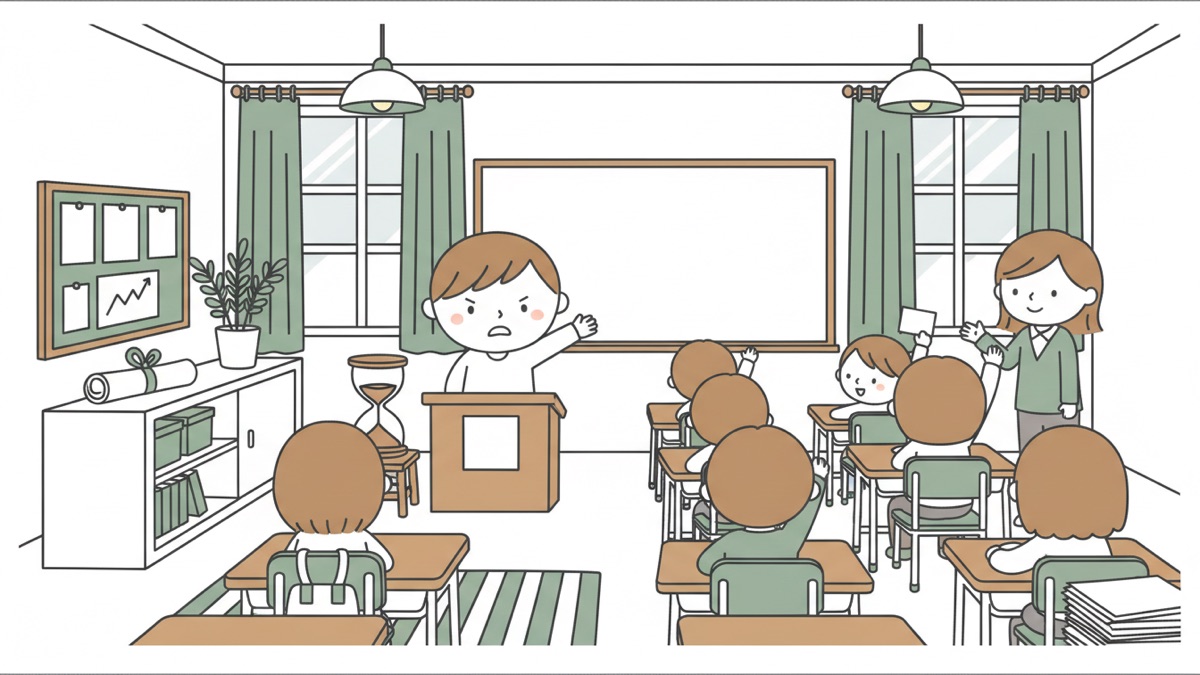
In the summer before children start secondary school in Taiwan, most of their time goes on getting a head start on next year's syllabus.
We don't run that kind of preparation. Not because it's useless, but because we keep seeing something else get skipped: a child finishes a passage and cannot tell you what it said. The same gap shows up in maths in a different guise — we've written about where it comes from in the problem usually isn't maths, it's reading the question.
The usual approach in a speaking class is to go straight to practising on stage. But a child who hasn't understood the material has nothing to do up there except recite. However fluently it comes out, the view isn't theirs.
First understand it, then read into it
Understanding is being able to locate information: which sentence in a paragraph carries the point, and what the others are doing to support it; what the shape of the whole piece is, which part is the main thread and which is only illustration. What this step trains is the habit of not treating every sentence as equally important.
Reading into it is a second layer: what the writer implies without stating, and which side they are on. Whether a line is gentle or sarcastic — and what the evidence for that judgement is.
Charts are text too. We give children real figures from the news, have them find what they can in the graphic and reason their way to a conclusion, then go back to the original report to see whether they got there. What this really drills is the same thing throughout: who took the step from evidence to conclusion. Did the data support it, or did the reader arrive with a position and then go looking for a chart?
Organising: turning what you read into a view of your own
Only once a child can read does a framework for expressing it become useful.
The first one we give is point, reason, example. Next comes the rebuttal form: although… but… because…. Disagreeing is not the hard part. The hard part is having a better alternative once you have disagreed.
We built this stage into two classroom games so that the rules could carry the instruction for us. The reasoning is in turning persuasion into a game.
Saying it: you only really have it once you can say it
The last step is assembling everything into a complete piece of speech: an opening that catches, a clear point, the material that supports it, and an ending that lands.
Then the timed rounds: thirty seconds, one minute, two minutes, each longer than the last. For most children the real barrier isn't content, it's opening their mouth the first time. Once the clock stretches, they start complaining there isn't enough time.
The course closes with a long, demanding text and a full round of persuasion. Each student prepares their own position, takes the floor, and argues for every vote in the room — and by that point it's obvious at a glance whether the first three steps went in.
None of the four can be skipped. Without understanding there is nothing to organise; without organising there is nothing to say but a memorised script. And the steps between reading and speaking rarely have a slot on a school timetable — which is exactly why we chose to fill them.