

Turning persuasion into a game: the rules are the marking scheme
Children are not short of opinions. What they lack is a way of putting an opinion so that someone else will take it. We built the point–reason–example structure into two classroom games and let the rules do the instructing: an attack with no reason costs you points, and so does taking too long. They want to win, so they drill the exact thing we wanted drilled.
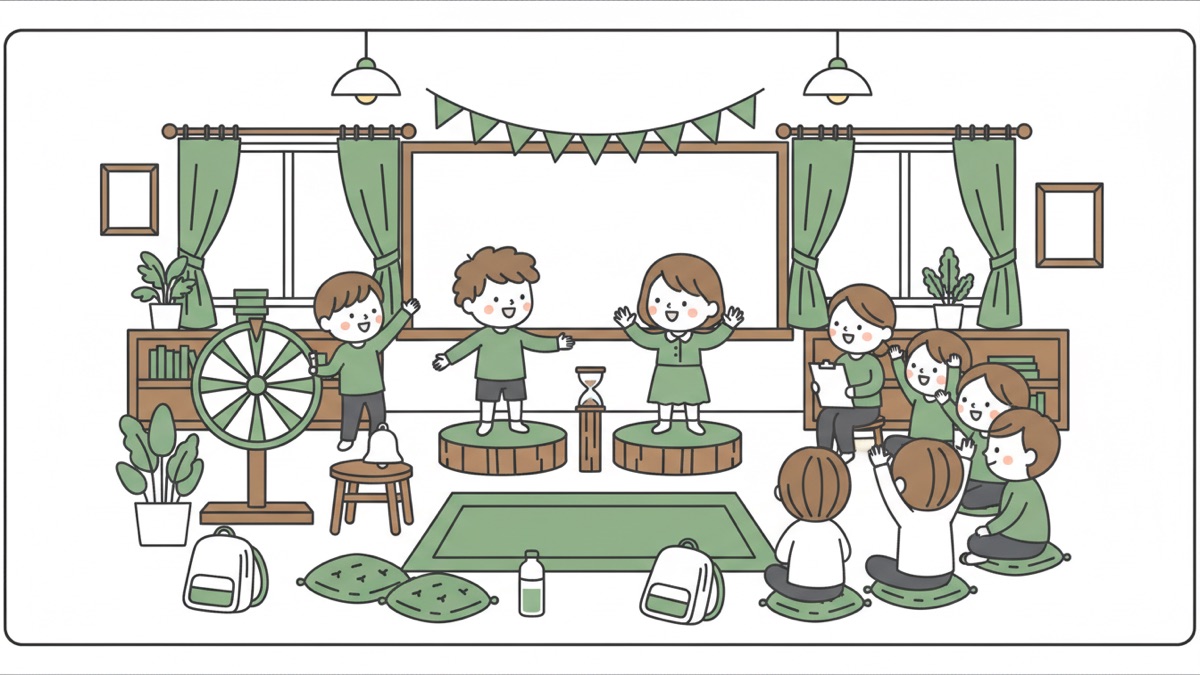
"Well, I just think —" is where a lot of children's arguments stop.
Between having an opinion and putting it in a form someone else will accept, there is a piece of technique. It can be broken down, and it can be practised.
Persuasion breaks into three moves
The structure we give children has three steps: point, reason, example.
- Point: say which side you're on, clearly.
- Reason: why. Give a because that holds up.
- Example: something concrete, so the other person can follow you in.
The structure itself is easy — one explanation and they've got it. What's hard is producing it while someone is watching you and the clock is running.
So what actually needs practising is never "knowing there are three steps." It's drilling them until no thought is required. That takes a great deal of repetition, and repetition is precisely what an ordinary speaking lesson can't supply: forty minutes, two turns each, and nobody has practised anything.
Why make it a game
Our answer was to wrap the practice in two games.
The first is a question slot machine. Prompts are drawn at random, from small everyday disputes to genuinely absurd dilemmas — whether Taiwanese salt-and-pepper fried chicken should be tossed with basil, for instance. The children laugh, then still have to talk the room round. What this mechanism removes is the cost of choosing: nobody stalls on what shall I say, so they go straight to how do I say it.
The second is a rebuttal arena — two students head to head, each defending the side they drew, taking turns. Over a single match, each child speaks far more often than they would in a whole lesson of presentations.
The point of making it a game is not to make the lesson fun. It's to make something that needs fifty repetitions bearable for fifty repetitions. Those are two different goals, and they're easily confused.
The rules are the marking scheme
This is the part we care most about in the design: rather than standing beside a child repeating our expectations, we write the expectations into the rules.
- An attack with no reason behind it is void — and costs the speaker points.
- Hesitating too long costs points too. "Um… hang on… let me think" has a price on stage.
- Rebuttals must use the although… but… because… form. You may disagree, but you have to give a reason, and ideally a better alternative.
Once the rules are set that way, children do the thing we would otherwise have to keep nagging about, because it's how you win. They aren't being made to persuade; they want to win, so they practise hard. Even the child who never volunteers will have a hand up for the next round.
This sits inside a longer path, with reading and organising ahead of it — we've written about that in reading closely, then saying it out loud.
The scores are forgotten within minutes of the game ending. What stays is whether, the moment they're pressed, a child can still set out their reasons steadily.