
Add LINE →

§ Unlock Science Reading · CAP Science Competency Workbook

Long-form science reading × Chart interpretation × 108 Curriculum competency questions

New science the textbook doesn’t cover,
chosen before the exam

Unlock Science Reading (解鎖科閱力) is a science reading workbook made by STARK Lab for the competency-based questions in the science section of the CAP (Comprehensive Assessment Program for Junior High School Students, Taiwan’s national junior high exam). “Carbon Capture and Storage (CCS),” which we included in 2024, appeared the following year in the 2025 CAP science exam, because our topics are chosen by a lab that runs real experiments.

  • 50 long-form articles on frontier science
  • About 250 questions
  • 137 pages · Full worked solutions
  • 108 Curriculum code on every article

§ 01

Why PractiseThe Shift

CAP science looks different now

A year of diligent memorizing, and then stuck in front of a passage of science never seen before: what the exam tests now is understanding and reasoning on the spot.

0% Chart questions
  • 50Questions in total
  • 0Complex calculations
  • Cross-chapterIntegrated questions
CAP science question types · About 70% involve charts or graphs, 50 questions in total, no complex calculation (2026 CAP science; source: udn)

The questions have changed: not how much you memorize, but how well you understand

In the 2026 CAP science section, about 70% of questions involved charts or graphs, out of 50 questions with no complex calculation; question stems are long passages set in real-life contexts, and questions integrate several chapters. The exam leans toward more text, more charts, more real-life contexts and no complex calculation. It tests not how much students remember, but whether they can understand a new passage, reason from data and connect concepts across subjects.

What a competency question looks like · Sample question in the same style (not an actual CAP question)

Since the Industrial Revolution, humans have burned large amounts of fossil fuels, steadily raising the concentration of carbon dioxide (CO₂) in the atmosphere. The ocean is one of Earth’s largest carbon reservoirs and absorbs part of the CO₂ in the atmosphere. When CO₂ dissolves in seawater, it reacts with water to form carbonic acid (H₂CO₃), which then dissociates and releases hydrogen ions (H⁺), gradually lowering the pH of seawater. This is called “ocean acidification.”

Calcium carbonate (CaCO₃) in seawater is the main component of coral skeletons and shellfish shells. As seawater pH falls and hydrogen ions increase, carbonate ions (CO₃²⁻) decrease, making calcium carbonate harder to form and easier to dissolve, which threatens the survival of coral reefs and shellfish. The table below shows long-term surface seawater measurements from a research station (illustrative).

YearAtmospheric CO₂ (ppm)Surface seawater pH
19903548.11
20003698.09
20103898.07
20204148.05
Table · Atmospheric CO₂ concentration and surface seawater pH (illustrative data for teaching)

QBased on the passage and the table, which of the following inferences is most reasonable?

  1. From 1990 to 2020, atmospheric CO₂ concentration rose, and the pH of surface seawater rose with it.
  2. After seawater absorbs CO₂, hydrogen ions increase, making calcium carbonate dissolve more easily and threatening shellfish shells and coral skeletons.
  3. Ocean acidification increases carbonate ions (CO₃²⁻), which actually helps corals build their skeletons.
  4. The pH values for every year in the table are greater than 7, which shows this seawater is already acidic.
Show answer and explanation

Answer: (B)

(B) combines the passage and the table: CO₂ dissolving in seawater releases hydrogen ions (chemistry), making calcium carbonate dissolve more easily and threatening shellfish and corals (biology). Correct. (A) contradicts the table: as CO₂ rises, pH falls. (C) contradicts the passage: acidification reduces CO₃²⁻. (D) A pH above 7 is basic; this is a common misconception. This is exactly how competency questions work: understand a long passage, interpret data, integrate across subjects, and see through misconceptions. Rote memorization does not help here.

* This sample question was written by STARK Lab in the same style; it is not an actual CAP question. The context and data are illustrative.

This ability cannot be crammed before the exam

Reading long passages, interpreting charts and reasoning across subjects grow out of reading done steadily over time. A last-minute push rarely makes up for it, which is why Unlock Science Reading is built around one article a day, until the skill becomes second nature.

§ 02

What Sets It ApartWhy It Hits

How we choose the right topics

Not luck, but a method for choosing topics. Three things set this workbook apart from popular-science reading and mock exams on the market.

  • Webb Telescope
  • mRNA
  • Black hole imaging
  • Ocean acidification

Tied to the latest science news

We choose new contexts that textbooks do not cover but that can be reasoned through with textbook concepts: the James Webb Space Telescope, mRNA, black hole imaging, ocean acidification. This is exactly how CAP competency questions are written. Students are not practising questions they have seen before; they are building the ability to understand unfamiliar material on the spot.
Made by a lab that runs real experiments

Behind every reading passage is STARK Lab’s own lab work. The charts are not borrowed from elsewhere; we drew them ourselves from classroom measurements and experiment extensions, something a publisher’s editorial team cannot offer.

Linked to the textbook and the curriculum

Every article is mapped to a competency indicator of the 108 Curriculum (Taiwan’s 12-Year Basic Education Curriculum) and labelled with its code (e.g. Jd-Ⅳ-1), so students know which indicator they have practised and which textbook chapter it links back to. Not a loose collection of popular-science reading, but structured exam training.

§ 03

What’s InsideInside

Inside each volume

50 long-form science articles, each with 5 multiple-choice questions on the facing page, about 250 questions in all; each article has a suggested time of 5 minutes, like a series of short competency tests.

How each article is structured

  1. Science context

    Opens with an everyday hook that gives students a reason to read.

  2. Scientific principle

    Links back to textbook concepts, connecting the new context to what students have already learned.

  3. Data analysis and graphing

    Data tables and graphing prompts: not only reading charts, but making them.

  4. Competency reflection

    Cross-subject integration, connecting physics and chemistry, biology and earth science.

  5. 108 Curriculum mapping

    Competency indicator codes, so every article can be traced and checked.

§ 04

Training GoalsCompetencies

Three abilities students carry with them

Not memorizing more, but breaking “scientific literacy” down into abilities that can be practised, aligned with the three competencies of the OECD PISA scientific literacy assessment and the inquiry competencies of the 108 Curriculum for natural sciences.

Explaining phenomena scientifically

Read an unfamiliar long-form science article and use principles from the textbook to explain a new phenomenon: putting knowledge to use rather than only remembering it.

Interpreting data and evidence

Read charts, compare data, draw sound conclusions from evidence, and see through misleading numbers and common misconceptions. About 70% of CAP science questions involve charts or graphs, so this is where the exam is decided.

Evaluating and designing inquiry

Identify experimental variables, judge whether a method is appropriate, and assess whether a conclusion holds up, until the thinking of “inquiry and practice” becomes second nature.

Framework reference · OECD PISA scientific literacy assessment framework (explaining phenomena scientifically / evaluating and designing scientific enquiry / interpreting data and evidence scientifically) and “Inquiry and Practice” in the 108 Curriculum for natural sciences.

§ 05

New in 2026How to Solve

Not just more questions, but how to solve them

The 2026 edition adds an introductory unit on problem-solving strategies.

5 problem-solving techniques × worked examples from real CAP questions

Faced with a long passage and charts, what should students look at first, how do they pick out key information, and how do they eliminate options? We break this down into 5 techniques and demonstrate them step by step with real questions from the 2021 and 2023 CAP science exams. Students learn “how to solve competency questions” as a method they can understand and master, not just by doing more practice papers.

§ 06

EditionsEditions

2025 & 2026: completely different articles

Like an annual, one volume a year, with topics updated each year. The two editions share no articles; families can get a single volume or work through both years.

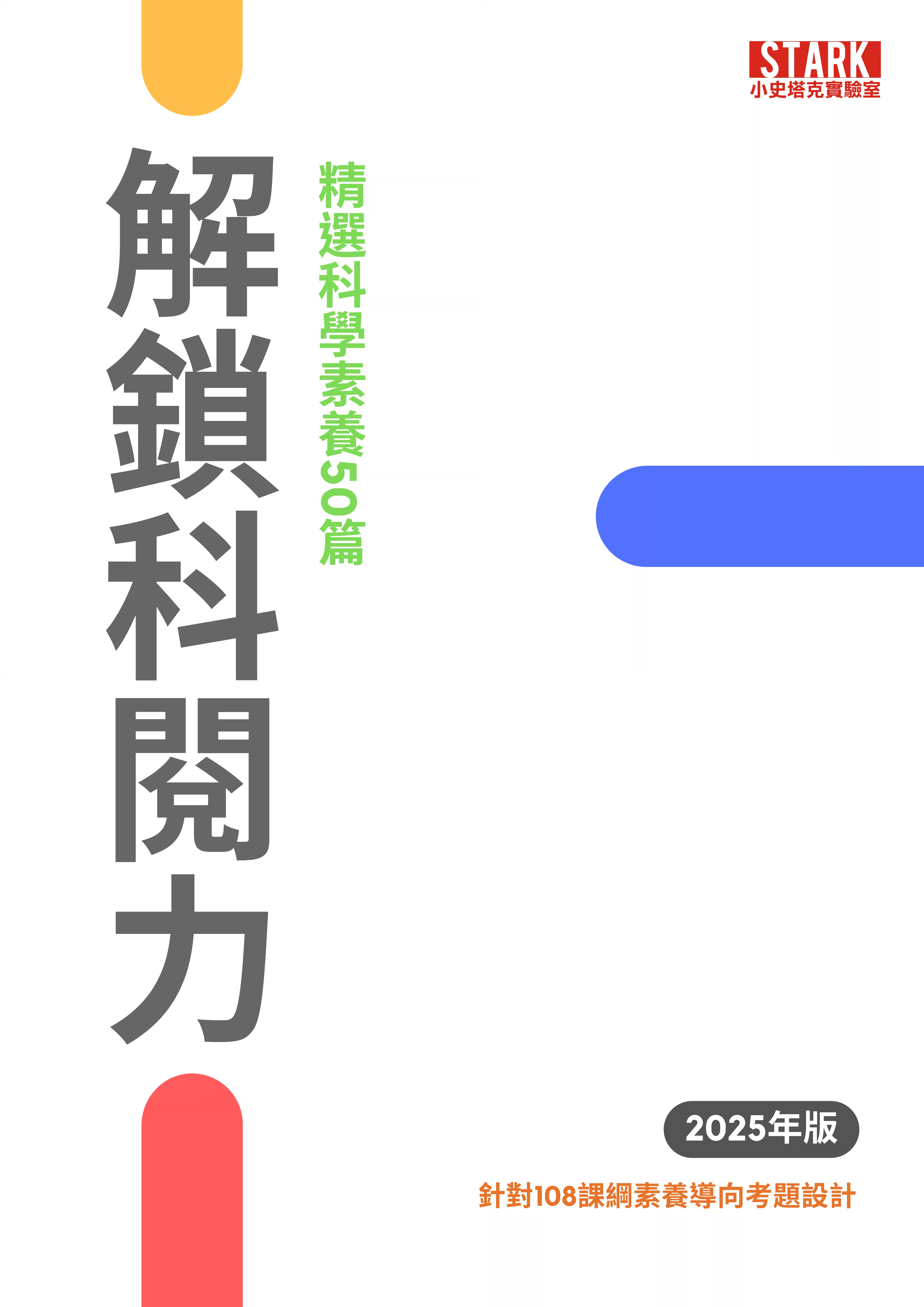
Cover of Unlock Science Reading, 2025 edition: 50 selected science literacy articles
2025 edition · 50 science literacy articles
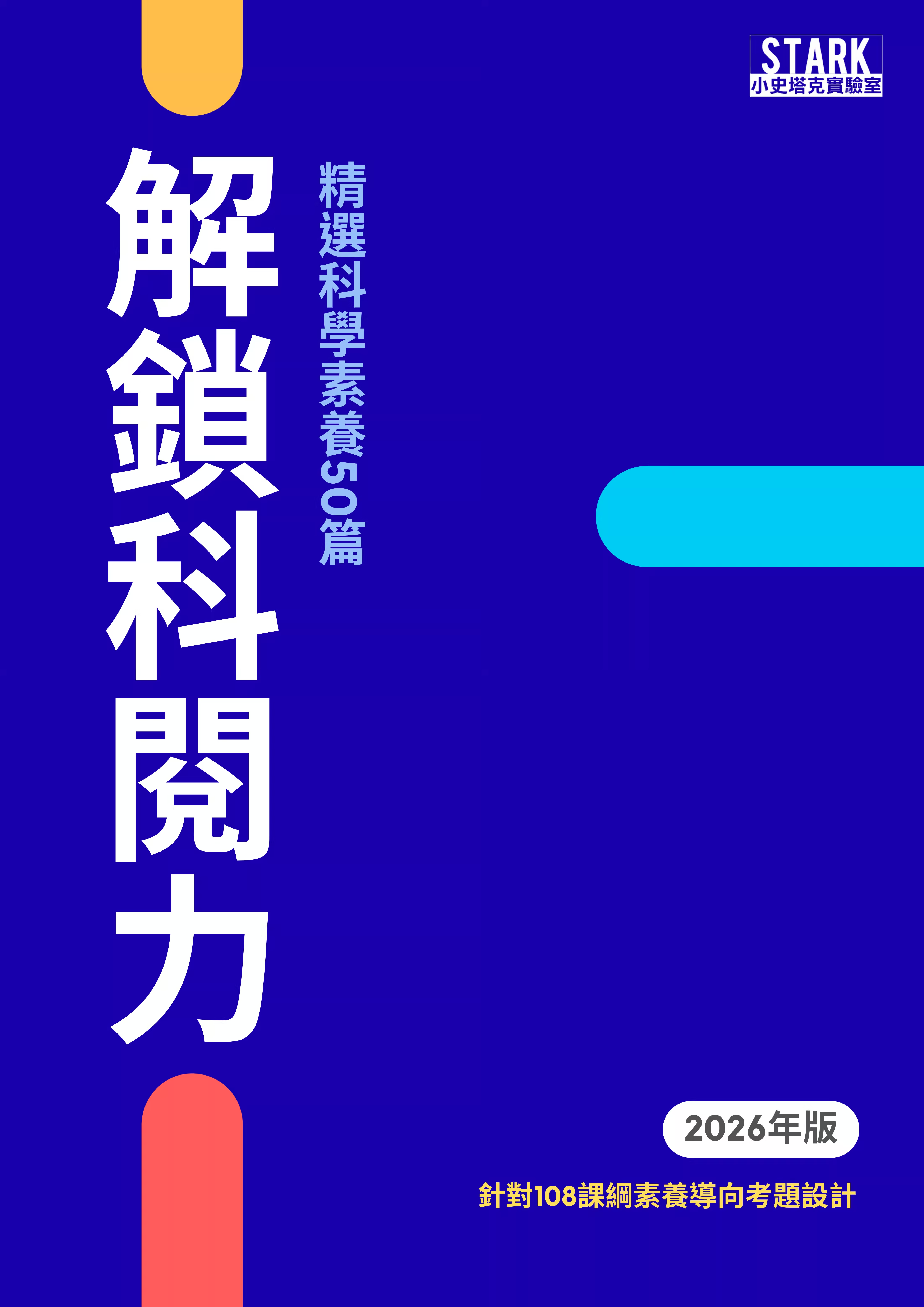
Cover of Unlock Science Reading, 2026 edition: 50 selected science literacy articles, designed for the competency-based 108 Curriculum
2026 edition · Adds problem-solving strategy lessons

§ 07

Who It’s ForWho It's For

For students like these

  • Junior high students preparing for CAP science who want competency-based questions to become second nature.
  • Students moving from passively reading charts to actively interpreting them and reasoning across subjects.
  • Upper elementary students getting an early start on junior high science, building a foundation in reading long texts and interpreting charts.
  • Families who want their children to understand, reason and explain why, not just work through more practice papers.

§ 08

Editions and OrderingEditions & Order

First the content, then the price

137 pages, 50 articles, about 250 questions, with full worked solutions and problem-solving strategy lessons. Prices and current bundles are shown on the online store’s order page.

How to buy

Single volumes are available in the 2025 edition or the 2026 edition (with problem-solving strategies), and there is also a two-year bundle. Editions, bundles and current offers are shown on the online store’s order page, which also includes a content preview to look through before deciding.

Order and preview →

§ 09

FAQFAQ

Questions parents ask most

QIs this a workbook or a textbook? Does it need to be used with a class?
It is a science reading workbook for independent study, with no class required. Each volume has 50 long-form science articles and about 250 multiple-choice questions, with full worked solutions and problem-solving strategies, so students can practise at home.
QWhich grades is it for?
It is designed mainly for CAP science. It also suits upper elementary students as a bridge to junior high science competencies, with early training in reading long texts and interpreting charts.
QWhat do the “competency-based” questions in CAP science actually test?
In the 2026 CAP science section, about 70% of questions involved charts or graphs; question stems are long passages set in real-life contexts, integrate several chapters, and involve no complex calculation (udn). They test the ability to understand new material on the spot and reason from it.
QHow is this different from other workbooks on the market?
137 pages, 50 articles, about 250 questions, with full worked solutions and the problem-solving strategy lessons new in 2026; made by a lab that runs real experiments, not drawn from a publisher’s general question bank. Current prices are shown on the order page.
QAre the 2025 and 2026 editions the same? Do we need both?
The two editions have completely different articles, with topics updated each year; the 2026 edition adds a unit on problem-solving strategies. Families can start with one volume or work through both years for a larger body of reading.
QHow do I order? Can I preview the content?
Choose an edition or bundle in the online store and order directly. The order page also includes a content preview to look through before deciding.

Understanding first,
then exam preparation

Choose an edition or bundle and order in the online store;
the order page also includes a content preview.

Order and preview

Questions? LINE @starklab · 06-358-5873

STARK Lab · 417 Guoping Rd., Anping District, Tainan