

Add LINE →

§ PROGRAMS · 2027 WINTER CAMP

Tinker Lab
Take It Apart, Then Build Your Own

Five days, six projects. Children open up real machines to see how they work, then build working devices with their own hands.

  • Jan 30 – Feb 3, 2027
  • Grades 1–6
  • 6 projects
  • Anping, Tainan

Used every day. Never once opened.

So that is what is inside.

Once it makes sense, they start building their own.

Six projects, six different principles.

Concept illustration. Actual projects are the ones students complete in class.

Scroll down

§ 01

AboutWhy Tinker

They see the casing, never the principle

Of all the things children use every day, not one has ever been opened by them.

Cameras, fans, radios: they are in children’s hands every day, yet never opened. Over time children come to feel that things “just work”, and their curiosity stops there.

Over these five days we do two things: take real machines apart to see the lenses, motors, coils and speakers inside, and then build working devices by hand, putting what they learned from taking things apart back to use. Taking apart shows children “so that is how it works”; building shows them “so I can make one too”.

The parts that come out are not thrown away. At the end of the camp they are arranged by structure in a large clear specimen box, which goes home together with the finished devices: a whole week of understanding, laid out where everyone can see it.

§ 02

ProjectsProjects

Six projects, six different principles

Airflow, light, electromagnetism, radio waves, mechanics, fluids: each one tells a different story.

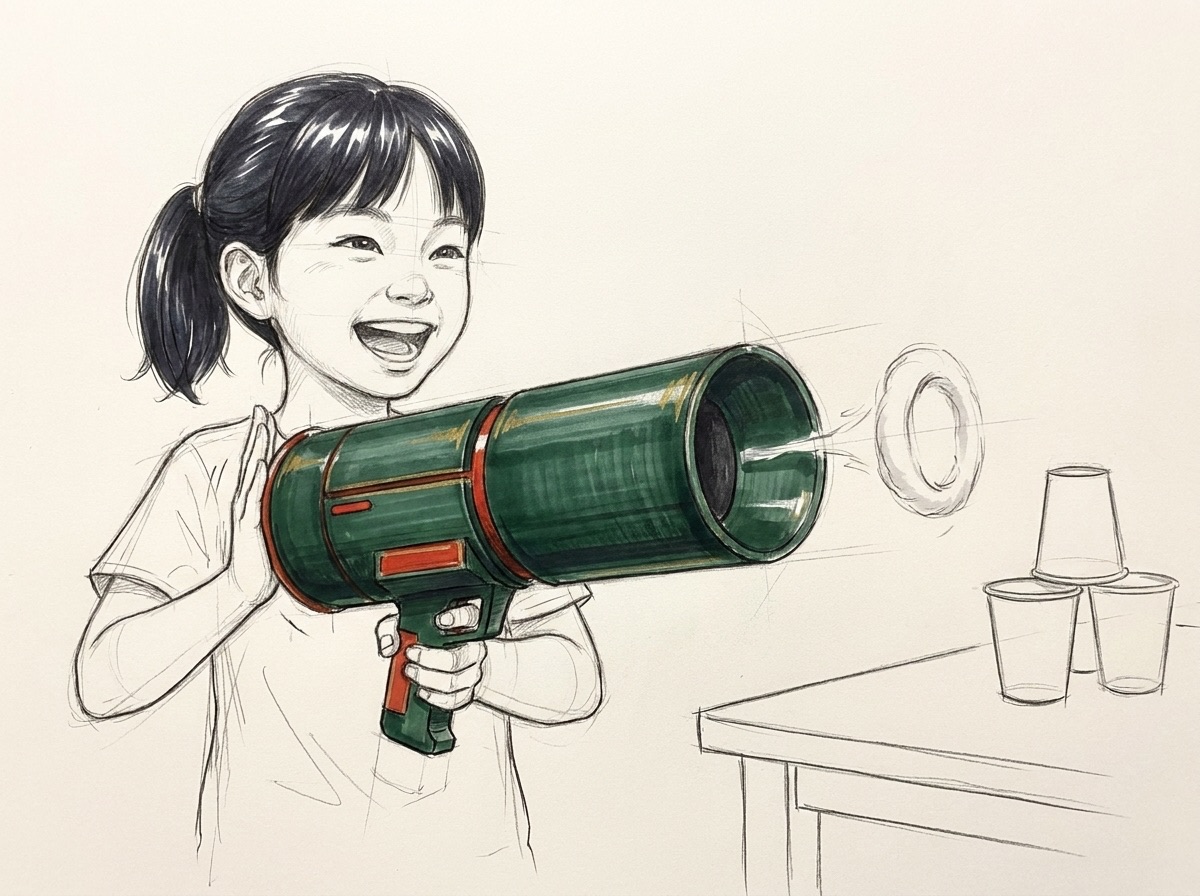
  • Smoke-Ring Air CannonBuild

    Flip the switch and the barrel fills with visible white mist; tap the elastic membrane at the back and a perfect smoke ring shoots out the front. Children discover something counter-intuitive: the ring does not drift apart like ordinary smoke, but flies straight across most of the classroom. That is because it is not a cloud of smoke at all. It is a self-spinning vortex ring.

    Concept render of the smoke-ring air cannon: a child holds a large tube in one hand and fires a visible smoke ring
    Concept illustration. Actual projects are the ones students complete in class.
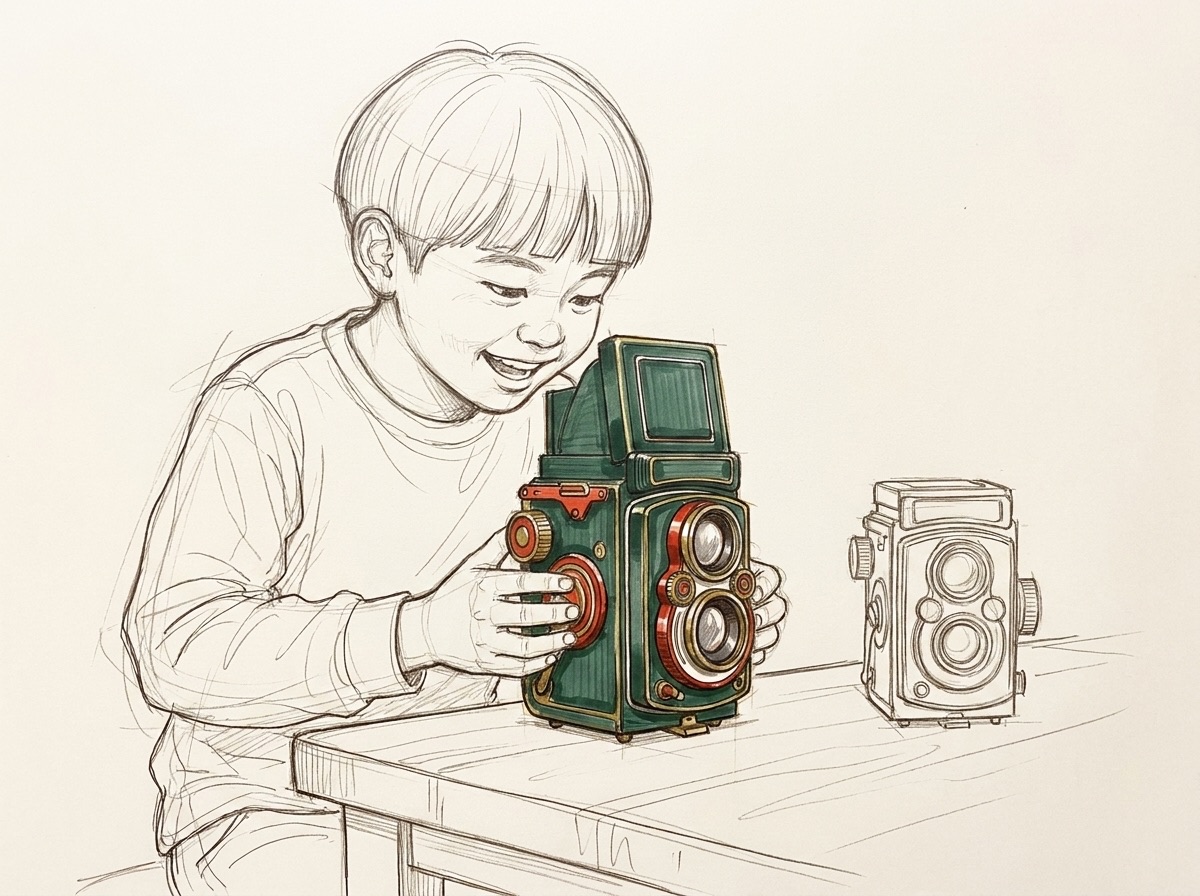
  • Vintage Twin-Lens CameraTake apart + Build

    Each child receives two vintage twin-lens cameras. There are two lenses, one above the other. The top lens is only for viewing: light enters, bounces off a mirror set at 45 degrees, and the image appears on the screen on top of the camera. The bottom lens takes the picture, sending light onto the film. The two lenses are linked by gears, so turning one moves both together, which is why a sharp view means a sharp photo. The first camera is taken apart completely to trace both light paths; the second is assembled by the child, loaded with film, and used to take real photos.

    Concept render of the vintage twin-lens camera: a child looks down into the focusing screen on top of the camera
    Concept illustration. Actual projects are the ones students complete in class.
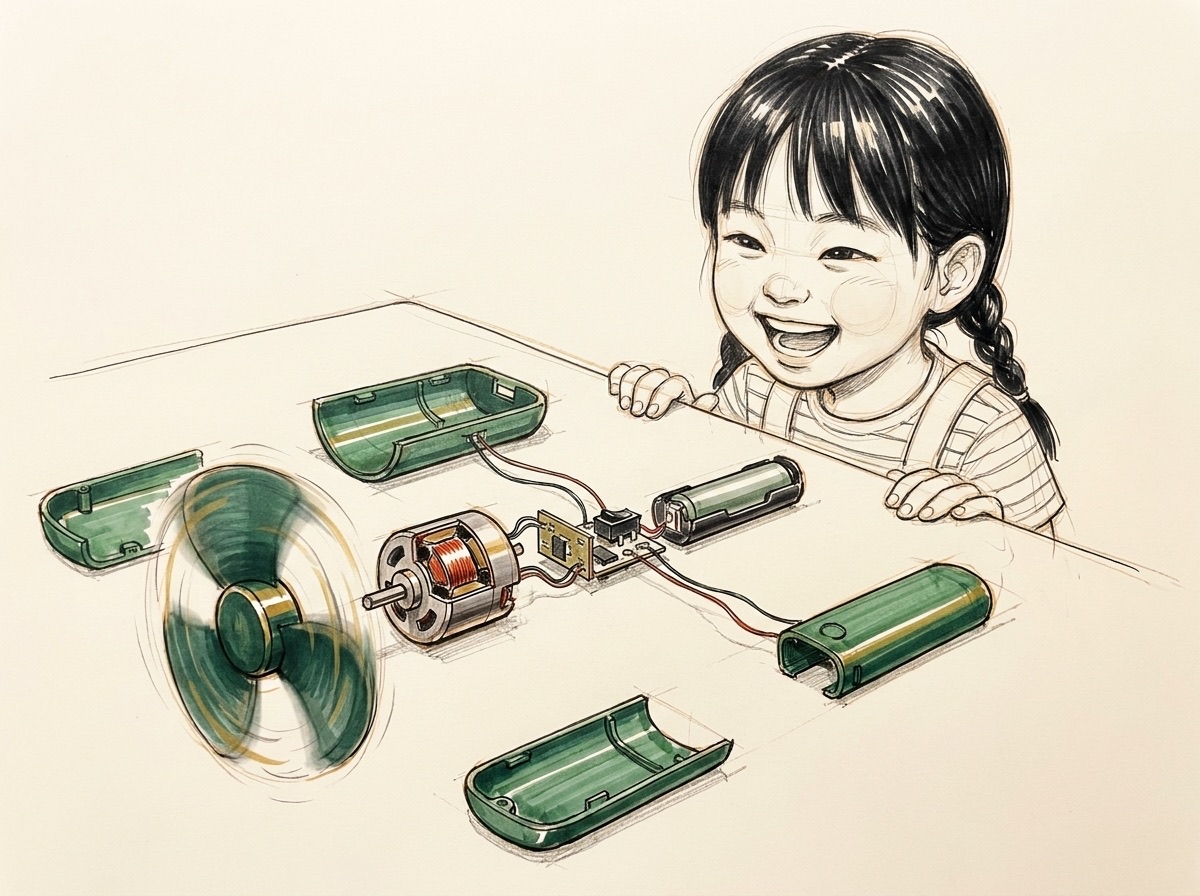
  • Handheld FanTake apart

    An ordinary store-bought handheld fan, taken down to its individual parts. For the first time, children see inside a motor: the coils, the magnets, the commutator. They come to understand that electricity itself does not spin. Current turns the coil into a magnet, magnets push against each other, and that is what makes it turn. Every wire between the parts is kept, so once the fan is spread out and powered up, the blades still spin. Then comes a second question: when you press the button to change the speed, what exactly does it change?

    Concept render of the handheld fan: parts laid out in a row on the table, still wired together, with the blades spinning
    Concept illustration. Actual projects are the ones students complete in class.
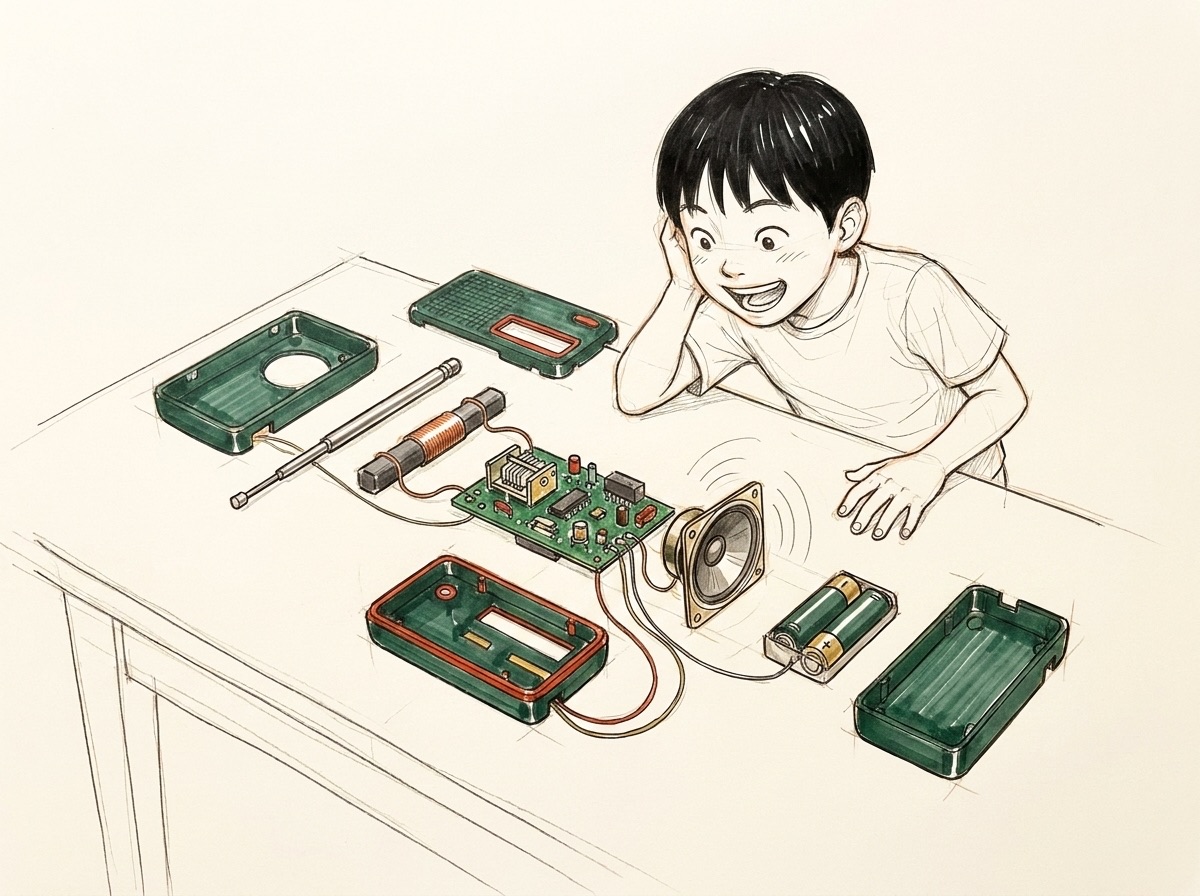
  • Pocket RadioTake apart

    The most abstract day of the week, which is why it comes after children have already handled a motor. First they turn the dial and listen as the radio pulls a station out of the static. Then they open it up: how invisible radio waves in the air are picked up by a coil, and how they pass through the speaker’s electromagnet and paper cone to become vibrations the ear can hear. All the wiring stays connected, so the radio still plays while spread across the table. The day before was “electricity becomes motion”; this day is “electricity becomes sound”.

    Concept render of the pocket radio: parts spread across the table, still wired, with a child leaning in to listen to the speaker
    Concept illustration. Actual projects are the ones students complete in class.
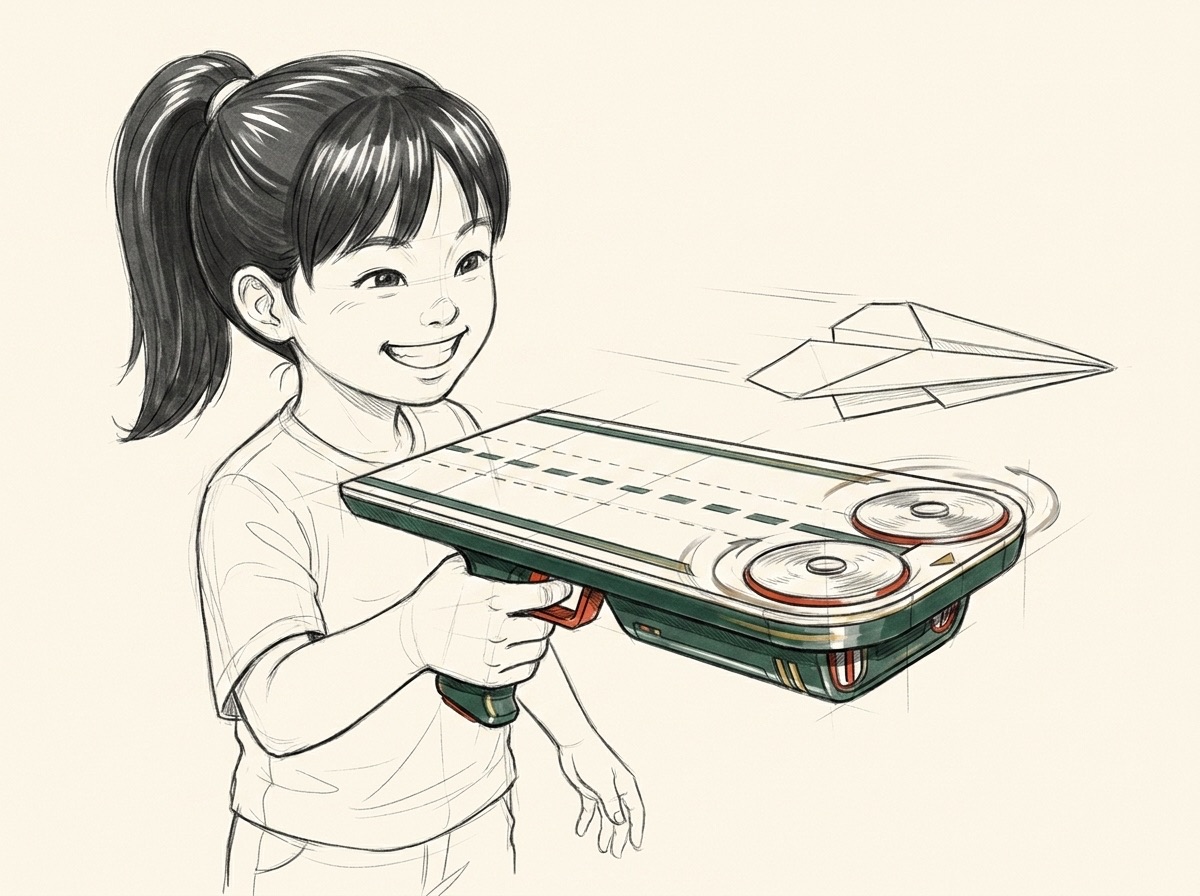
  • Flight-Deck Paper Plane LauncherBuild

    The finale of the week. Children assemble a paper plane launcher shaped like a miniature aircraft carrier: a flat flight deck on top where the plane waits, and two horizontal wheels at the front edge spinning fast in opposite directions. Pull the trigger and the wheel rims grip the plane and fling it off the deck. The motor they understood while taking apart the fan on day three now becomes the power source in their own hands. The rest of the time goes to testing: which wing fold and which launch angle make the plane fly farthest.

    Concept render of the flight-deck paper plane launcher: like a miniature aircraft carrier, launching a paper plane off its deck
    Concept illustration. Actual projects are the ones students complete in class.
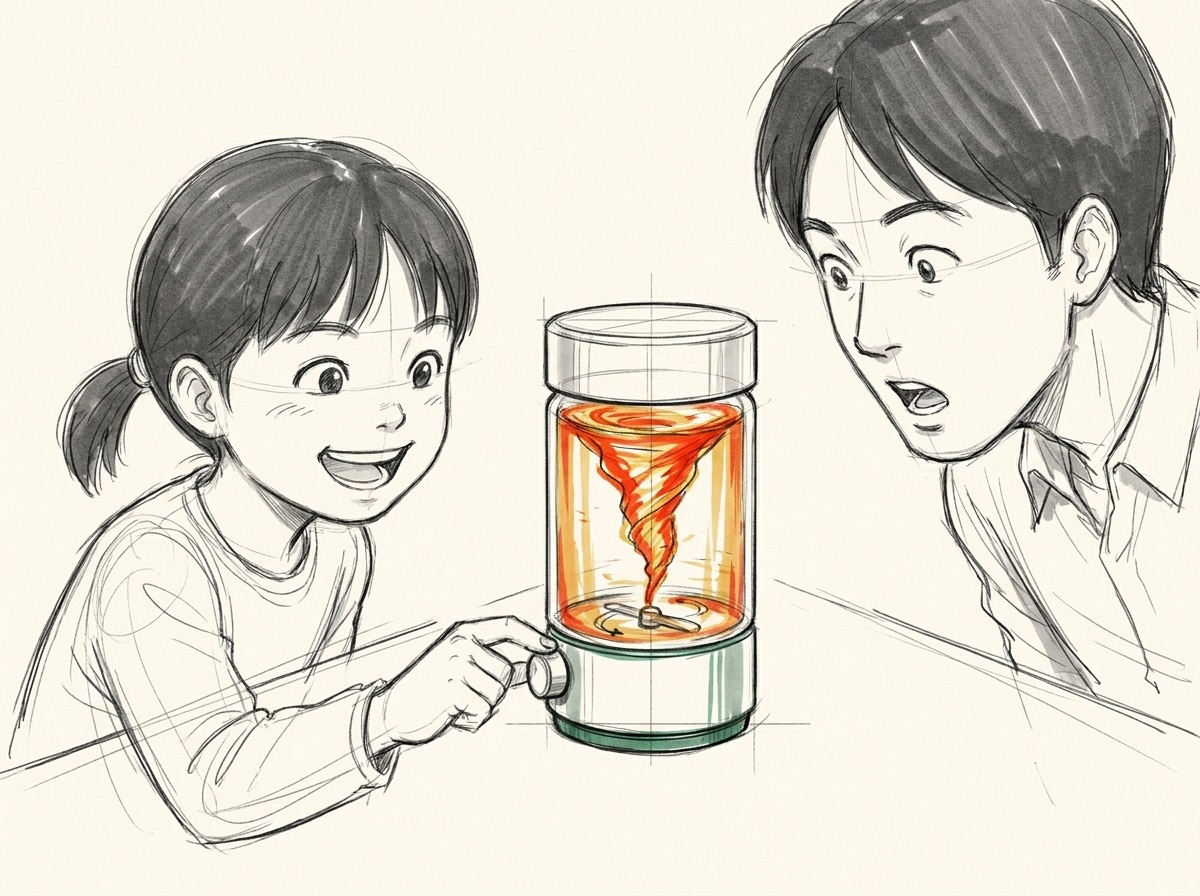
  • Tornado in a JarBuild

    A fully sealed clear jar holding a chain of chemical reactions that never runs out. Turn the knob and a colour-changing tornado swirls up inside; stop, and the colour fades; turn it again, and it comes back.

    Concept render of the tornado in a jar: a child turns a knob and a colour-changing tornado swirls inside a sealed jar while a parent looks on in surprise
    Concept illustration. Actual projects are the ones students complete in class.

§ 03

EnrollmentEnrollment

Dates and fees

2027 Winter · One Session

Dates

Sat, Jan 30 – Wed, Feb 3, 2027 (5 days)

Five consecutive days, including the weekend of Jan 30–31

Hours

09:00 – 16:00 daily

Includes a one-hour lunch break

Who

Grades 1–6

Where

STARK Lab, Anping, Tainan

417 Guoping Rd., Anping District, Tainan

Fee

NT$12,500 per child

  • Includes lunch and all lab materials
  • Covers every device used over the five days, the specimen box and all finished projects taken home
  • Stored Value 2.0 points can be applied
§ 04

FAQFAQ

Questions parents ask

QIs taking apart electrical devices dangerous?
Every device is prepared by our teachers before it reaches the classroom: power cords and any battery or charge-storing parts are removed. Children use child-sized tools throughout, work alongside a teacher and teaching assistants, and never come into contact with mains electricity.
QCan my child handle it?
The program deliberately avoids steps that require fine handcraft. Taking things apart cannot fail, and the parts for each build are pre-machined to fit. Children take apart, observe, assemble and adjust, with visible progress every day.
QAre the product images on this page the actual finished projects?
No. All product images on this page are concept illustrations from the design stage, used to show how each device is built and how it works. The actual projects are the ones students complete in class, and their appearance and details will differ.
QCould anything leak out of the jar?
No. The jar is screwed shut and sealed with glue in class, and it is never opened afterwards, so children do not come into contact with the contents.
QWhat does the fee include?
The fee of NT$12,500 includes lunch and all lab materials: every device used over the five days, the specimen box and all the finished projects children take home. There are no other charges.

Tinker Lab · 2027 Winter

This winter,
a chance to open things up

Places are limited. Enrollment and payment can be completed online.

Have a question first? Ask us on LINE · 417 Guoping Rd., Anping District, Tainan