Intensive Winter Training
Dates
Thu, Jan 21 – Fri, Jan 22 + Mon, Jan 25 – Fri, Jan 29, 2027
7 days in total, with the weekend off
Hours
09:00 – 16:00 daily (includes a one-hour lunch break)
Where
STARK Lab, Anping, Tainan

§ PROGRAMS · SCIENCE INQUIRY COMPETITION TRAINING
Grade 4 – Grade 12
A national science competition that values creative expression: from one question and one set of experiments to a project that explains itself clearly.
2 competitions · 9 national awards · winners at all 3 school levels
§ 01
Coaching RecordTrack Record
From elementary to high school, children at every level have taken the stage. Award names follow the official competition announcements.
2026
National Bronze
Junior high
2026
National Silver
High school
2025
National runner-up
Elementary
2026
Distinction × 2
Elementary
2026
AVC Sustainability Award
Elementary
2026
Digital Measurement Award
Elementary
2025
Honourable mention × 2
High school
What an award-winning project looks like
Could popcorn replace Styrofoam? The children ground and sieved popcorn, pressed it into moulds with a natural binder, then tested its insulation, cushioning and fire resistance, turning an environmental question into a complete research project. The report was hand-drawn throughout and the video acted by the children themselves: this is the kind of science children who can express themselves create.
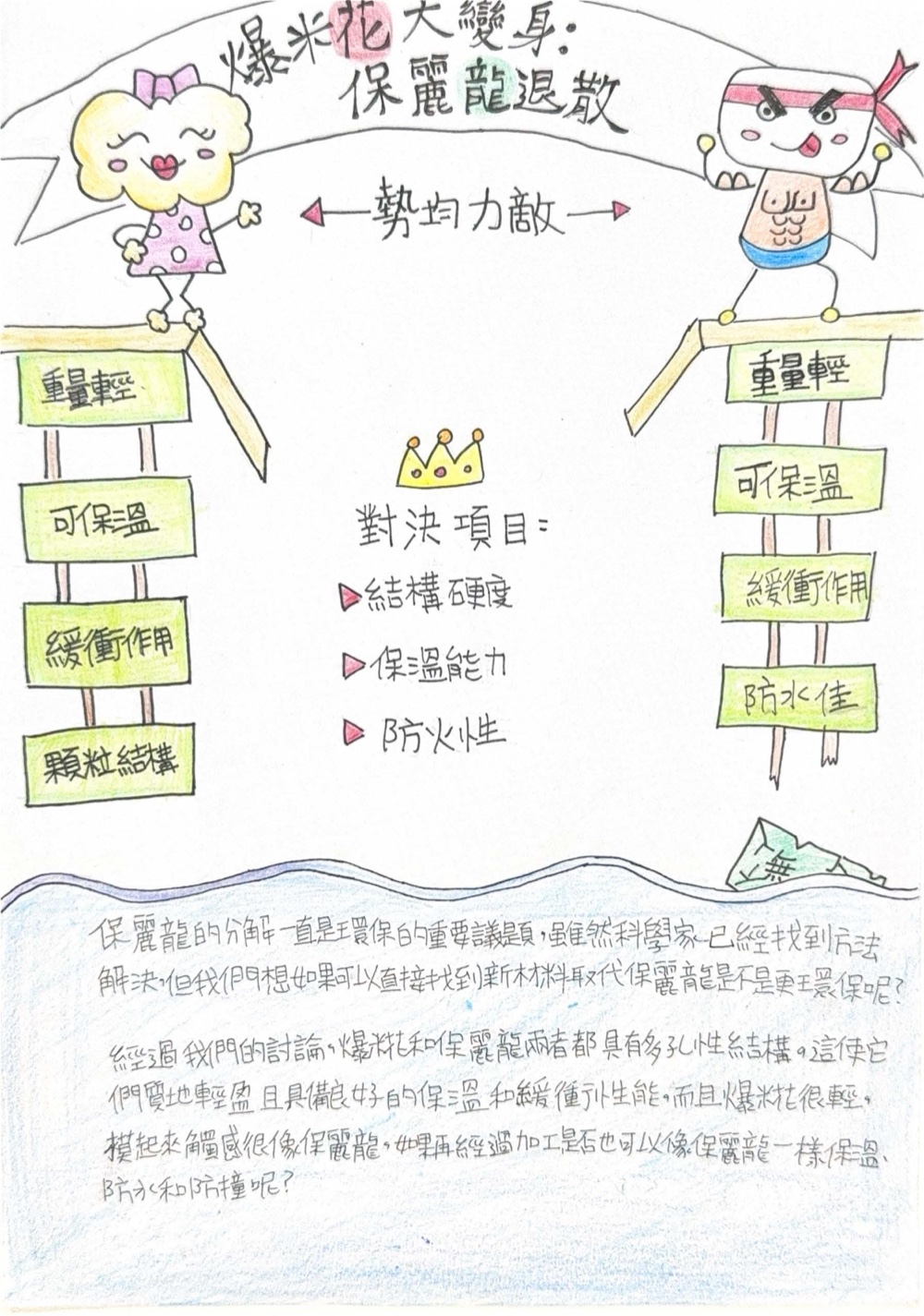
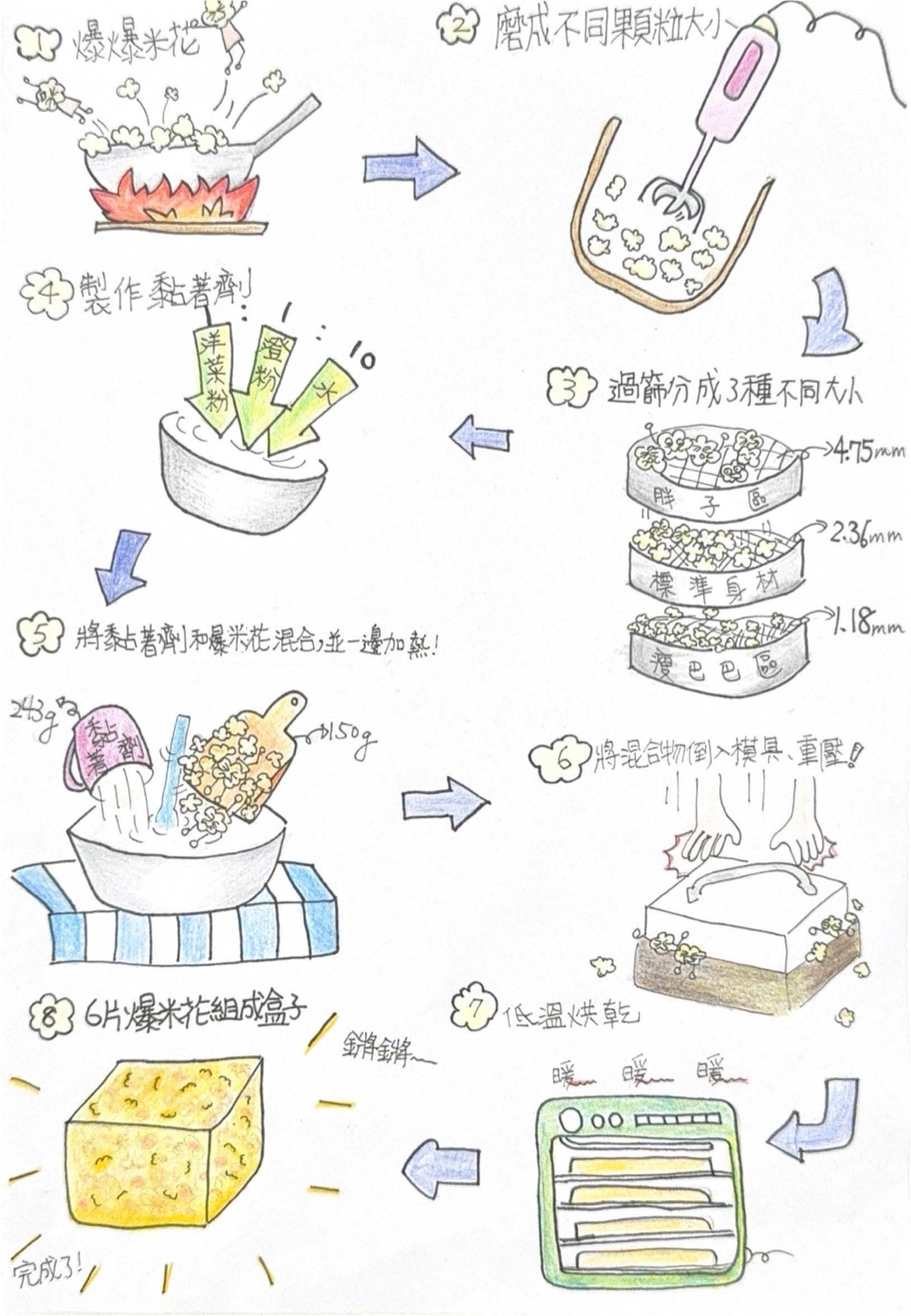
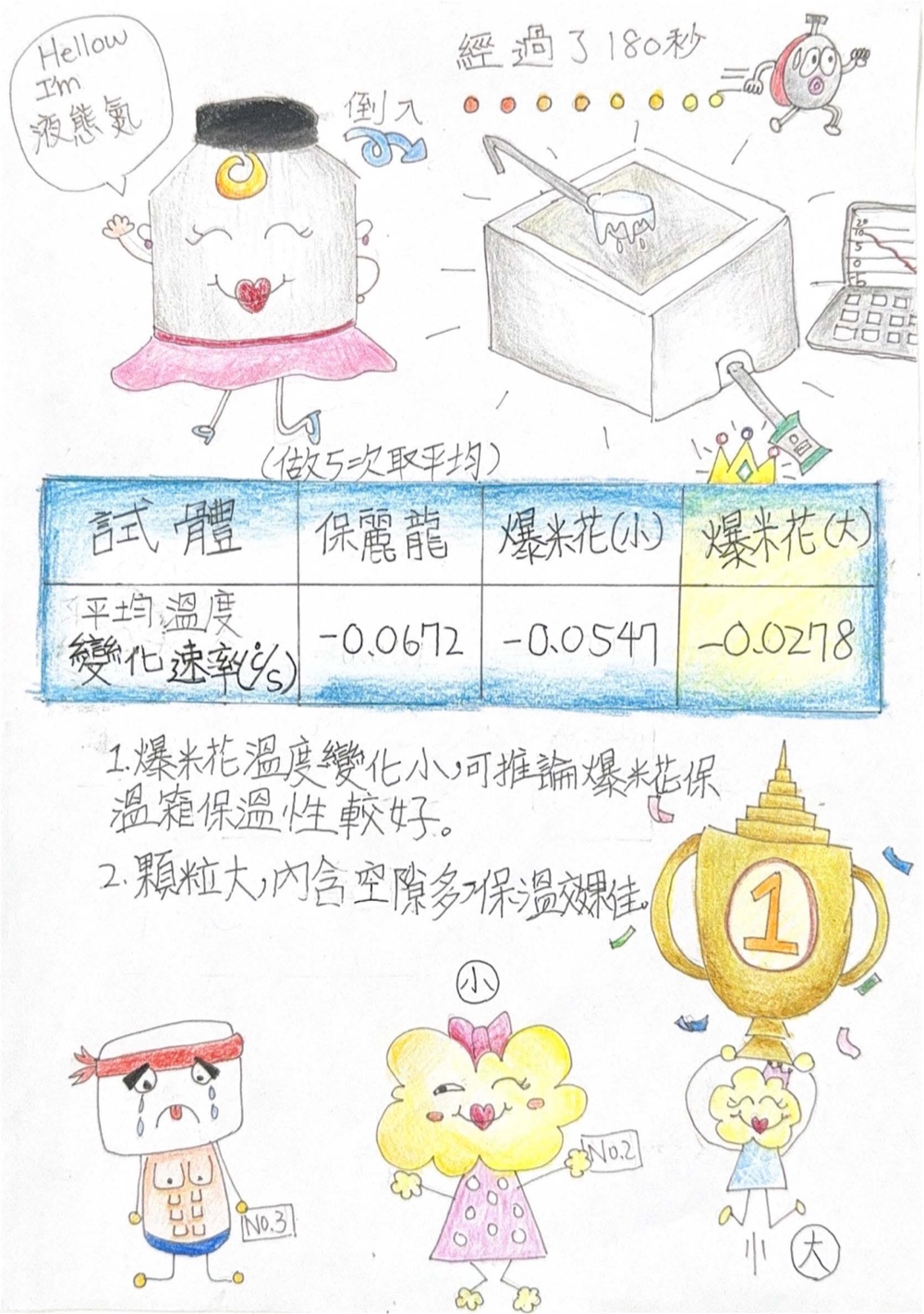
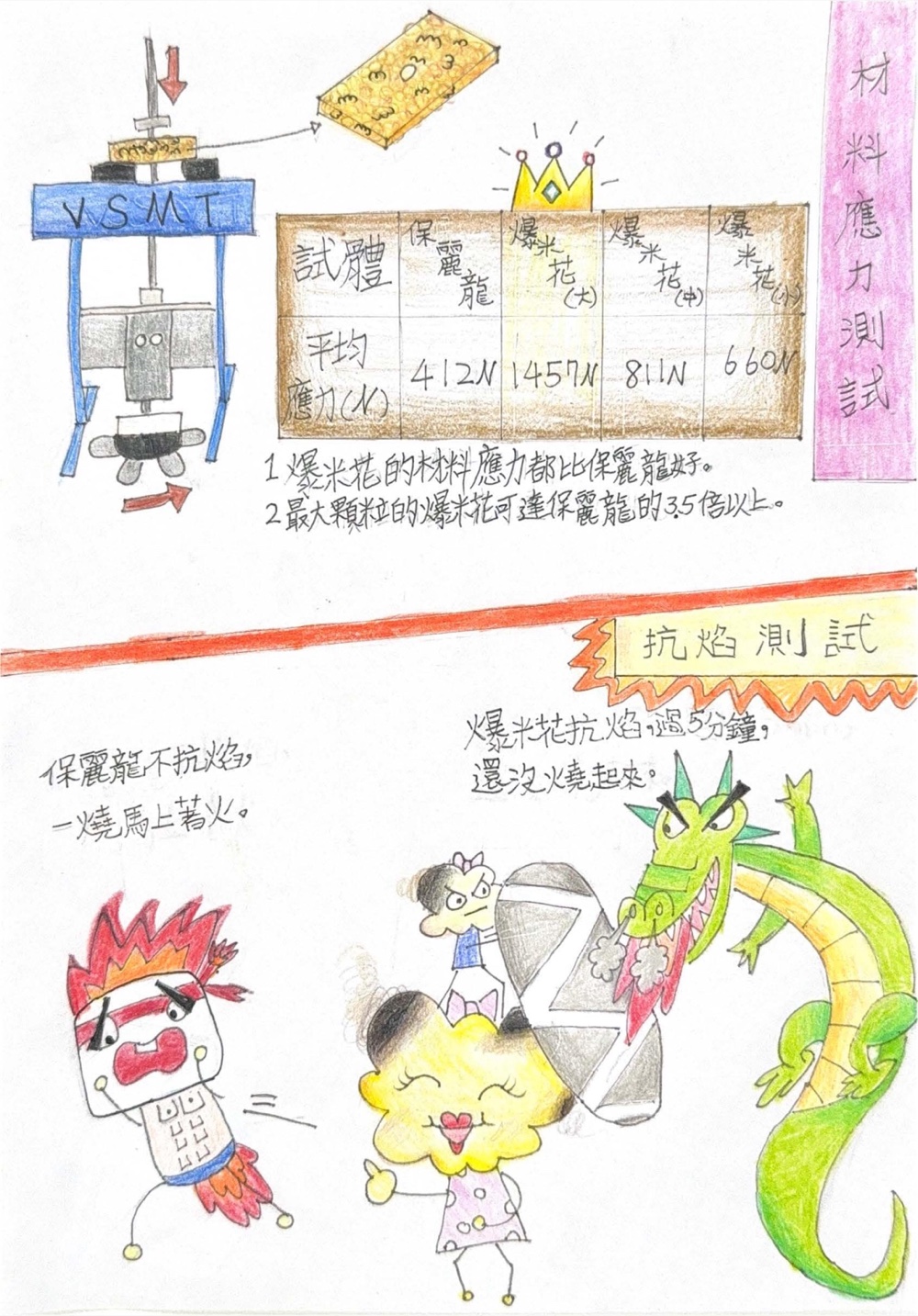
Pages from the hand-drawn research report
§ 02
About the CompetitionThe Competition
The National Science Inquiry Competition, a nationwide science inquiry event held every year (about the competition ›)
What kind of competition is it?
What do children do themselves?
Is it right for my child?
What stays with them afterwards?

§ 03
Who It’s ForWho It's For
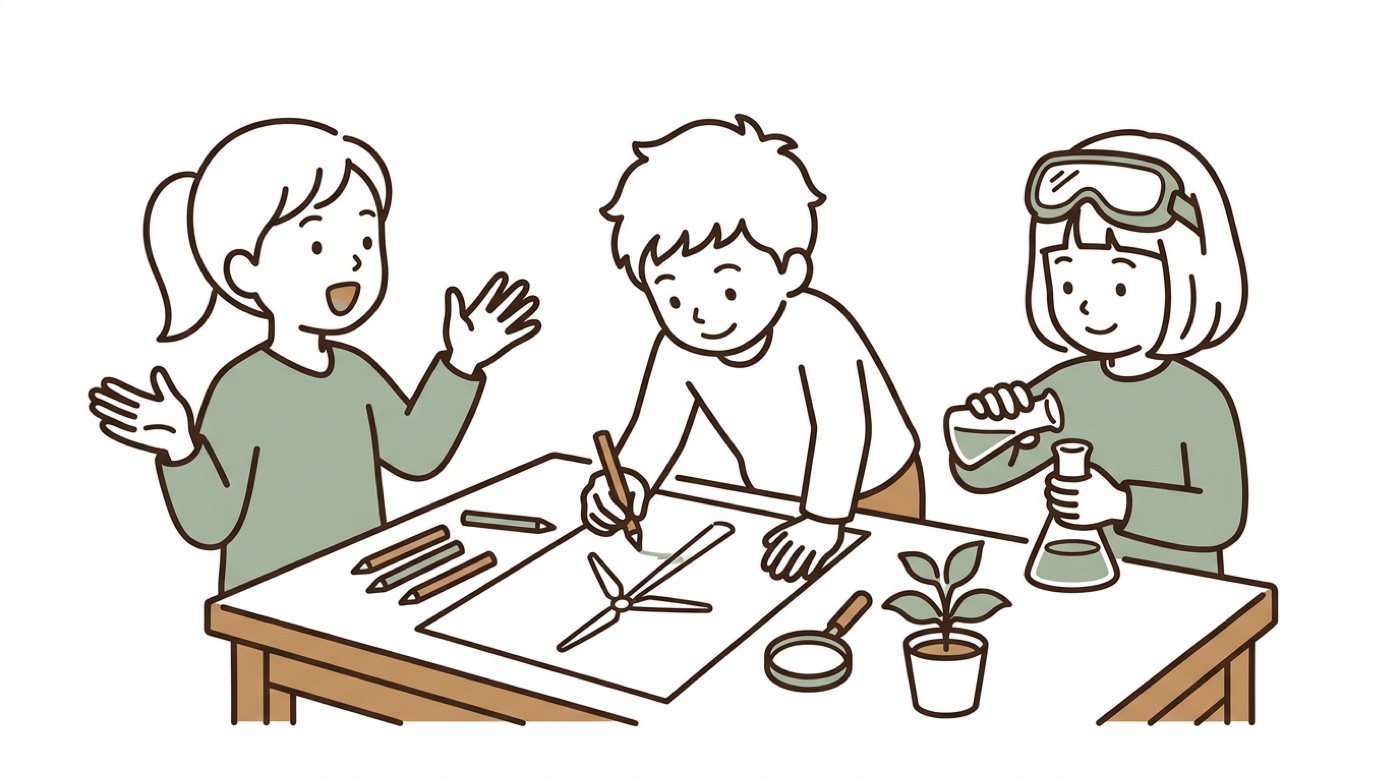
No research experience needed, just the urge to figure something out
Elementary, junior high and high school compete separately, and the course adjusts its depth for each level.
Not minding experiments and being willing to share ideas out loud are what matter most.
A moderate research scale and shorter preparation make it a complete warm-up before a science fair.
Eligibility
Competition training runs on project accountability (every team must deliver a complete project by the deadline), so places are reserved for children we already know: current STARK Lab regular-class students, or those who have completed Research Talent Training or VSTC Digital Measurement Certification. Any one of these qualifies. Children who do not yet qualify are welcome to start with either of those two courses, which are also the best preparation for this competition.
Teams
Generally 2 to 3 children per team, and cross-school teams are welcome. If your child already has a friend to team up with, we respect that; if not, there is nothing to worry about. Teachers help form teams among the children who enrol, based on each child’s strengths.
Research topics
Any field is possible: physics, chemistry, biology, and engineering design. Topics start from the child’s own curiosity, and the teacher’s role is to ask questions: helping children narrow a topic that is too big, sharpen one that is too vague, and confirm it fits the competition rules.
§ 04
CurriculumCurriculum
From a single question to a project that explains itself clearly
PHASE 01
Turning curiosity into a question you can test by hand · Turning “better” into a number you can measure · Changing one condition at a time, keeping everything else the same
PHASE 02
Measuring, recording and repeating by hand · Making sense of data that does not match expectations · Using charts so conclusions hold up
PHASE 03
The structure and logic of a research report · Writing the process so others can follow it · Checking and revising against competition rules
PHASE 04
The first round is judged on video · Storyboard planning · Filming and visual design · Editing and narrative pacing

§ 05
InstrumentsInstruments
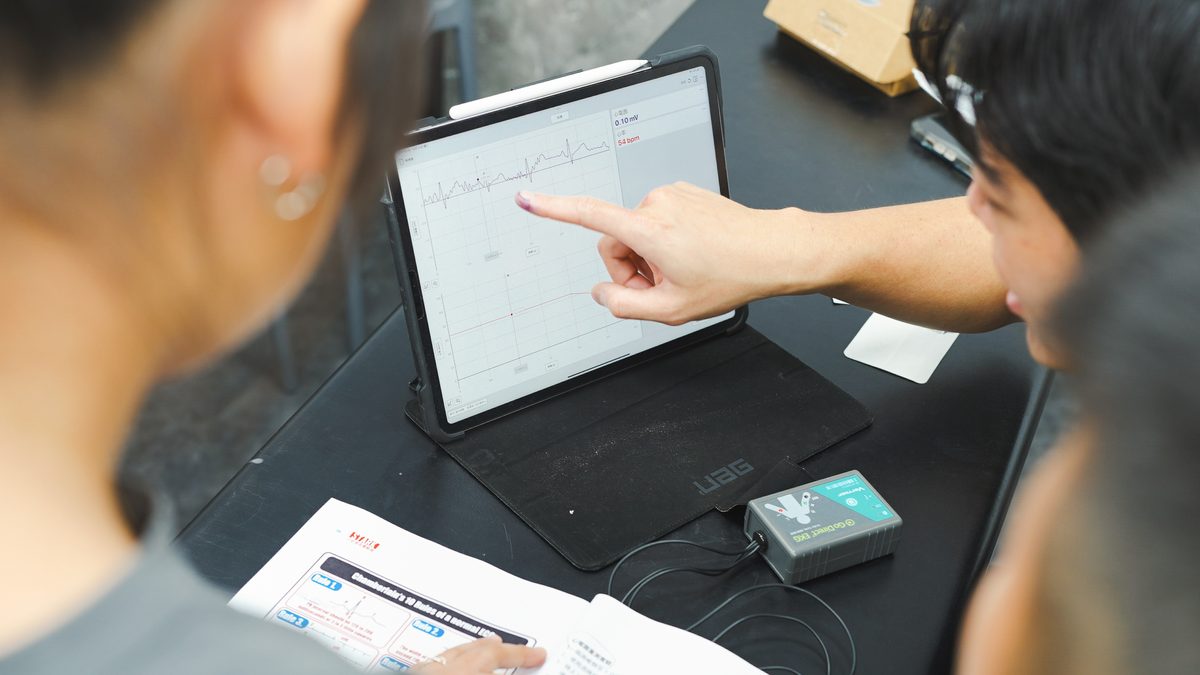
Children have full use of the professional Vernier scientific sensors the lab has purchased
Inquiry often succeeds or fails not on the idea, but on “whether you can measure precisely enough”. The lab is equipped with Vernier sensors for force and acceleration, spectrometry, three-axis magnetic fields, temperature, energy, wide-range motion, gas pressure, pH, carbon dioxide, oxygen, colorimetry and more, all fully available to children in the training.
Vernier is an international science-education measurement brand with forty years of history, and its resolution and sampling rates are good enough for real research, so children’s data is not distorted by the equipment. Learning to let instruments speak for them is one of the abilities this course aims to leave with children.
§ 06
From FamiliesFrom Parents

§ 07
Timeline & FeesEnrollment
The seven days of training are only the start. Based on the past two competitions, the season roughly runs like this
Registration opens in the autumn; teams and topic directions are settled by mid-December, so children arrive at training with a clear question.
The core of the experiment design, measurement and data analysis is completed in these seven days.
February and March are for wrapping up and filming at each team’s own pace, with submission by early April.
Teams that advance get added practice in oral presentation and Q&A, at no extra charge.
Children take their own research to the stage and present the year’s work to the judges.

Dates
Thu, Jan 21 – Fri, Jan 22 + Mon, Jan 25 – Fri, Jan 29, 2027
7 days in total, with the weekend off
Hours
09:00 – 16:00 daily (includes a one-hour lunch break)
Where
STARK Lab, Anping, Tainan
The fee covers a whole season
The fee is paid once, with nothing added from topic selection in December to the final in June, not just for the seven days in winter.
Elementary
NT$22,000 per child
Junior high
NT$25,000 per child
High school
NT$30,000 per child
Equipment deposit
NT$10,000, charged separately
Places are limited and enrollment closes when full. These are the official 2027 fees and will not increase after enrollment.
§ 08
FAQFAQ
If your question is not answered here, you can ask STARK Lab directly on LINE
Class times, fees, whether your child is a good fit:
any question is welcome on LINE.
@starklab
STARK Lab · 417 Guoping Rd., Anping District, Tainan