Add LINE →

§ NEUROSCIENCE · BRAIN-SCIENCE STUDY SKILLS

It is not about being clever enough.
No one has taught them how to use their brain

A five-day camp that uses brain science to help children build a study method that actually works. The 2027 winter session is for the middle and upper elementary grades (roughly Grades 3–6).

  • Sat, Jan 30 – Wed, Feb 3
  • 09:00 – 17:00 daily
  • Main campus, Anping, Tainan
  • NT$9,900
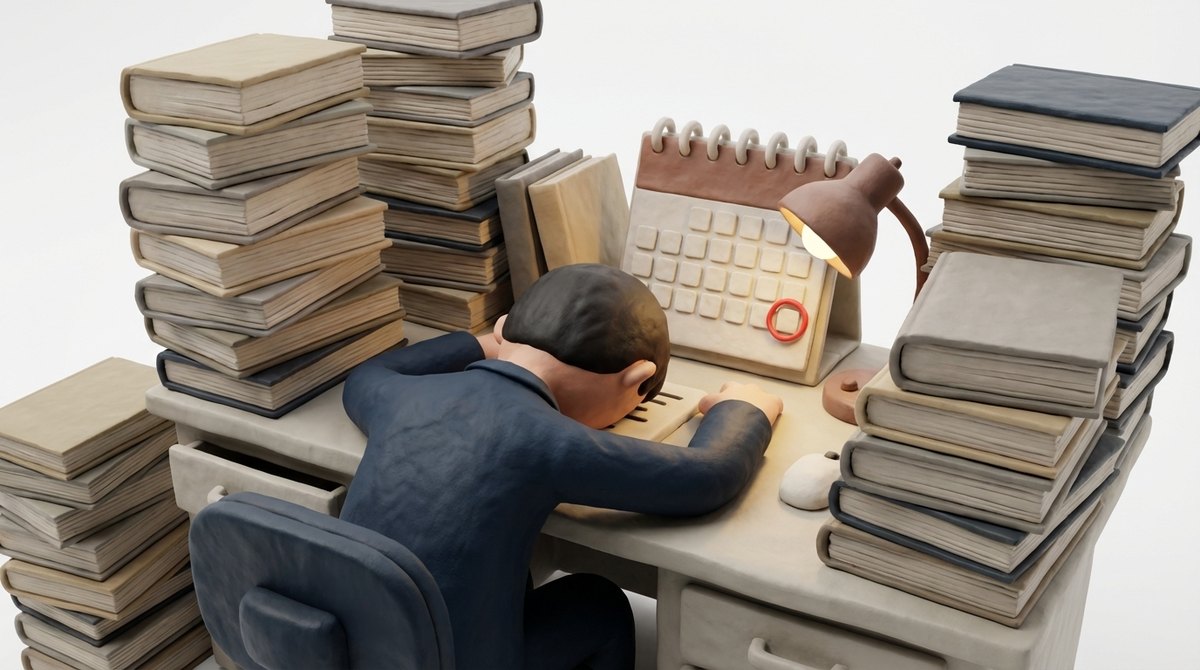
Key visual for the five-day Brain-Science Study Skills Camp

§ 01

AboutWhy

The root of the problem is not attitude. It is how the brain is used

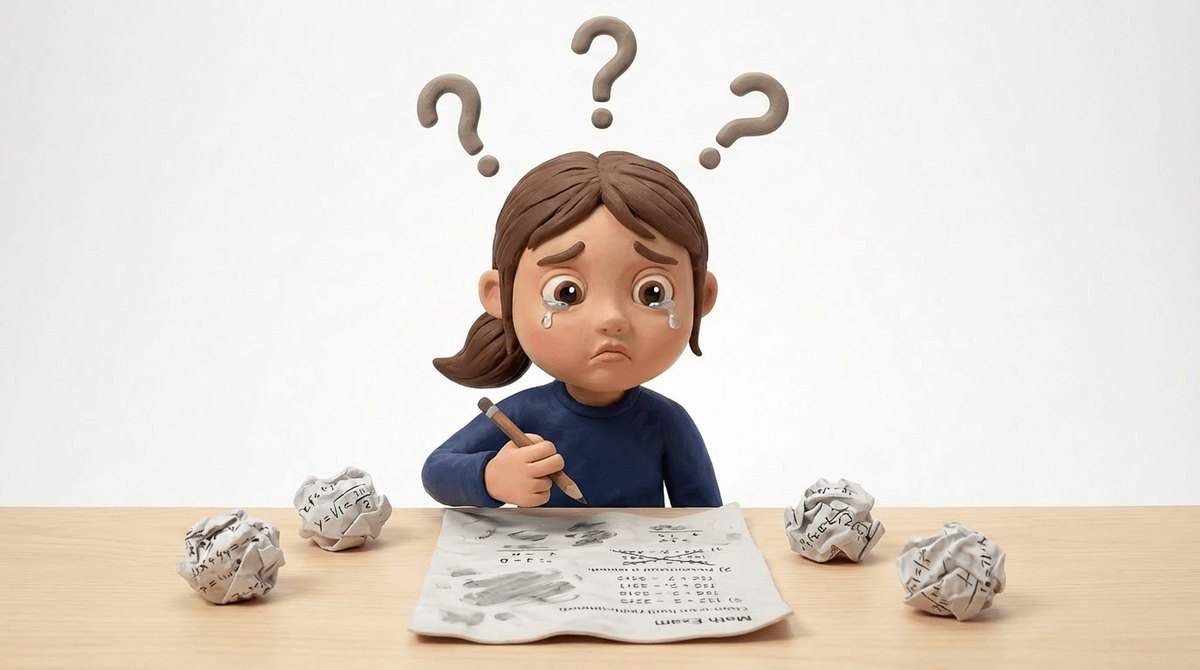
Does your child often say things like: “I studied really hard, but the test still went badly”, “I keep doing practice problems but don’t feel I’m improving”, or does picking up the phone mean it never goes down, and getting them to study feels like a battle?

The root of these problems is not attitude. It is how the brain is being used.

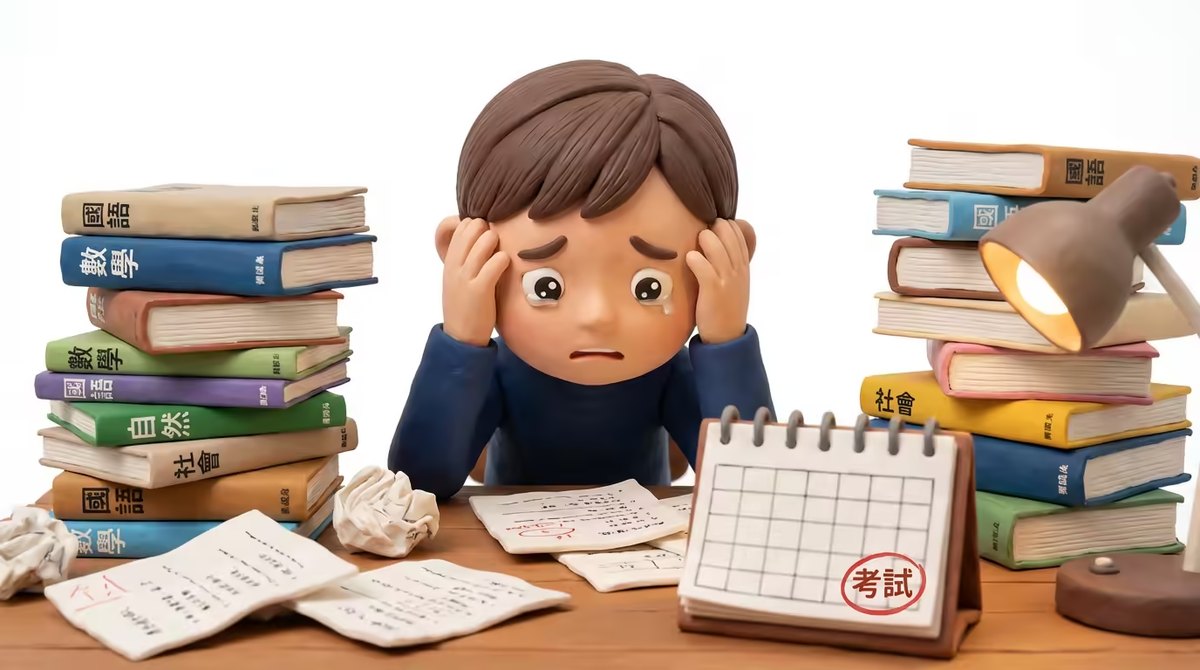
Illustration of a child working hard at a desk

§ 02

What Parents Tell UsPain Points

Do any of these sound familiar at home?

If even one of these is happening, this is something we can help with

  • They know how to solve it, yet make careless mistakes every time. “I’ll be more careful next time,” they say, and next time it happens again.

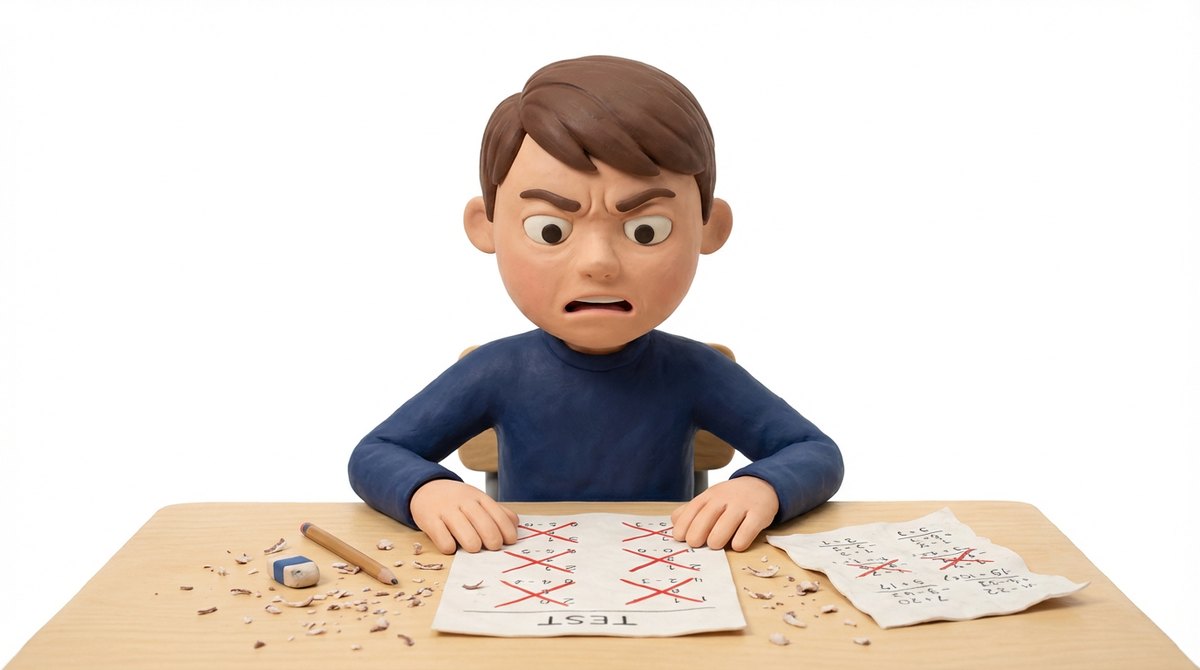
    Illustration of a child making a careless mistake on a problem they know how to solve
  • Asked to study, they stall: scrolling the phone, sharpening pencils, one more trip to the bathroom, until the work is rushed at the last minute.

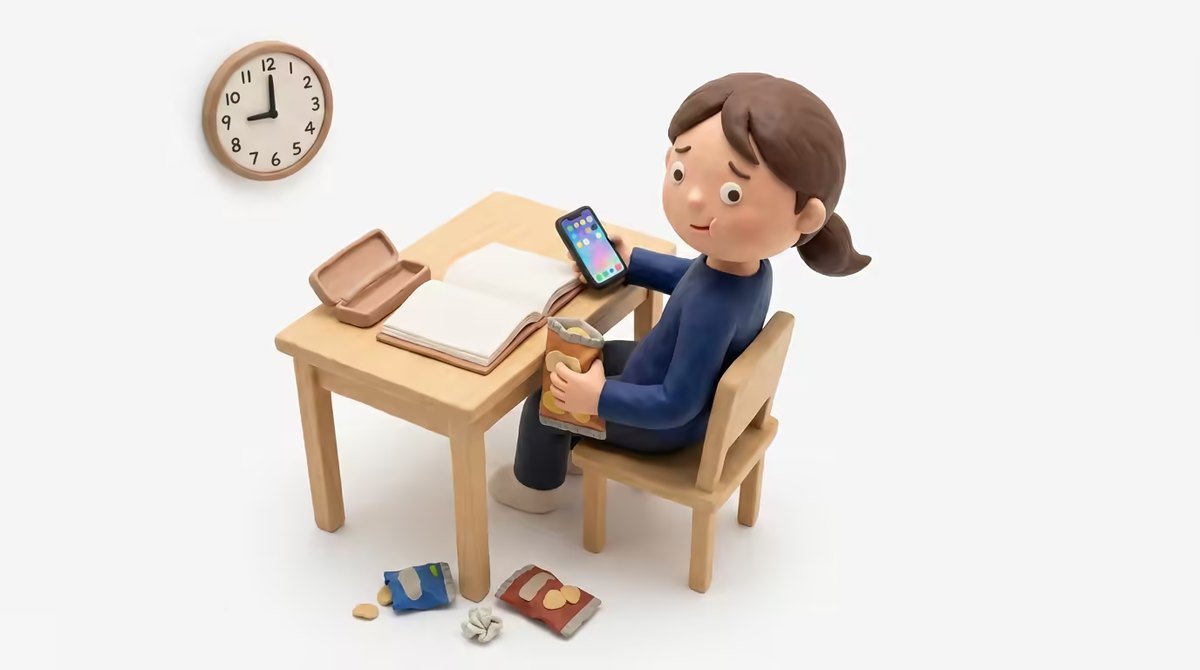
    Illustration of a child putting off studying
  • They do not know how to plan study time, cram the night before every test, and forget it all once the test is over.

    Illustration of a child who cannot plan study time and crams right before a test

§ 03

Stuck in Every SubjectBy Subject

Every subject gets stuck for a different reason

  • MathWhere it sticks

    The problem type was taught in class, but word it differently and they are lost.

    Illustration of a child stuck when a familiar math problem is worded differently
  • Chinese / Social StudiesWhere it sticks

    They read the text three times, yet cannot say what the main point is.

    Illustration of a child who has read a text three times but cannot state its main point
  • ScienceWhere it sticks

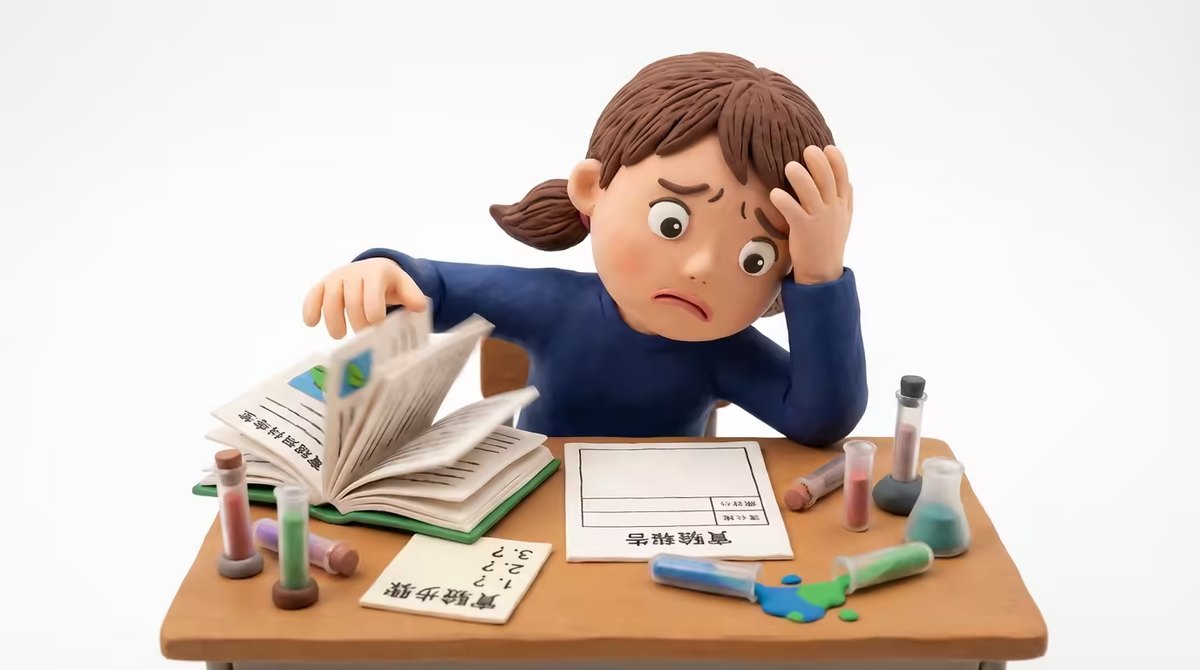
    They memorise the experiment steps and forget them, and do not know how to write a lab report.

    Illustration of a child memorising and forgetting experiment steps
  • EnglishWhere it sticks

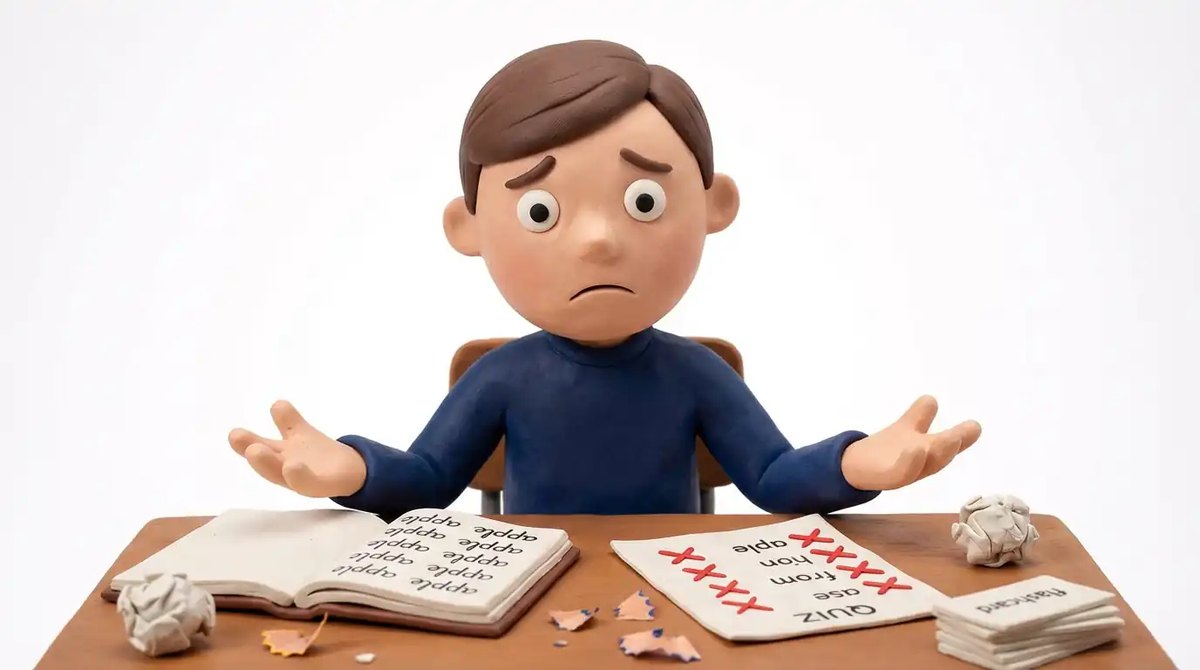
    They practise each word a hundred times and still get half of them wrong in the next day’s spelling test.

    Illustration of a child who has practised vocabulary a hundred times but still misspells it the next day

§ 04

The Hard TruthForgetting

Memorised it and still forgot?
That is not your child’s fault

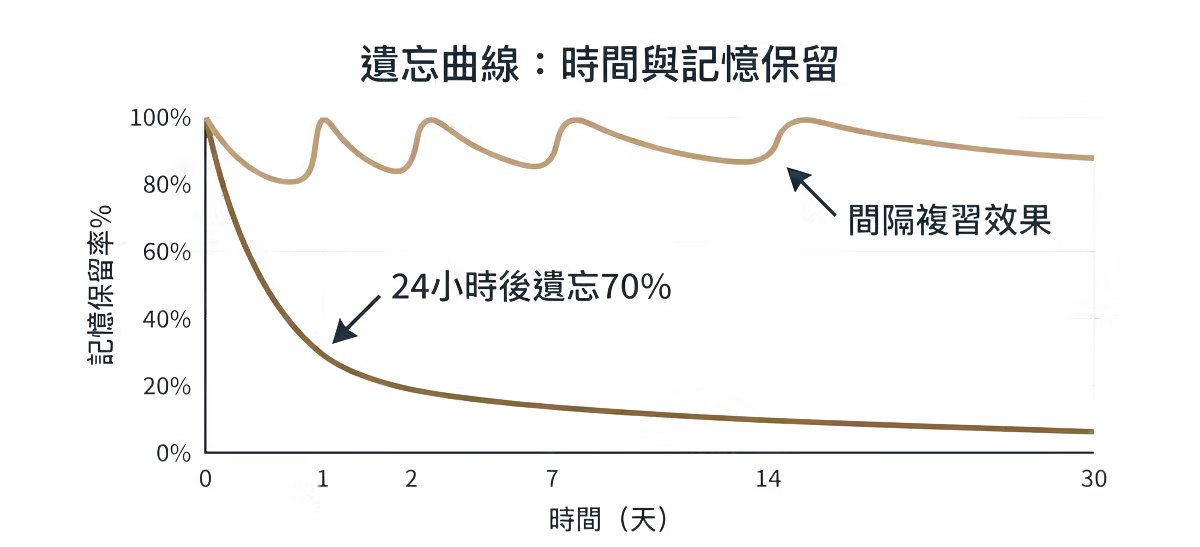
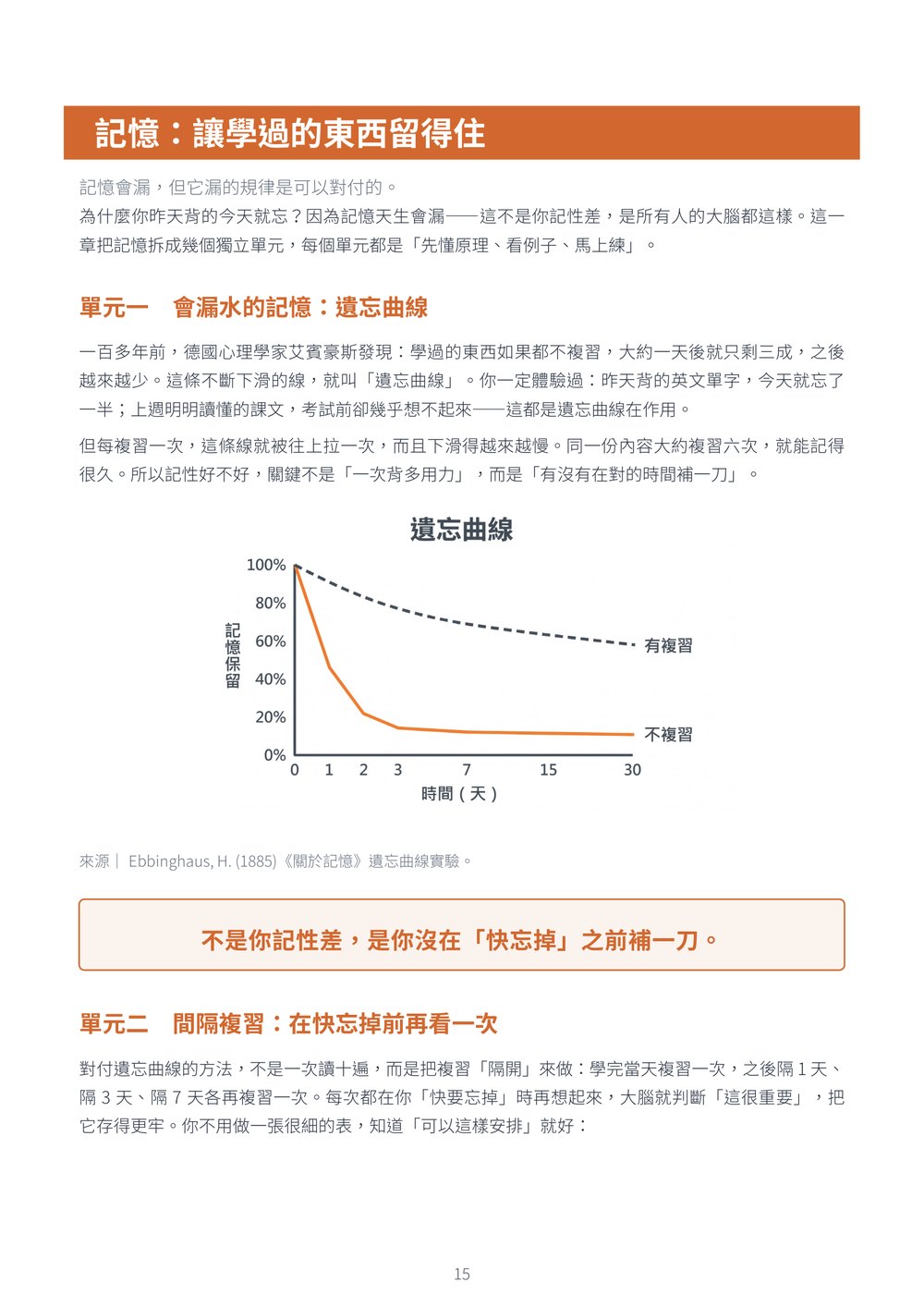
Twenty-four hours after memorising something, anyone will have forgotten about 70% of it. That is not a bad memory; it is simply how the brain works.

The question is not “why can’t they remember”, but “has anyone taught them the right way to remember”.

The Ebbinghaus forgetting curve: without review, about 70% is forgotten after 24 hours

§ 05

The Turning PointThe Brain

Behind all of these problems
is how the brain is used

It is not that children do not try. No one has taught them how the brain works

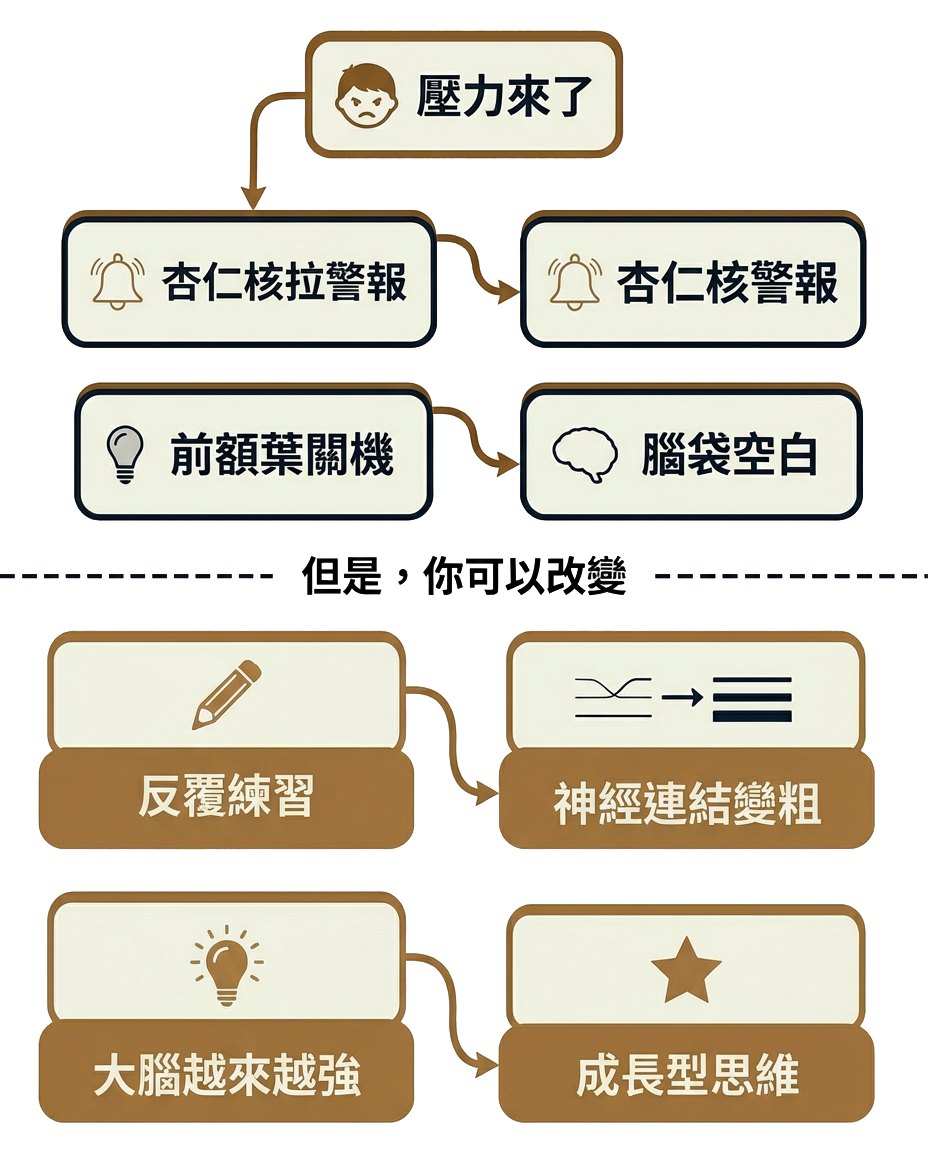
Inside your brain is a “nervous security guard”: the amygdala. When you are stressed, it switches off your “thinking switch”. That is why a child who can answer everything at home goes completely blank in the exam room.

The brain is like a muscle: the more it trains, the stronger it gets. Many children say “I just can’t do it anyway”. Scientists call this “learned helplessness”: the brain has “learned” to give up.

The first step of this course is to let children know: you are not stupid; no one had taught you the right method before.

Brain mechanism flowchart: stress triggers the amygdala alarm and shuts down the prefrontal cortex; practice thickens neural connections and builds a growth mindset

§ 06

Phones and the BrainDopamine

How short videos steal children’s brainpower

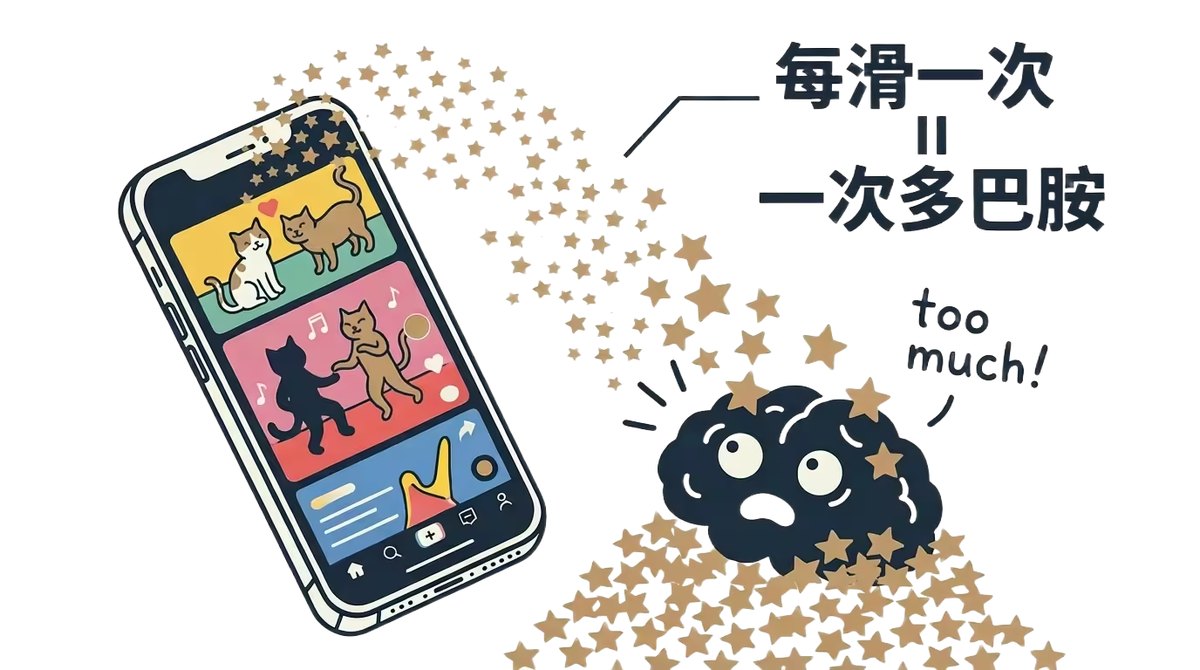
The brain has a chemical called dopamine, a bit like “happy points”. Short videos hand the brain a round of happy points every ten seconds or so, with no effort at all. Over time the brain gets used to “something new every few seconds”.

Diagram of short videos giving the brain a large dopamine hit with every swipe

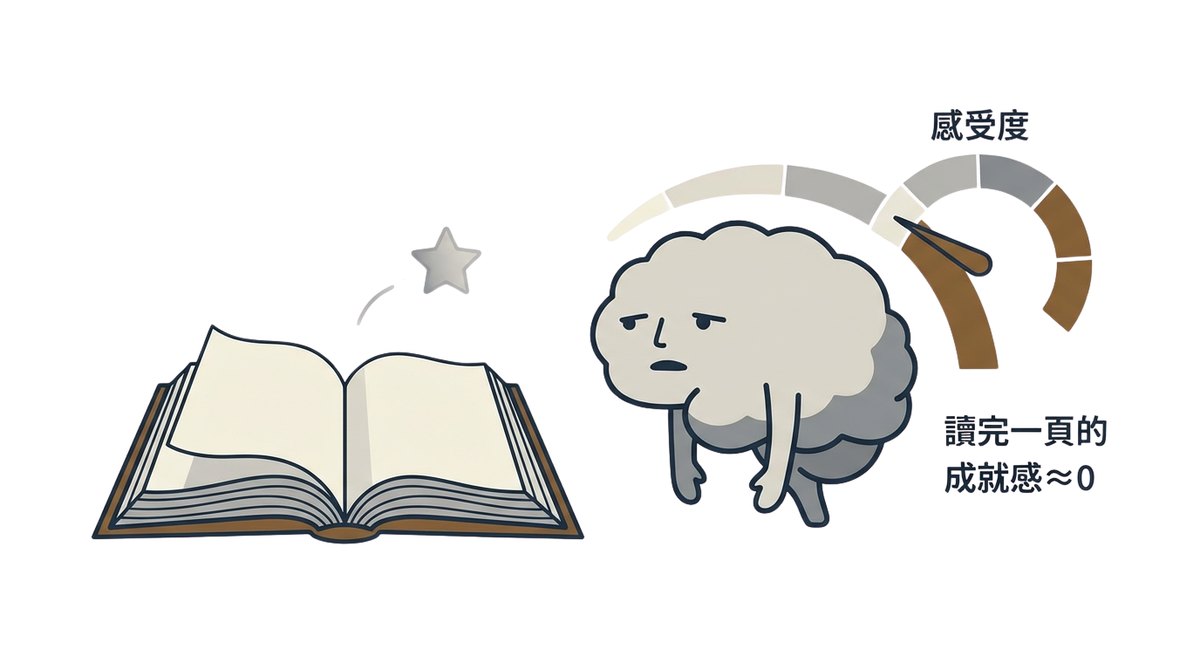
When short videos give out too many points, the brain turns its sensitivity down. The result: the sense of accomplishment from finishing a page of a textbook becomes so small it barely registers.

Diagram showing that, after short videos, the satisfaction of reading a textbook drops close to zero

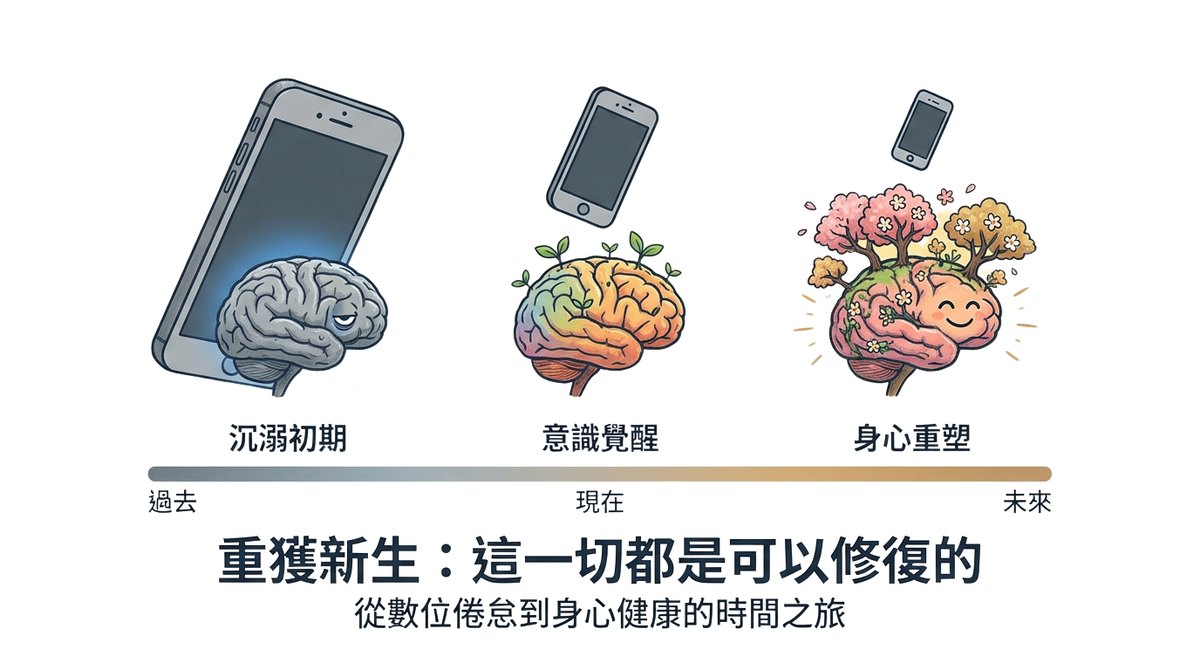
The good news: the brain can recover, with the right methods.

Timeline diagram of the brain gradually returning to normal sensitivity after less phone use

§ 07

Course MaterialsMaterials

Methods are invisible. The handbook is not

Actual pages from the elementary handbook, not mock-ups

Cover of the Brain-Science Study Skills Camp handbook
Handbook cover “It’s not that you can’t. You just can’t yet.” The theme of all five days is written on the cover.
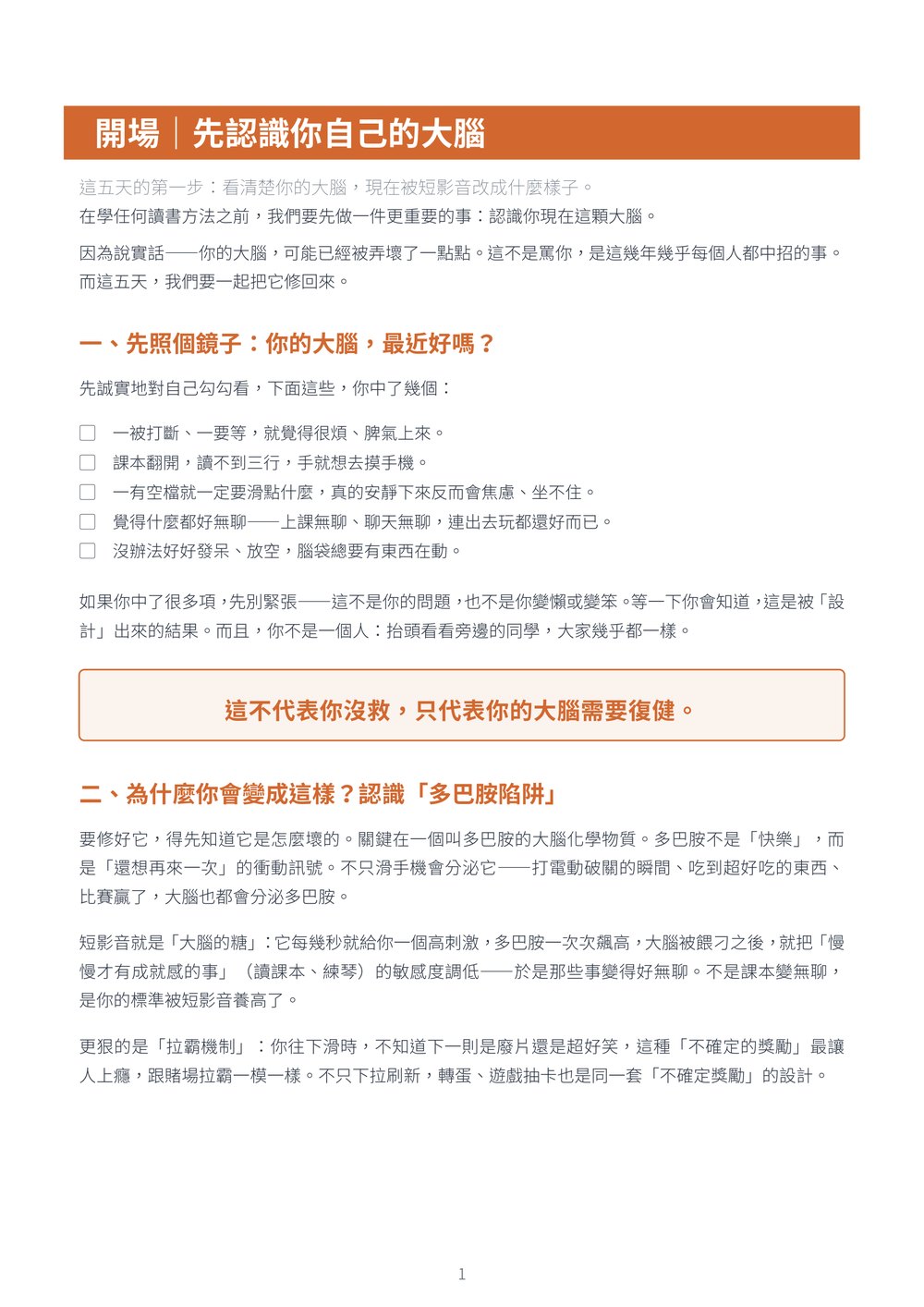
Handbook page: the opening unit “Meet your own brain”, with a self-check list and an explanation of the dopamine trap
Opening | Meet your own brain The first page holds up a mirror: getting interrupted, flipping pages, not sitting still. Once children tick the boxes, they see they are not the only ones.
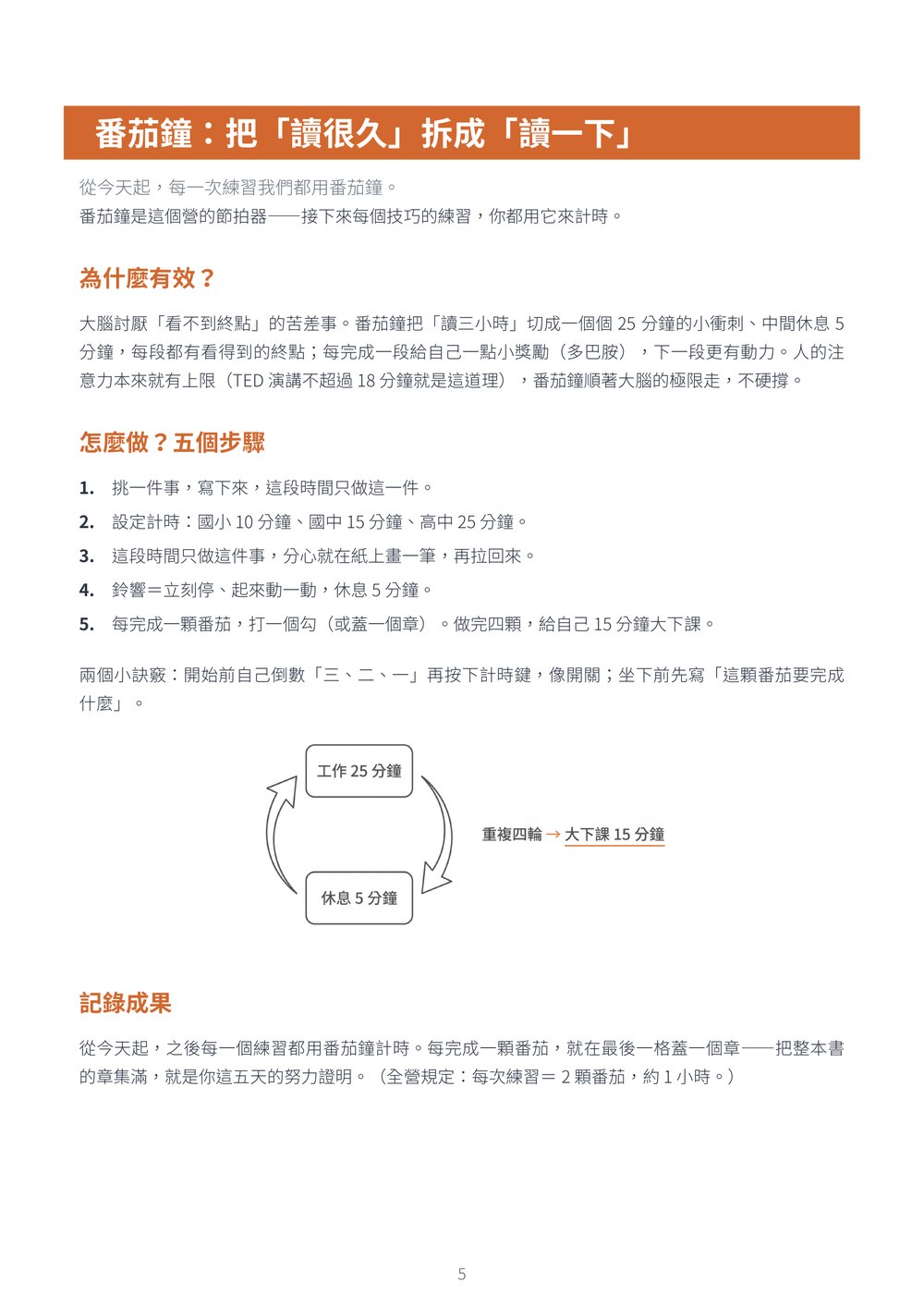
Handbook page: the Pomodoro unit, turning “studying for a long time” into “studying for a bit”, with five steps and a cycle diagram
Pomodoro | From “study for ages” to “study for a bit” Each method sets out why it works and how to do it, and children run a full timed round that same day.
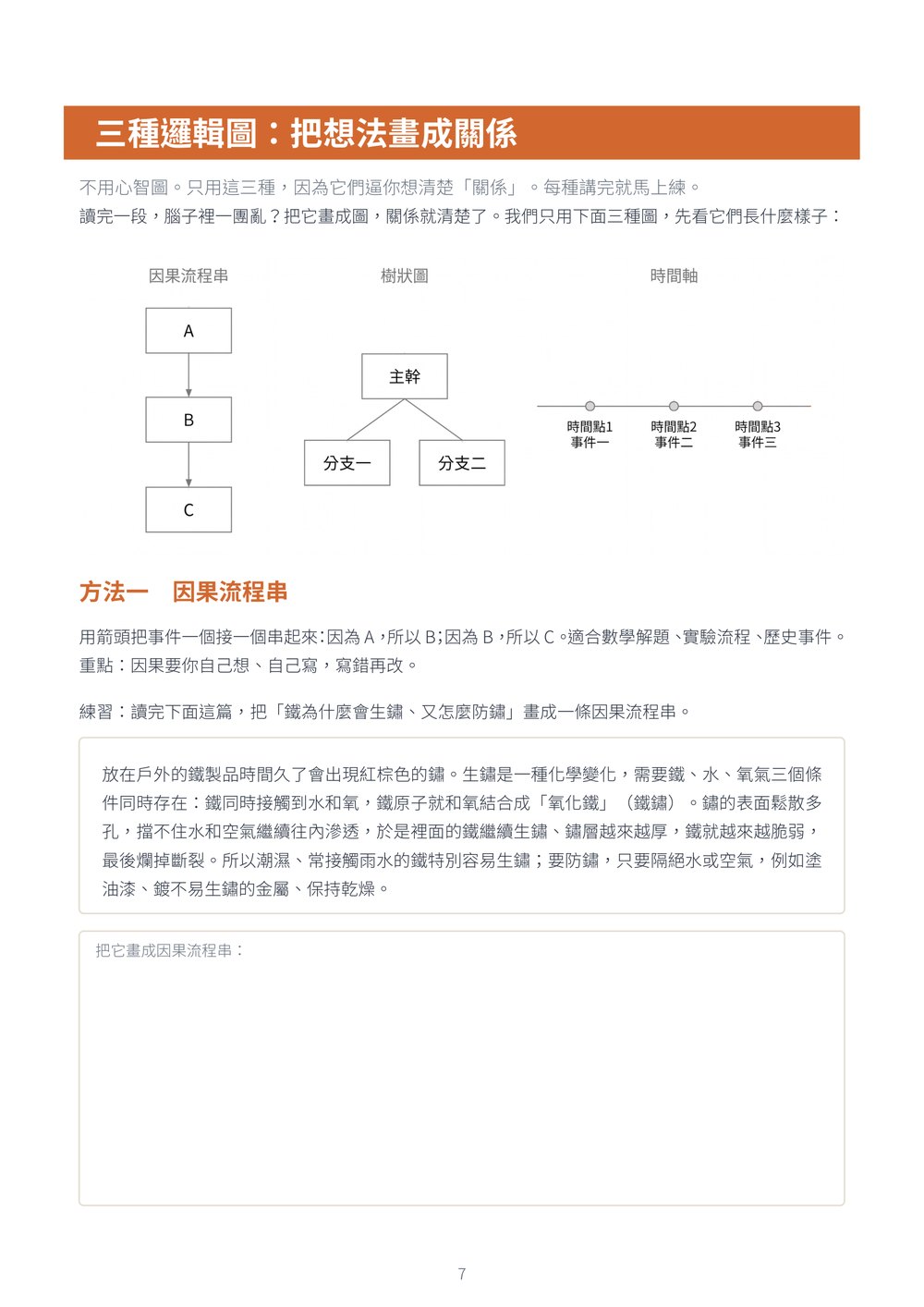
Handbook page: three kinds of logic maps (cause-and-effect chain, tree diagram, timeline) with blank practice boxes
Three logic maps | Drawing ideas as relationships The space on the right is for practice. After reading a passage, children decide which map fits and draw it themselves on the spot.
Handbook page: the memory unit, with the Ebbinghaus forgetting curve and an explanation of spaced review
Memory | Making learning stick The forgetting curve is cited (Ebbinghaus, 1885). Every study the handbook draws on is referenced.
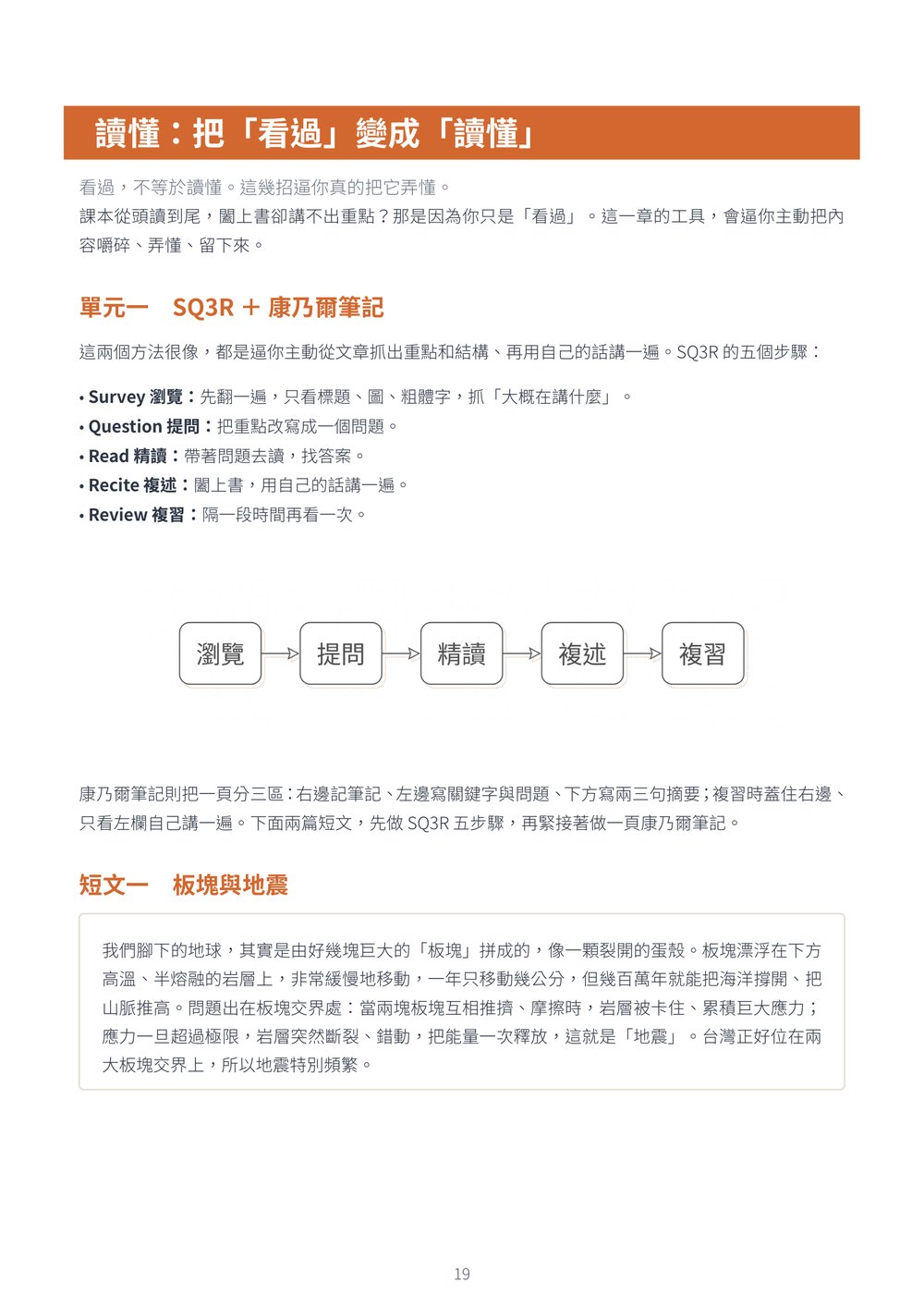
Handbook page: the reading unit, with SQ3R and the five-step Cornell note-taking flowchart
Understanding | From “I’ve read it” to “I get it” The five SQ3R steps come with short practice passages, so each method is applied to real text as soon as it is learned.

§ 08

Learning ToolboxToolbox

Five days, a complete set of methods

Every method is grounded in research, and practised hands-on the same day

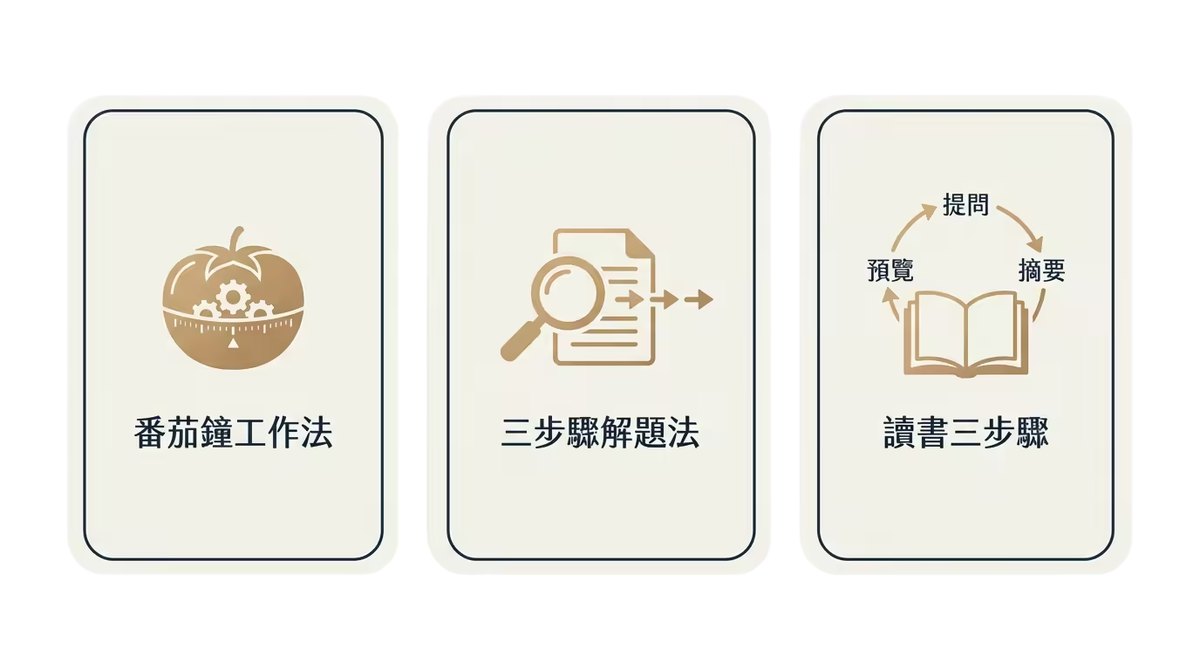
Diagram of the Pomodoro Technique, three-step problem solving and three-step reading
  • 01

    The Pomodoro Technique

    Focus for 15 minutes, rest for 5. The brain is not built to concentrate nonstop, and fifteen minutes is just right.

  • 02

    Three-Step Problem Solving

    Dig the key information out of a question, so a new problem no longer causes panic.

  • 03

    Three-Step Reading

    Preview, question, summarise. From “eyes skimming the page” to “actually taking it in”.

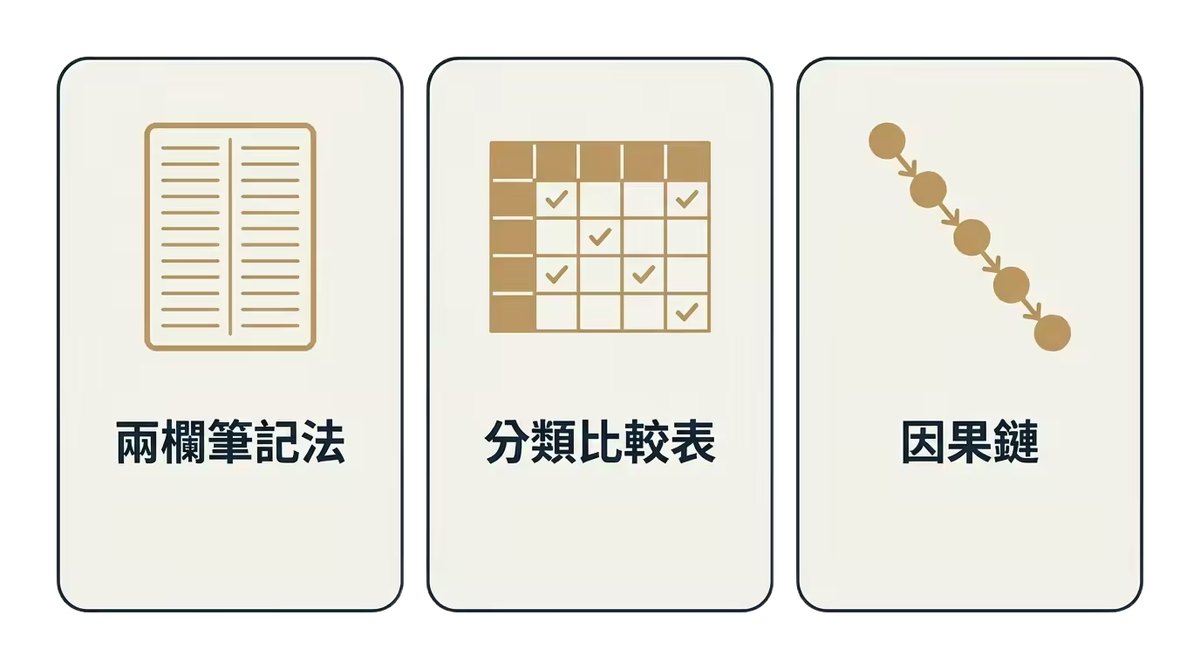
Diagram of two-column notes, comparison tables and cause-and-effect chains
  • 04

    Two-Column Notes

    Key points on the left, your own understanding on the right. One of the most widely recommended note-taking methods in the world.

  • 05

    Comparison Tables

    Line up similar things side by side so the similarities and differences are clear at a glance.

  • 06

    Cause-and-Effect Chains

    Link causes and effects with arrows into a single line, so complex knowledge becomes logical.

§ 09

Memory StrategiesMemory

Three superpowers for remembering what you learn

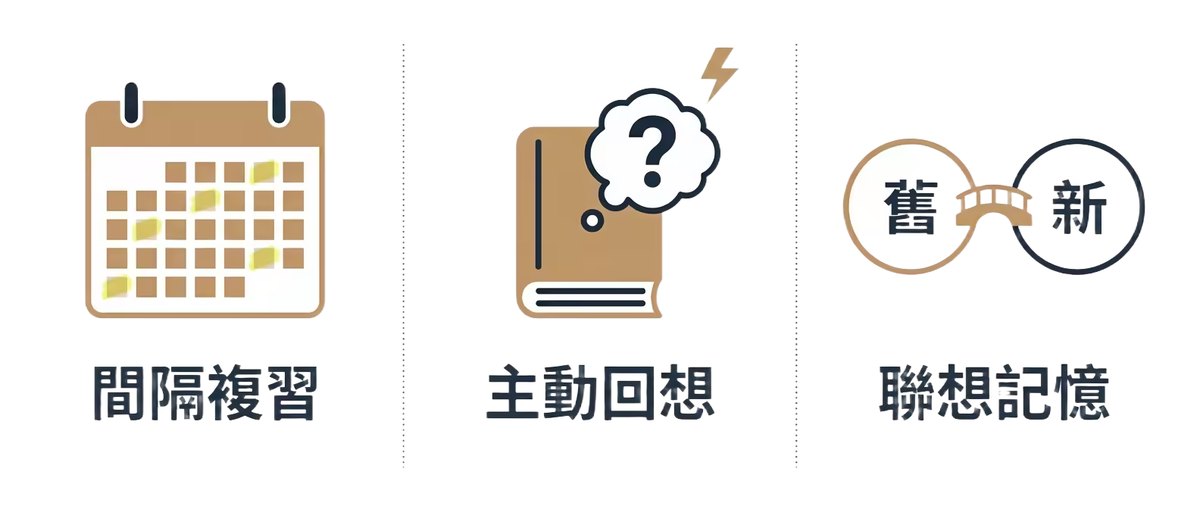
Three memory superpowers: spaced review, active recall and association
  • A

    Spaced Review

    Instead of cramming the night before, review is spread over several days. Each session is short, and the memory lasts far longer.

  • B

    Active Recall

    Close the book and try to bring it back from memory. The struggle of “I can’t quite remember” is exactly when the brain remembers best.

  • C

    Association

    Connect new material to what you already know. A memory with a “hook” is much harder to lose.

§ 10

Progress TrackingReport

A full report for every child

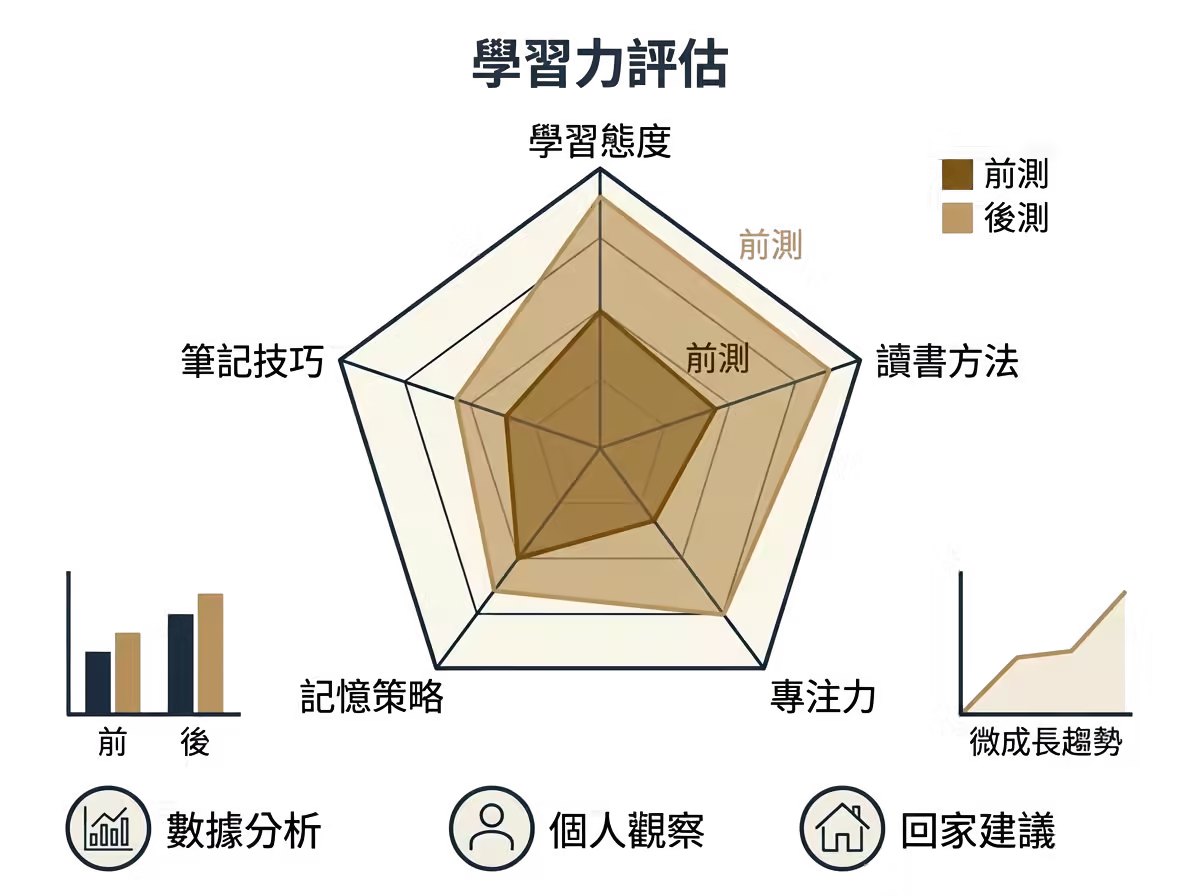
Daily pre-test × post-test × individual analysis, so parents see real change

Before class each day, children take a short “learning skills pre-test” on that day’s topic to set a baseline.

At the end of each day, they take the matching post-test, so progress can be compared the same day. The teacher also sees immediately how well the material landed and adjusts the next day accordingly.

After the five days, every family receives a complete learning report bringing together the data from all five days.

Learning skills radar chart comparing pre-test and post-test results across five areas
  • Pre- and post-test comparison

    Score changes in each area, showing clearly what changed over the five days

  • Observations on learning style

    The learning style the teacher observed in your child over the five days, and areas to strengthen

  • Concrete suggestions for home

    Specific ways for parents to support practice at home, based on your child’s needs

§ 11

After the CampTake Home

What children take home is more than memories

  • ✓Complete student handbook: every method from the five days, class notes and practice work
  • ✓Personal learning report: pre- and post-test comparison, teacher observations and suggestions for home
  • ✓My review schedule: a personalised review plan the child designs
  • ✓Learning toolbox summary: quick-reference cards for every method

§ 12

EnrollmentEnrollment

2027 Winter Session | Groups and Fees

This session is for middle and upper elementary only; the junior/senior high group returns in summer 2027

Middle & Upper Elementary

Dates

Sat, Jan 30 – Wed, Feb 3, 2027 · 5 days

Five consecutive days, including the weekend of Jan 30–31

Hours

09:00 – 17:00 daily (includes a one-hour lunch break)

Where

STARK Lab, Anping, Tainan

Places are limited

Fee

NT$9,900 per child

  • Includes lunch and all lab materials
  • Stored Value 2.0 points can be applied; paying with points needs no wait for transfer confirmation

Junior & Senior HighSummer 2027

Content

Same structure as the elementary group, with language depth and everyday examples adjusted for junior and senior high students.

Returning in summer 2027

FAQFAQ

Questions parents ask

What families often want to know before enrolling

QHow is brain-science study skills different from a cram school?
Cram schools teach subject content (Chinese, English, math, science). Brain-science study skills teaches how to learn: how the brain remembers, how it focuses, how it organises knowledge. Once children have the methods, they can use them in any subject.
QWho teaches the Brain-Science Study Skills Camp?
The whole camp is taught by Ms. Li of STARK Lab. Ms. Li has long been responsible for students’ learning support and communication with parents, and knows the learning habits of children from elementary through junior high school well. The course involves a great deal of observation and one-on-one interaction, so it is led by the teacher who knows the children best.
QFive days of classes: will my child get bored?
No. After each method is taught, children put it into practice straight away: timing homework with a Pomodoro timer, organising a text with two-column notes, breaking down problems in three steps. With pre- and post-tests every day, children also see their own progress day by day, and seeing that progress is itself a strong motivator.
QIs brain science too hard for children in the middle and upper elementary grades?
No. Everything is explained with comparisons children understand: the amygdala is “the brain’s security guard”, working memory is “a very small desk”. The point is not to learn technical terms but to understand how their own brain works.
QIs the content the same for the elementary group and the junior/senior high group? Why separate by age?
The structure and core ideas are exactly the same, but the depth of language and the everyday examples are adjusted by age. Grouping by age also makes small-group discussion better, as children of the same age understand each other more easily. The 2027 winter session is open to the middle and upper elementary group only; the junior/senior high group is planned for summer 2027.
QMy child already gets good grades. Is this camp still relevant?
Yes. Children with good grades usually already have some effective habits, but do not always know why they work. This course helps them turn those habits into a system, which matters more as their classes get harder.
QMy child resists studying. Will it help if I make them come?
This is exactly what the first step of the course addresses. Many children resist studying because of “learned helplessness”: they have tried hard too many times without results, and the brain has learned to give up. The course first helps children understand this mechanism. Once they no longer feel stupid, a fresh start becomes possible.
QWill the effects last after the five days?
Every method is recorded in the student handbook. On the last day, children are guided to make a study plan and a review schedule. Together with the daily pre- and post-test data and the full learning report, parents will also know how to support continued practice at home.
QCan the Brain-Science Study Skills Camp be paid with Stored Value 2.0 points?
Yes. The camp is a domestic program run by STARK Lab, and Stored Value 2.0 points can be applied to the winter session.


This winter, a study method
that truly works

Tell us your child’s grade and how their learning is going,
and we will help you check whether this session is a good fit.

@starklab · 417 Guoping Rd., Anping District, Tainan · (06) 358-5873