Add LINE →

§ CAP LAB · CAP Lab Intensive

CAP science lab questions
make sense once you have done the lab

For Grade 9 only. Two days to do, by hand, the Grade 7 – 9 key experiments chosen from a statistical review of the last ten years of CAP papers, with a fast theory review and past CAP lab questions.

  • Feb 9 – 10, 2027
  • 2 consecutive days
  • Grade 9 only
  • Anping, Tainan
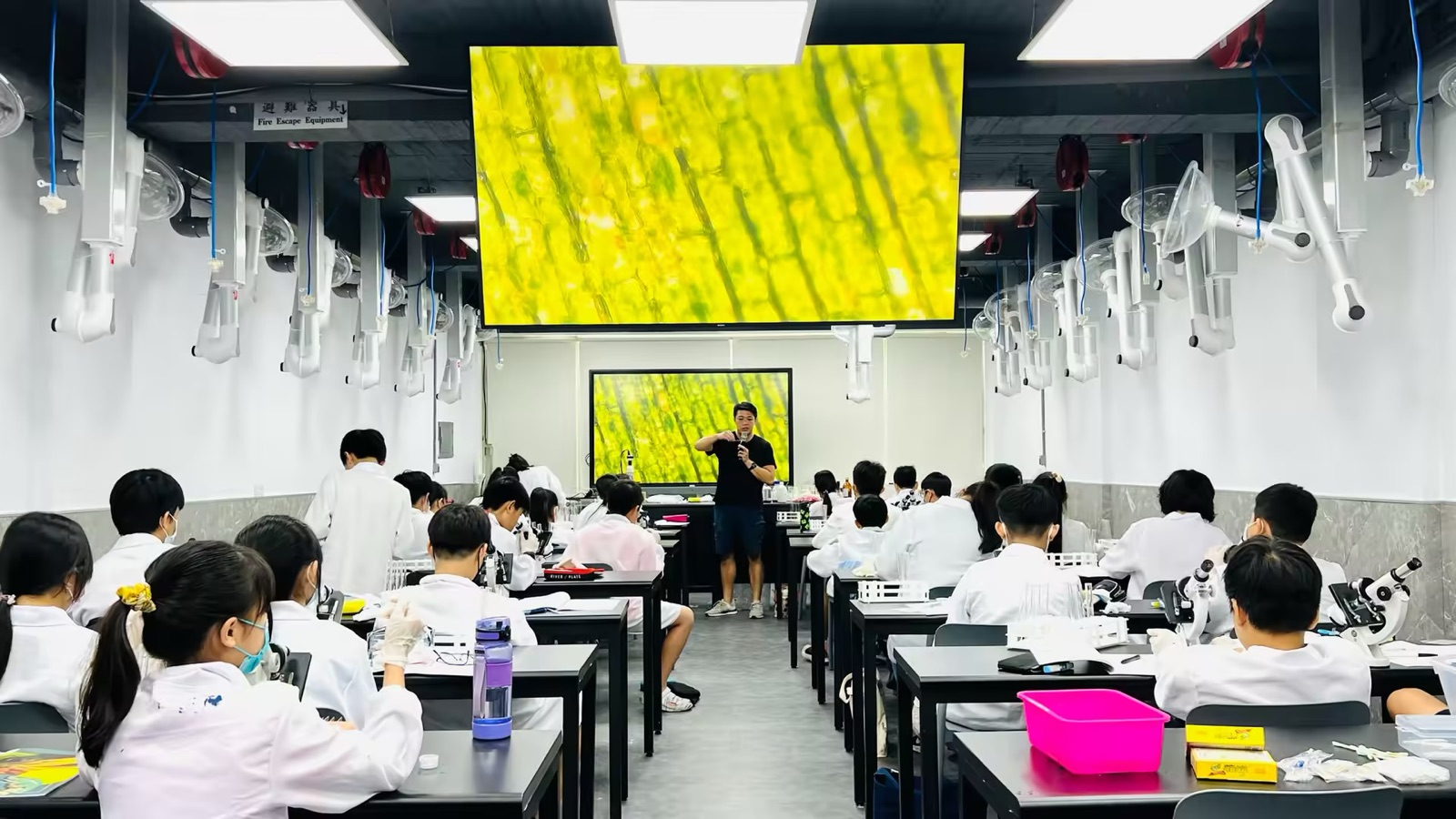
The STARK Lab classroom, with students in lab coats at the benches

§ 01

Why

Lab questions do not test memorized steps.
They test judgement you get from doing.

CAP science questions often put an experiment into the question: how to use the apparatus, how to read the data, how to control variables. Students who have only read the steps in a textbook get stuck when the scenario changes. In two days they do, by hand, the key experiments that ten years of CAP papers point to, and check them against past CAP lab questions, so lab questions stop relying on memory.

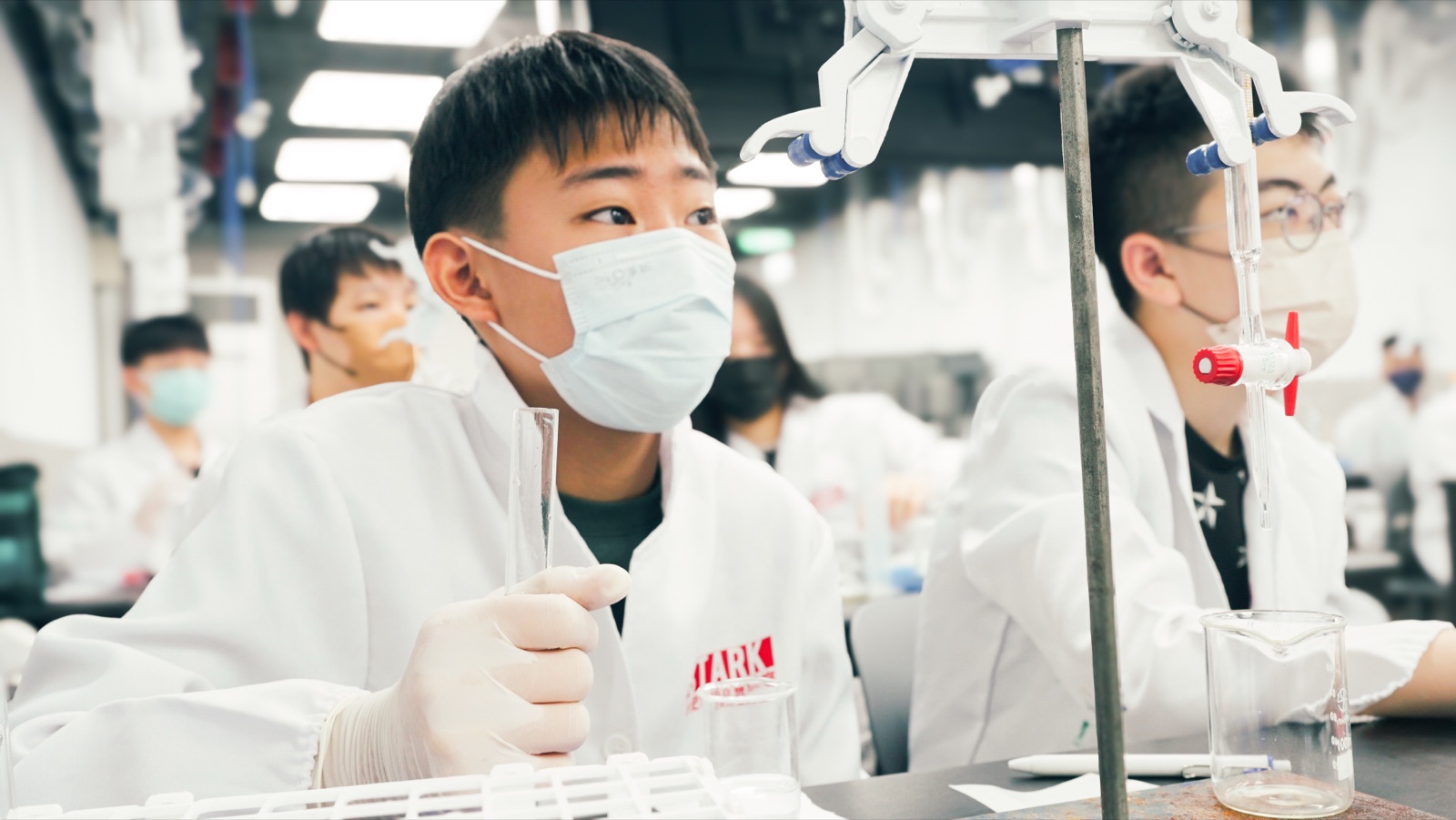
A student focused on a chemistry setup with a stand and burette

§ 02

Who

Grade 9 only: a lab review before the CAP

A good fit

  • ✓Grade 9 students sitting the 2027 CAP exam
  • ✓Few labs at school, often losing marks on lab questions
  • ✓Understand the theory but get stuck on lab scenarios
  • ✓Want to connect Grade 7 – 9 experiments before the final push

§ 03

Design

Do it, understand it, see how CAP tests it

  • 01

    Key experiments, done by hand

    The key experiments are chosen from a statistical review of the last ten years of CAP papers, and every student does them by hand. Not videos, not just demonstrations.

  • 02

    Fast theory review

    Each unit starts by making the principle behind the experiment clear, then students do it.

  • 03

    Matched to past CAP lab questions

    The handbook collects past CAP lab questions by unit, so students see how each experiment is tested right after doing it.

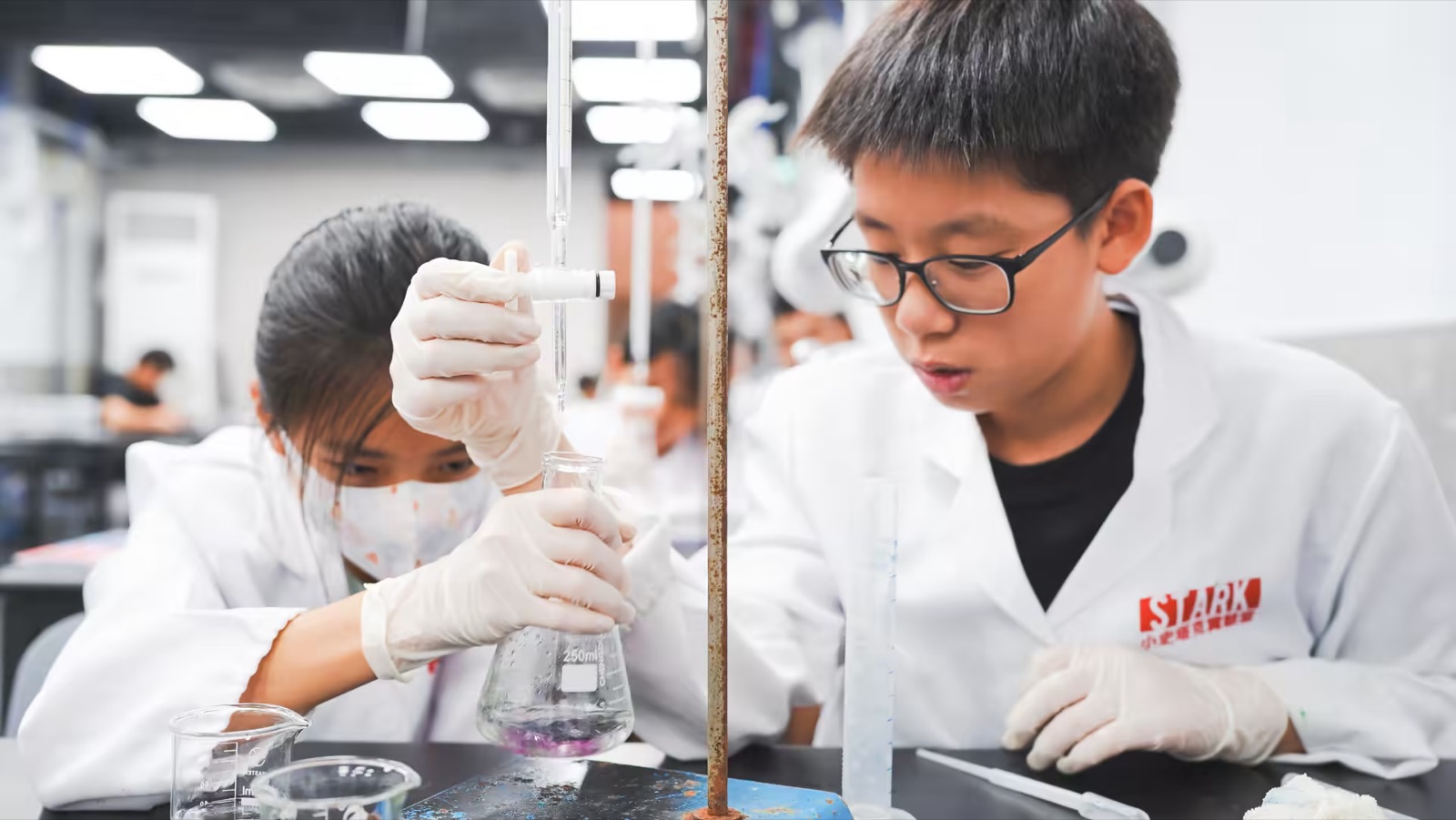
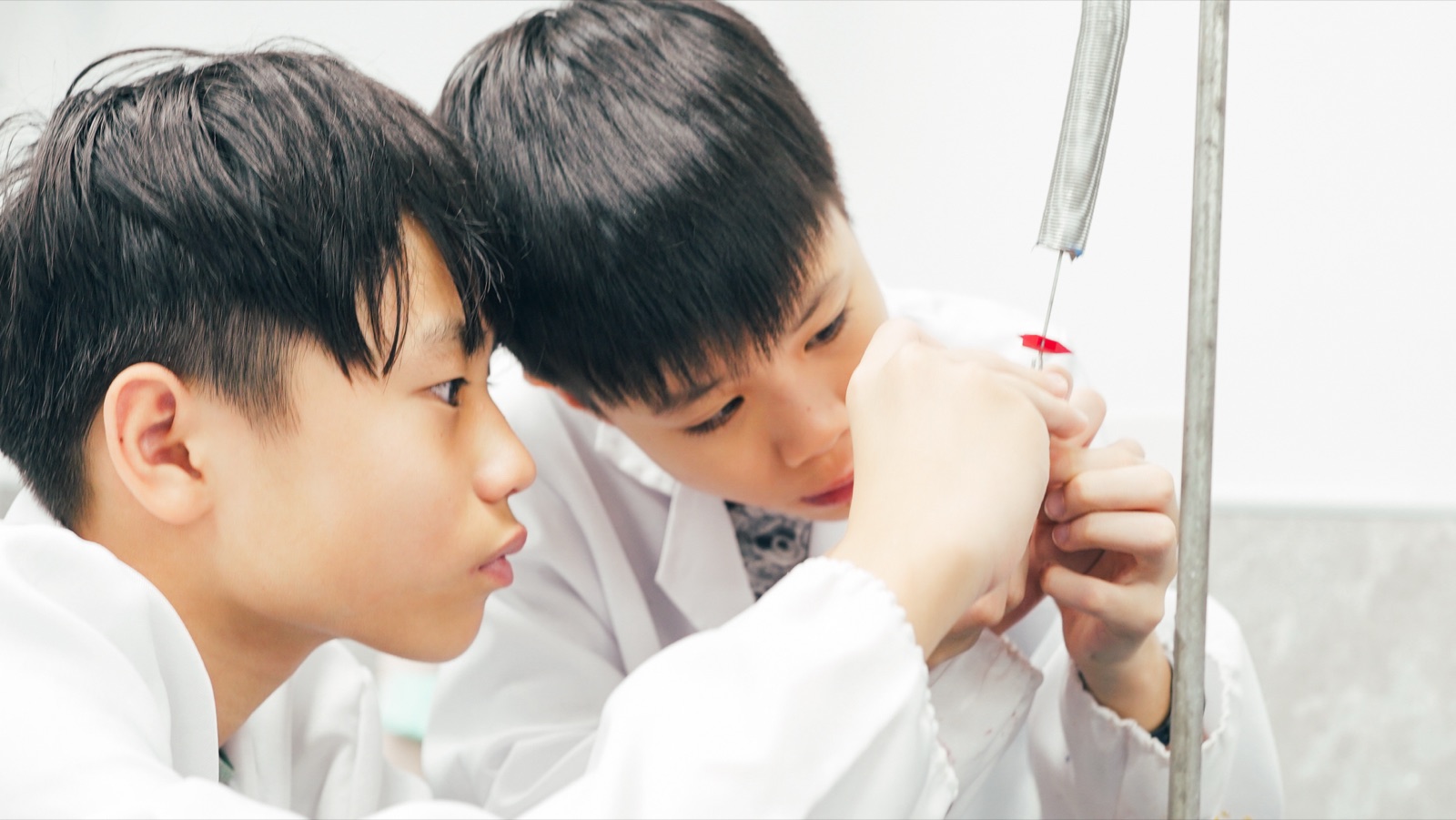
A student doing an acid-base titration with a burette Two students looking closely at an apparatus in their hands

Handbook highlight · STARK DIGI-LAB

Finished the experiment?
Do it again at home

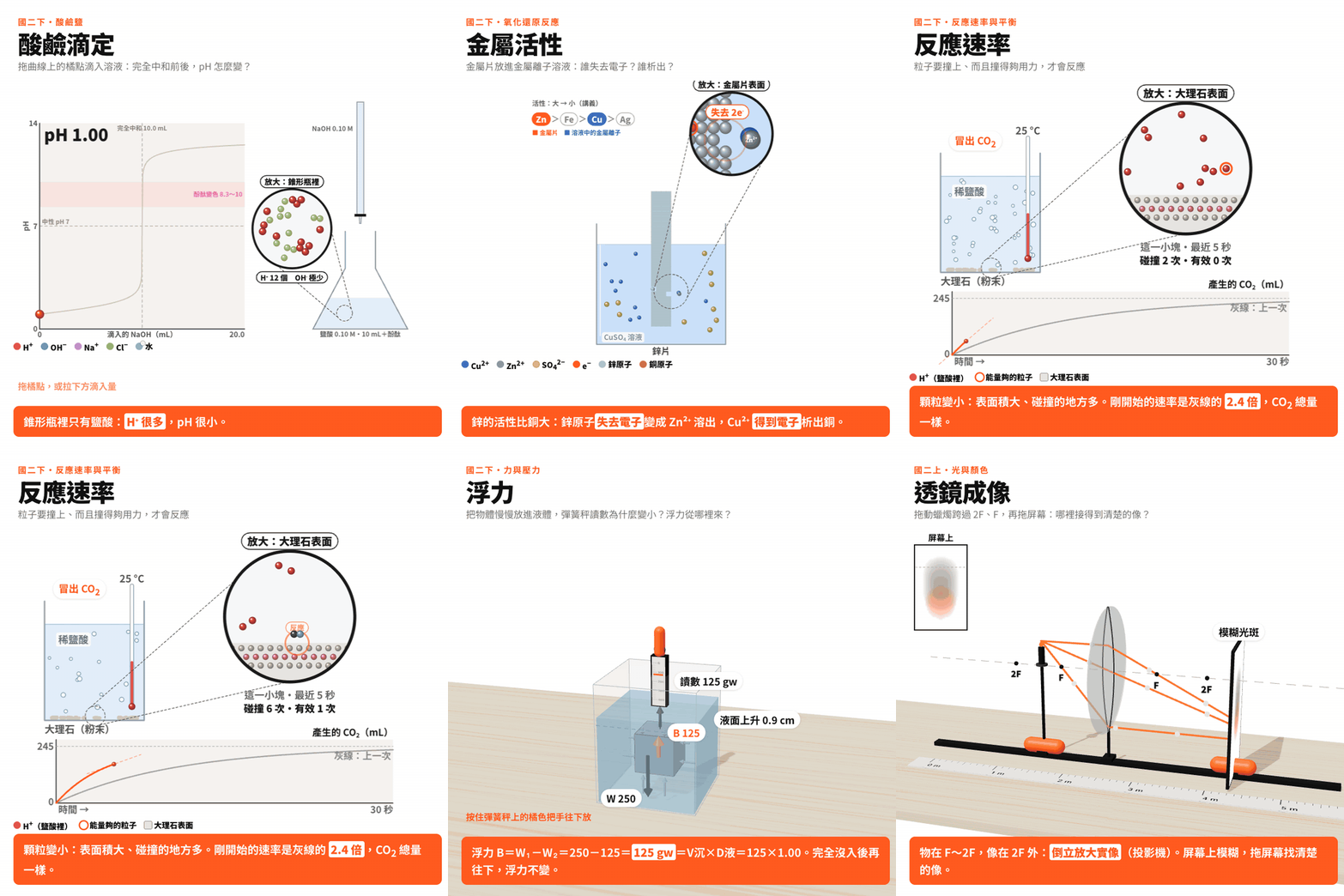
The experiments in the handbook come with STARK Digi-Lab digital demonstrations. Where the titration ends, how the pH jumps: drag once and see it.

Digi-Lab demonstrations: acid-base titration, metal reactivity, reaction rate, buoyancy and image formation by lenses
  • Acid-base titration
  • Metal reactivity
  • Reaction rate
  • Buoyancy
  • Image formation by lenses

§ 04

Units

Grade 7 to Grade 9:
21 CAP lab units

One term of biology and four of physical science, covering the CAP syllabus

Grade 7 fall · Biology

3 units

  • MicroscopesUsing compound and dissecting microscopes, magnification and field of view
  • Movement across membranesDiffusion and osmosis
  • Testing for starch and sugarIodine and Benedict's tests, enzyme action

Grade 8 fall · Physical science

6 units

  • Lab basics and densityUsing apparatus, measurement and density
  • The world of matterSolutions, concentration and separating mixtures
  • WavesProperties of waves and sound
  • OpticsReflection, refraction and lens images
  • HeatTemperature, heat and specific heat
  • ElementsElements, compounds and the periodic table

Grade 8 spring · Physical science

6 units

  • Conservation of mass and reactionsConservation of mass and stoichiometry
  • Oxidation and reductionMetal reactivity and redox reactions
  • Acids, bases and saltsIndicators, neutralization and pH
  • Reaction rateConcentration, temperature, surface area and catalysts
  • Organic compoundsTesting organic compounds, esterification and saponification
  • Force and pressureMeasuring force, liquid pressure and buoyancy

Grade 9 fall · Physical science

4 units

  • SpeedDisplacement, velocity and acceleration
  • Newton's three lawsHow force relates to motion
  • Work and energyWork, kinetic and potential energy
  • ElectricityMeasuring current, voltage and resistance; Ohm's law

Grade 9 spring · Physical science

2 units

  • Electrochemistry and electric heatingCells, electrolysis, electroplating and the heating effect of current
  • ElectromagnetismMagnetic effect of current and electromagnetic induction

§ 05

Bonus

Enroll and receive
two 2027 workbooks

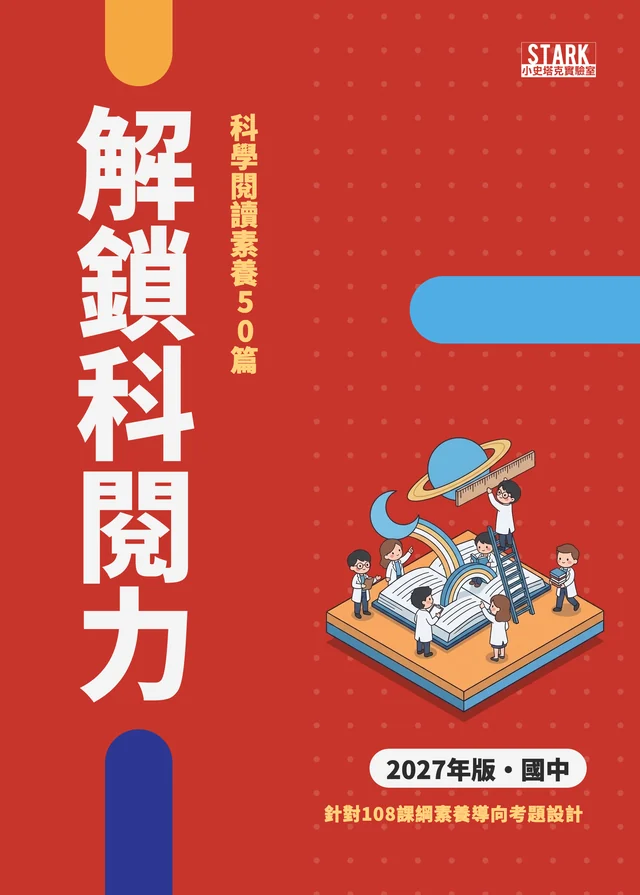
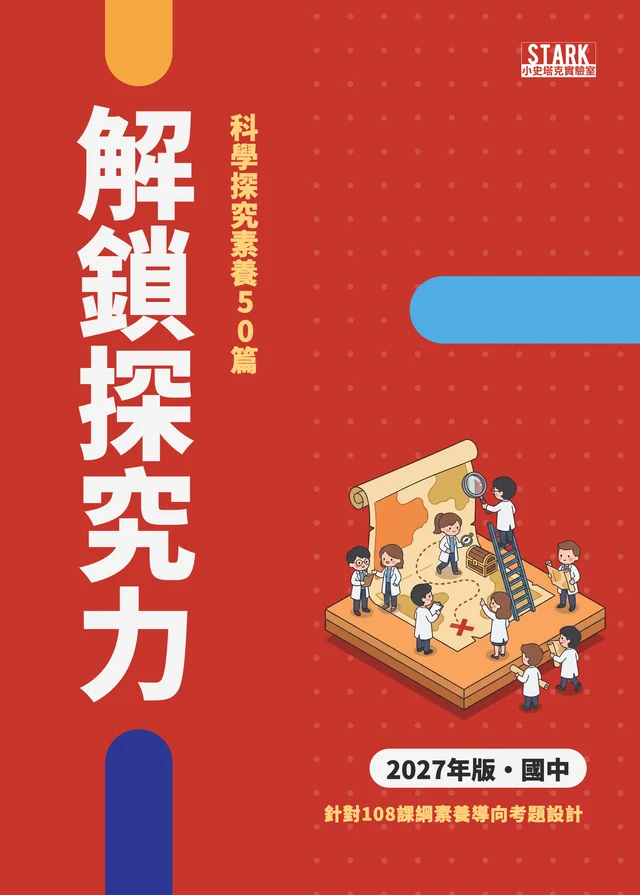
Unlock Science Reading 2027 edition cover Unlock Inquiry 2027 edition cover

FREE

Unlock Science Reading and Unlock Inquiry, 2027 edition (junior high)

CAP science literacy workbooks: Science Reading trains reading science texts and charts; Inquiry trains judging experimental design and variables. 50 passages each.

Learn more about the two workbooks →

§ 06

Enrollment

Dates and fees

CAP Lab Intensive

Dates

Tue Feb 9 – Wed Feb 10, 2027

2 consecutive days (Lunar New Year days 4 and 5)

Hours

Daily 09:00 – 17:00 (incl. 1-hour lunch)

Location

STARK Lab, Anping, Tainan

Limited places

For

Grade 9 students

Fee

NT$8,800 per child

For STARK Lab Grade 9 class students only

NT$6,000

Regular NT$8,800Save NT$2,800

Register online as usual; our staff will confirm and adjust the amount before payment.

  • Includes lunch and all lab materials
  • Includes the 2027 Unlock Science Reading and Unlock Inquiry workbooks

FAQ

Questions parents ask

QMy child has little lab experience. Can they keep up?
Yes. Every experiment starts from how to use the apparatus, with a teacher guiding throughout. No lab experience is needed.
QWhy is it for Grade 9 students only?
The course reviews the experiments across the whole Grade 7 – 9 CAP syllabus and runs in the Grade 9 winter break, for students preparing for the CAP exam.
QDo we need to bring any lab materials?
No. The fee includes all lab materials, and lab coats are provided in class. Your child just needs to show up.
QHow is lunch handled?
Lunch is included in the fee. If your child has any dietary needs, please let us know on LINE.

Is it right for your child?
Talk to us on LINE

Tell us about your child's science level,
and we will help you assess.

@starklab · 417 Guoping Rd., Anping District, Tainan · (06) 358-5873