

Teaching online isn't the easier job — it's the job with worse conditions
During the pandemic a line went around: teachers sitting at home have it easy. Anyone who actually ran live online classes knows better. The real cost of teaching online is rebuilding, one at a time, the three things a physical classroom hands you for free — being seen, being heard, and seeing your students react.
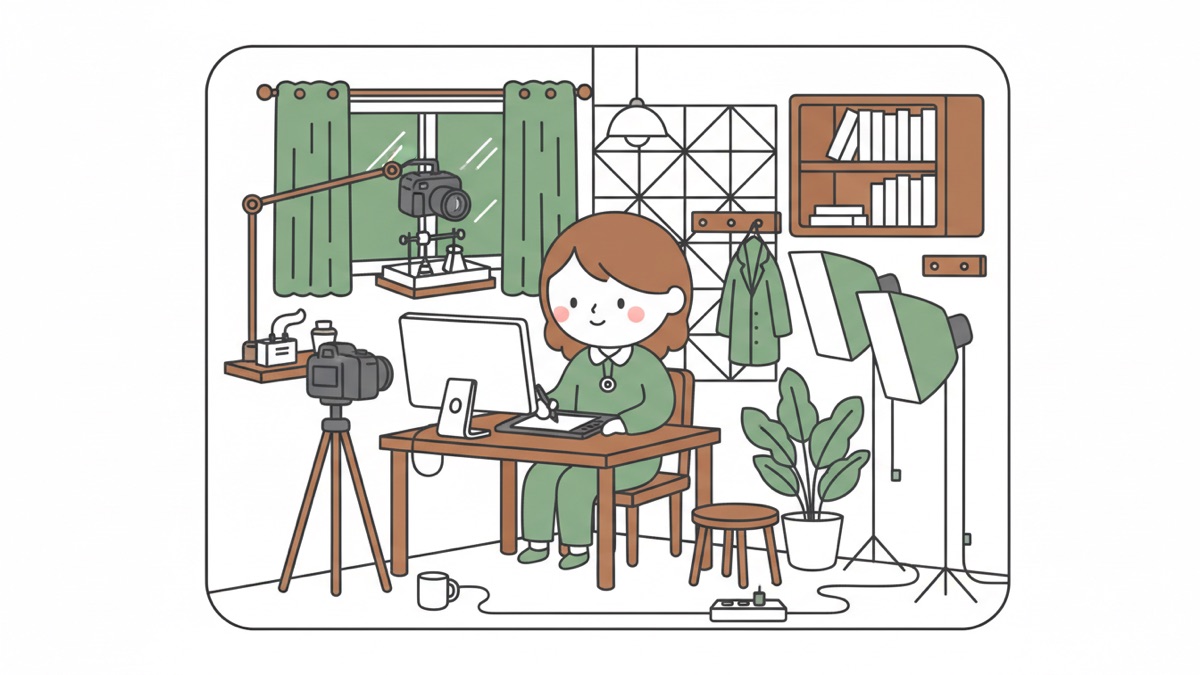
In May 2021, classes across Taiwan moved online within the space of a few days. A line went around at the time: teachers sitting at home have it easy — and if they were playing pre-recorded lessons, they were plainly taking advantage.
We're in no position to judge how anyone else's lessons went. But we can set out exactly what moving a class online actually requires you to rebuild.
What the classroom gives you for free has to be rebuilt, item by item
A physical classroom hands you three things at no cost: students can see what you write, they can hear you, and you can see their faces. On day one online, all three go to zero.
- Writing on the board. Pointing a camera at a whiteboard doesn't work. The board reflects, and once the writing is shrunk onto a laptop or phone screen, students are straining to read it. We switched to a digital pen so the handwriting appears directly on screen.
- Sound. The lab already sits close to a main road, and at the time the building next door was being demolished. A built-in microphone doesn't stand a chance, so it became a professional wireless mic, with noise reduction and tonal correction in audio software afterwards. When a student says the teacher's voice is clear, that clarity was built in layers.
- Picture. For a demonstration, every student has to see exactly how the hands move — which means an overhead camera, a tripod steady enough to hold it, lighting that doesn't blow out a face, and a monitor so you can check what the far end is actually receiving.
Together that came to a five-figure sum in NT dollars, and all of it went towards getting an online class approximately back to the clarity a physical room already had. None of it made the teaching better than in person.
A live online class costs a teacher roughly three times what a room does
The real difficulty isn't the equipment. It's feedback.
In a room, a teacher reads the air constantly: who frowned, who is glancing sideways, whose hands have stopped. Those signals correct your next sentence in real time. Online, to stop the audio descending into chaos, usually only one microphone is open at a time — so all the feedback a teacher gets is a faint nod or a small smile on a grid of tiles.
Holding a group of children's attention for two hours on almost no return signal is the reason it's exhausting. It isn't the technology that wears you out; it's having to carry the entire rhythm of the lesson single-handed.
Which means whether an online lesson works comes down to one thing: whether the teacher can rebuild the feedback loop deliberately — through questions, through tasks, through making children do something with their hands — in place of the check that used to take one glance.
Pre-recorded lessons aren't the soft option either
The other line was that a recorded lesson is filmed once and played forever, and therefore cheap.
From our own experience filming teaching videos, the eight minutes a viewer sees takes roughly four hours from preparation through filming to export and upload — and that's four uninterrupted hours. We've written about the post-production side in how we turned a university materials lab into a home experiment kit, so we won't repeat it here.
Looking back, the most useful thing left over from that period isn't the equipment. It's a judgement: online teaching isn't cheaper teaching, it's teaching under worse conditions, and it therefore needs more preparation just to draw level with what a room already provides.
If you ever have to judge whether an online class is worth taking, we'd suggest three checks: can the child see clearly, can the child hear clearly, and does the teacher get anything back from them. Only when all three hold is a lesson genuinely taking place.