
Please stop telling kids the learning portfolio doesn't matter
Every year after results come out, we get a wave of SOS calls — from top-choice, top-scoring students who stalled because their portfolio was nearly blank. This one is blunt, and we mean it.
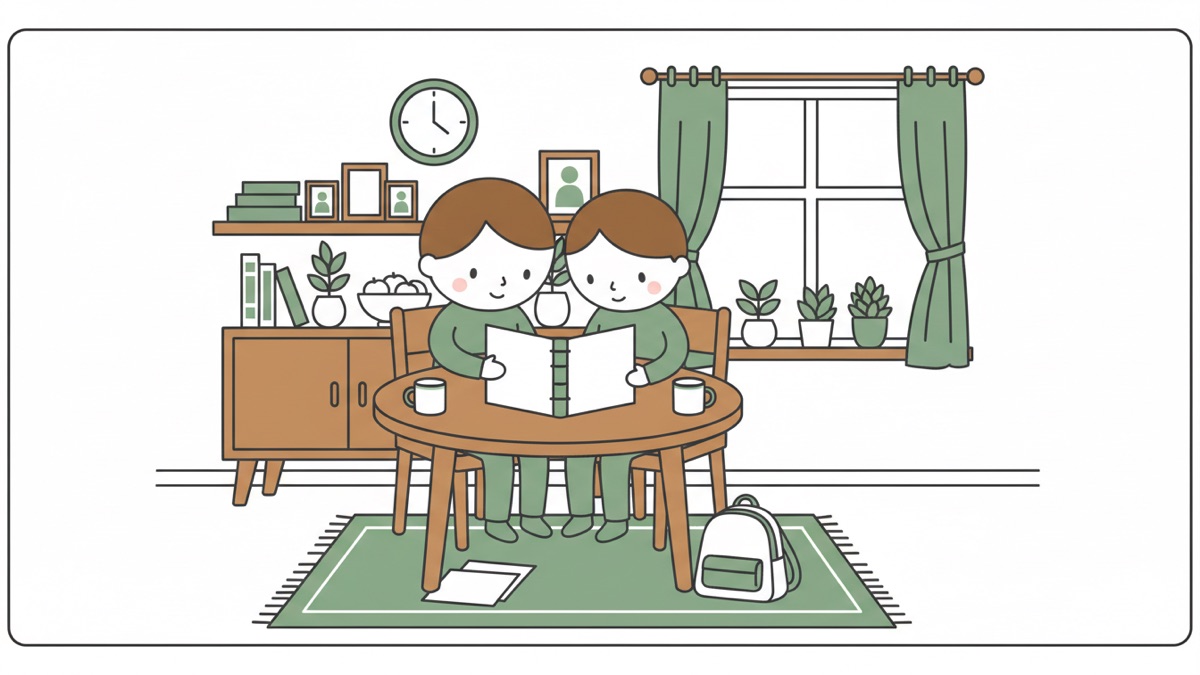
Every year, the moment first-stage results come out, we get a wave of SOS calls — and almost all of them are from students at their first-choice schools. Their scores were strong; they cleared the first-stage screen at every top university you'd name. But ask about the learning portfolio, and over three years it's often fewer than ten entries. Some are close to empty.
Ask these kids why, and the answer is one of two things: "I didn't know what to write," or — "My teacher said it doesn't matter, just get the scores."
This is going to be blunt. We mean it.
Context for readers outside Taiwan: the learning portfolio is a three-year record — projects, reading, competitions, self-directed work — that Taiwanese high-schoolers submit for university admissions, read alongside their exam scores.
"Good scores alone will get you in" — where does that confidence come from?
We genuinely don't understand what makes anyone so sure the portfolio is "all a con." So here's the simplest possible argument.
Every year the news is the same: several departments at the top universities are oversubscribed — far more applicants than places, and even after the first-stage screen on scores alone, there are still too many. What does that tell you? Top universities are never short of high-scoring kids. Among the applicants are plenty who have both the grades and a rich portfolio.
In that kind of field, how can you still say you'll compete on scores alone?
Because some things a score can never show
Top universities don't just want able students — they want students who can think for themselves and know what they're doing. And different departments want different traits:
- Medicine looks for empathy and communication — can a score show that?
- Engineering looks for collaboration — can a score show that?
- Computer science looks for the ability to self-teach — can a score show that?
None of them can. Which is exactly why a professor needs the portfolio to screen for these qualities.
So, plainly
- Stop counting on the school to teach your child to write the portfolio.
- Most teachers won't be standing over your child making sure it gets done, either.
- Students, face facts and rely on yourselves: if you don't know how to write it, go ask, go find help. There is a mountain of free material online — it only depends on whether you care enough. You scroll YouTube already; you can just as easily search "learning portfolio guide" there.
Our advice: start understanding the portfolio in the summer after ninth grade. The earlier you get it, the more complete and coherent a learning curve you can show a reviewer.
If you want to build the basics first, two free resources are especially worth it. One is the Parenting (親子天下) podcast — its interview episodes on how professors read the portfolio and on admissions strategy under the new curriculum. The other is Zuo-Huo-Xue (作伙學), a project site the Ministry of Education commissioned from NTU's Department of Sociology, dedicated to portfolio information — thorough, practical, and well worth an afternoon over a long weekend.
If you're in your final year, time really is short. But if you've only just started tenth grade, or even eleventh, don't lose heart — there's still time to make it up. Just don't wait until the last year to begin; that was never a good option.
We're being blunt not to frighten anyone, but because every year we watch capable kids lose out — not for lack of ability, but because no one warned them. That's a loss that never had to happen.