

Great fun — and genuinely strict
We often tell our students that STARK is 'great fun, but also very strict.' The two aren't in tension — children come back precisely because they can feel themselves getting better.
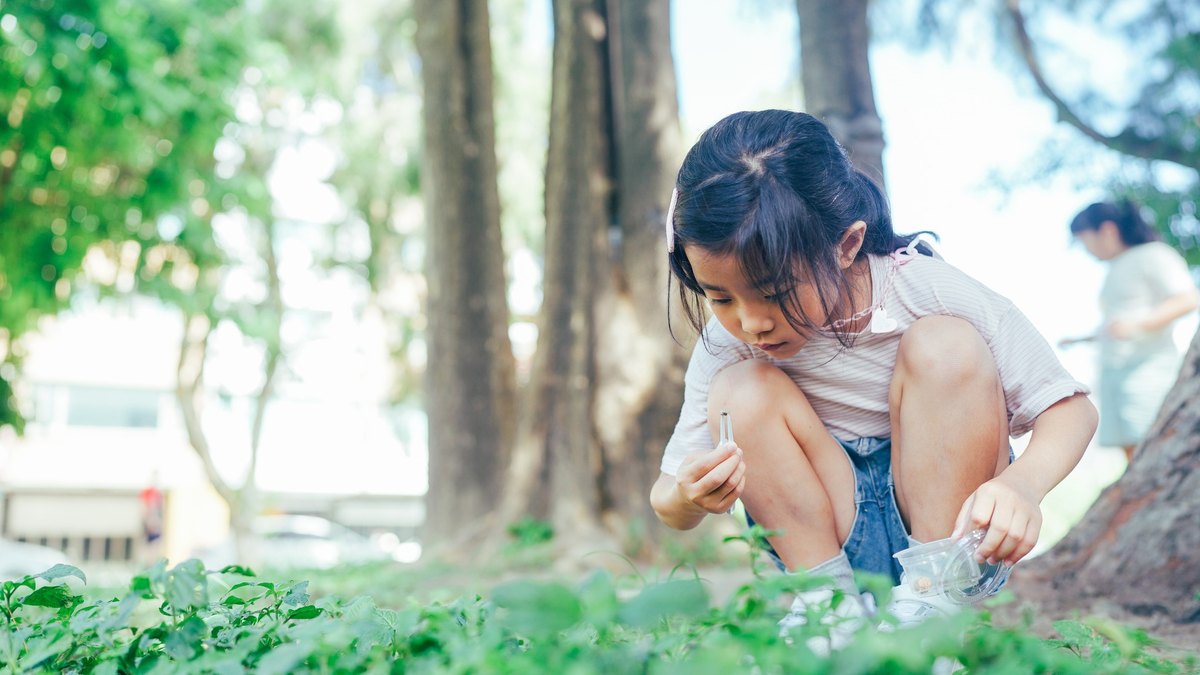
Hunting for some old photos the other week, we stumbled on picture after picture of children when they were small — and it hit us how many of them had, in fact, grown up here.
There's a line we say to our students all the time: STARK is great fun, but also very strict.
New arrivals usually freeze for a moment
Our rules and our pace are a long way from what many places do, so a brand-new student's bewilderment — and their looseness — is usually easy to spot.
For a lot of children, this is the first place they ever hang up their own coat, or rinse out a cloth and wipe down their own table. Never mind the shock of discovering that here you are expected to take proper notes, that you can't drift off and coast, and that a teacher is keeping a close eye on everyone's progress.
Clearing the bench, how you sit, how you speak to people, how you go about a task — we pull children up on all of it, and we do it to a mother's standard. More than one child has told us there are more rules here than at home.
We don't regard that as beside the point. Most of the danger in a lab comes down to habits: a child slouching over a cluttered bench will, sooner or later, put a hand somewhere it shouldn't go. Insisting on the rules isn't about the rules.
The younger kids are the veterans; the older ones are the rookies
Take one of our research-training courses. The class tends to split into two kinds of child: the upper-primary "veterans" who have already been put through their paces here, and the wide-eyed junior-high "rookies."
Yes, you read that right — here, the primary-schoolers are the veterans and the older students are the rookies.
Our research training is hard every single day, with no softening of it, and it leans heavily on Word and Excel — nearly all new territory for a generation raised on tablets, and a real source of stress.
The primary-school veterans just knuckle down and keep up. You can see the tiredness on their faces, but as long as the assigned work isn't finished, you'll find them still heads-down over it even once the break has started.
The rookies? Some arrive assuming this is an ordinary after-school hobby class that won't ask much of them, and spend the lesson trying to sneak in a game or a YouTube video, with the teacher forever playing cat-and-mouse.
A conversation we don't soften
When repeated reminders don't work, we call the child over and ask them straight:
"Do you actually want to be in this class?"
Usually they freeze, with no answer.
"If you don't, I can tell your mum, refund the rest, and you can go home right now."
"Really — don't be scared. If you can't bring yourself to tell your mum you'd rather not do this, I'll tell her for you. Watching you sit here checked out is painful for me too. So: do you actually want to be here?"
A small nod.
"This class is expensive — expensive enough for a round trip to Tokyo — because there is simply that much in it. Miss one link and the whole chain after it becomes very hard to pick back up. So the moment you don't understand or can't do something, come and find the teaching assistant or the teacher. Don't just check out."
Another nod, and the child goes back to their seat and carries on. When we follow up with the teacher afterwards, that child's attitude has usually shifted enormously — because now they know, unmistakably, that we are not playing at this.
We keep pushing children to their limit
The strictness isn't only about rules. We also keep the difficulty of the material itself sitting close to a child's ceiling.
Plenty of our units look, to them, like a mountain that can't be climbed. The first reaction is nearly always doubt: am I actually going to be able to do this?
Our answer is to leave no room to stop. When their legs go, we're behind them holding them up — but the walking is still theirs to do. No wheedling out of it, no going around it.
And a great deal of the time, up they go.
That feeling at the summit is what this really turns on. It isn't praise from anyone, and it isn't a better score. It's the child knowing exactly how hard the last stretch was, and knowing they finished it. That kind of satisfaction is habit-forming — and a child who has the habit goes looking for the next mountain themselves.
So why do they keep coming back?
Here's the strangest part: a child like that will often turn up next term enrolled in another course.
"Wait — told off like that, and still willing to keep coming?"
Honestly, at first we reacted the same way. But we came to understand why they return.
Because they can feel their own progress, plainly. Not the shallow kind measured in test scores, but their own maturing, their own attitude to learning — something they can feel in themselves. I've gotten better.
So they come back. And in time, they become the next batch of seasoned veterans.