

Why we bring university engineering to teenagers
A lot of kids feel lost because the only world they know is school subjects. Rather than chasing short summer camps, we'd rather have them run a real engineering experiment with their own hands — and properly explore a field.
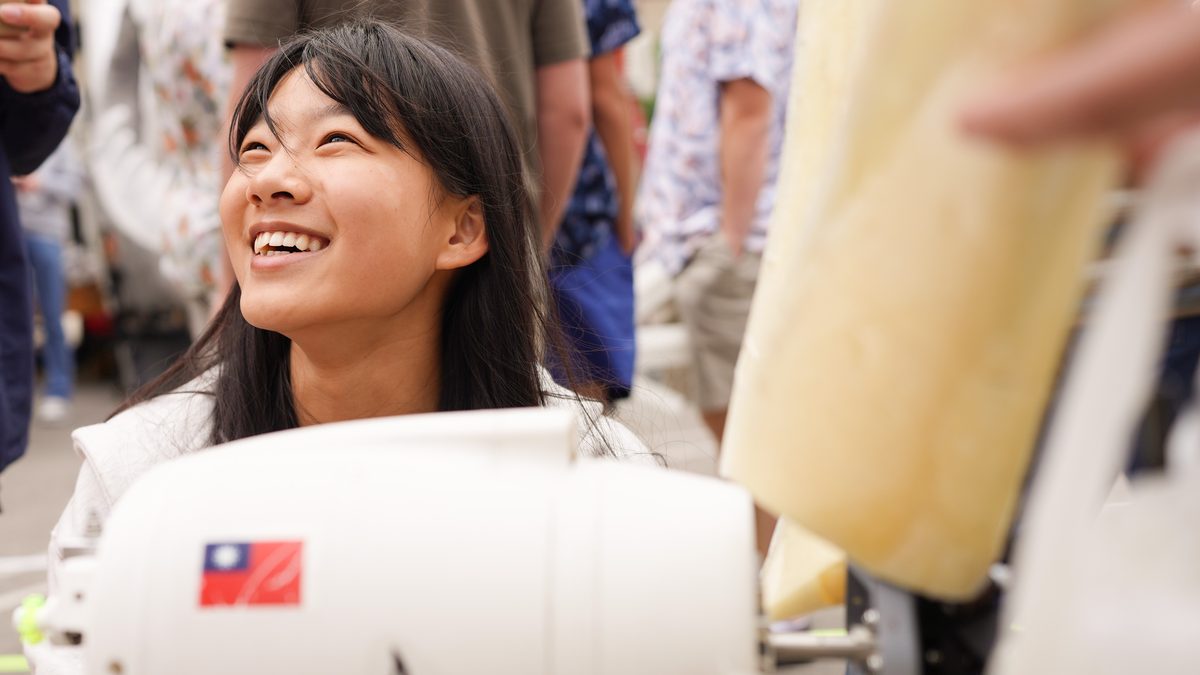
For a while, we were busy with a rather cool commission: an online digital course built in partnership with a university civil-engineering department. A professor from the department gives the lectures; we handled developing the experiment kits and filming the teaching videos.
What most made us want to throw ourselves into it was the breadth of its knock-on effects. The university had originally prepared the course in response to the pandemic — but we wanted to carry it further, all the way down to junior and senior high school.
A child's confusion often comes from never having seen it
Why go to that trouble? It comes down to how young people explore what they might do with their lives.
A lot of children feel lost simply because the only world they know is the handful of subjects taught at school, and the only jobs they can picture are the same few. If they've never really touched a field, how are they supposed to know whether it interests them?
Take civil engineering. Plenty of people picture it as nothing more than "working on a building site." But there's far more to it than that — it develops construction materials, and these days it even needs people who can work with AI. The investigation into why the Weiguan building collapsed in the 2016 Tainan earthquake drew on AI techniques.
Our course, of course, won't go anywhere near that deep, but it covers all the basic concepts of the mechanics of materials: axial compression, flexure, shear deformation, and the calculation and measurement of deformation under various kinds of load. Only after that does it move into the more civil-specific material — vibration period, damping, reinforced concrete, and so on.
Letting a child do the real thing, at the lowest possible pressure
Civil engineering is a discipline that prizes hands-on work, so the experiment kits play a crucial role in this course.
Taking equipment that runs to six figures in a professional lab — some of it to seven — and reworking it down to something a student can buy for under a thousand NT dollars, at a standard teachers can bring into their own schools, genuinely stretched us. Just finding the right specimen material took close to two weeks; the mechanical design, a month; testing and refinement, another two weeks — two full months, all told.
The point of all that upheaval was simple: to let interested children run the most true-to-life experiments possible, at home, under the least possible pressure. It lines up exactly with the intent we've held from the start: you only truly understand something once you've done it with your own hands.
Senior-high elective courses are where this matters most. Plenty of high-school teachers had already told the professor they needed materials like these, so they too could offer their students this kind of course. With them, a child gets a real chance to explore a field — not by dashing between short camps over the summer, but by settling in and properly working through a whole course.
Bringing a university engineering course down into junior and senior high may sound like reaching beyond ourselves. But we believe that letting a child get their hands on what real engineering actually does a little earlier is a chance to light up, a little earlier, a path they couldn't otherwise have seen.