
Before study skills: clear the interruptions, then teach the brain to organise
For most children the problem isn't effort. It's that their study environment is built to interrupt them, and that what they read never gets organised into anything. We treat those as two separate problems — and let students choose their own methods, because a method only survives past the end of a course if it fits the person using it.
Ask a child what a passage was about and they often can't tell you. Ask whether they've read it, and they'll say yes without hesitating.
That gap is what our study-methods course was built to close. Where children get stuck is usually not effort. It's two things further upstream: the environment they study in is designed to interrupt them, and what they do read never gets organised into anything.
Deal with attention first, methods second
On day one we collect every digital device, smartwatches included. Nothing goes back for five days.
This isn't a punishment. It's that in an environment where you can be interrupted at any moment, no study method survives half an hour — the best technique in the world still loses to an interruption every three minutes.
That first day we don't teach a single method. We explain how the brain's reward system works, and why social platforms and short video keep people scrolling. None of that needs speculating about: those products are designed to be hard to put down. We lay the mechanism out plainly — not to frighten anyone, but so each student can see their own habits for what they are. Awareness they arrive at themselves is what produces the wish to change; a rule imposed by an adult expires at the classroom door.
Having read it is not the same as having organised it
The most common misconception we meet is that having looked at something counts as having studied it.
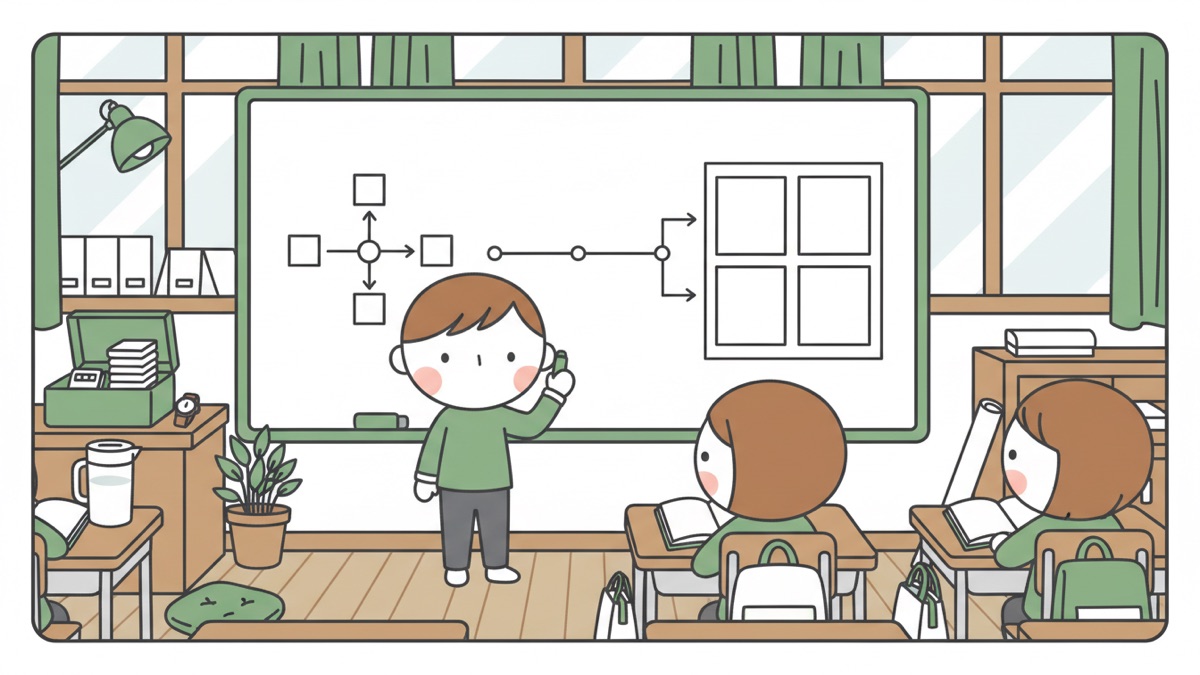
Information that has never been organised tends to pass straight through. So we spend three full days having students work through a large volume of real text, drawing the same three things over and over: tree diagrams for categories and hierarchy, timelines for sequence, and cause-and-effect tables for what led to what.
We deliberately avoid tidy worked examples. The material we give them is as long and as noisy as the real thing, because the real thing is what they will have to handle.
The value of this is that it isn't tied to a subject. The same way of organising works for history at thirteen, biology at seventeen, and a report you have to hand in at work.
To check that the methods were actually working rather than merely feeling like they were, we ran a short matched assessment before and after each day and tracked each student's change day by day.
No single method suits everyone
After more than a decade of teaching, we're certain of one thing: there is no single correct way to study.
Take note-taking. Some students need to write first and sort afterwards; others can't put a word down until they have a structure. Some read well in the morning, some genuinely don't. So for every goal, we offer several ways of getting there and let students test them and choose.
A method has to fit your temperament and your daily rhythm before you can keep it up. The ones that don't fit are usually abandoned within a fortnight of the course ending.
Raise the demands and children settle
This course is demanding, with a lot of work sent back for revision. Students grumble — not again — but they hold up perfectly well, and the clarity of a high standard actually settles them.
It isn't hard to see why. Vague expectations are what make people anxious. When the standard is explicit, and each revision is visibly better than the last, the loop of this is hard, and finishing it feels good starts turning on its own. We've written about this before in great fun, but also very strict; this course confirmed it again.
By the later days, what you notice isn't that they're working harder. It's that a wall of text no longer makes them freeze — they look for the main thread, break it into parts, and join the causes up.
Whether a study method sticks comes down to one test: will the child still use it once they've left the room? So we'd rather teach a few techniques fewer, and spend the time letting them choose and verify for themselves.