

The one stubborn thing we've bet the lab on
Back when we started, plenty of people called us fools — who teaches only science experiments and doesn't even bolt on English or maths? A decade later, we're surer than ever: with science, you only truly understand it once you've done it with your own hands.
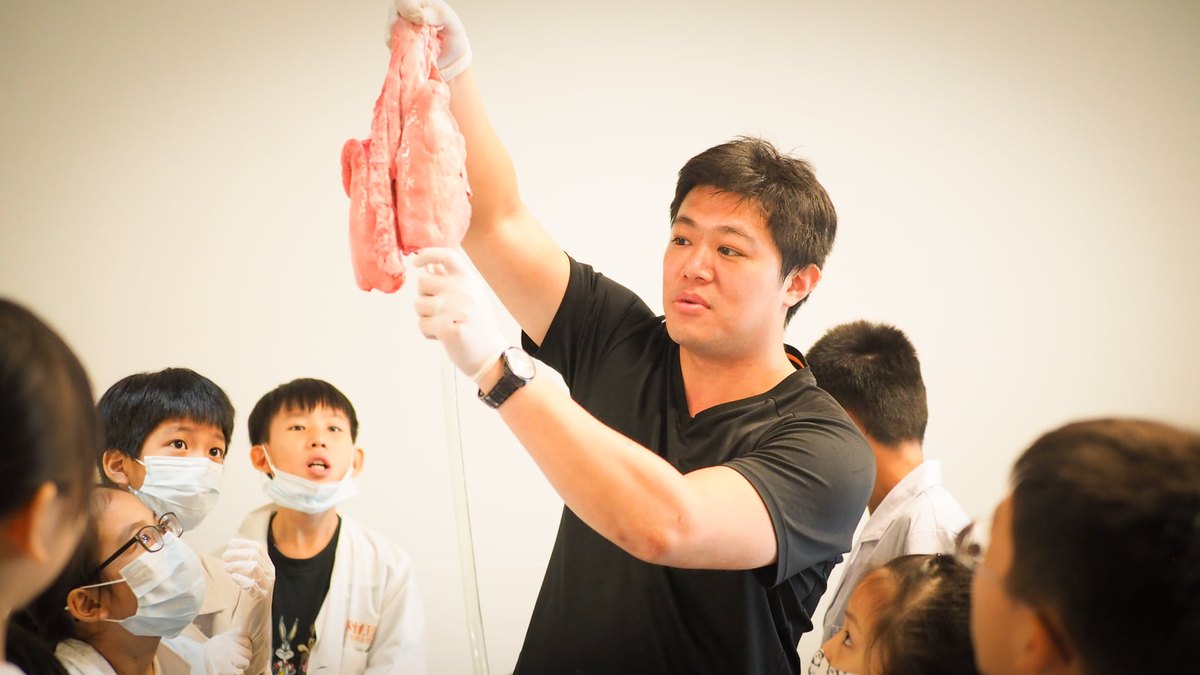
When we first started out, a lot of people — family included — thought we were fools. Who pays for an experiment class? And who, of all things, teaches only science experiments, without even tacking on a little English or maths? We had to be out of our minds.
But we believed this was the right way to learn, and the efficient one. Just preparing the science experiments already drained every bit of our money and energy, so all we could do was run on sheer stubbornness — teaching while pouring whatever we earned straight back into equipment, and floating the gap on credit cards whenever the cash ran out. Year after year, that's how a decade went by.
Plenty of people look at us now and see success. Perhaps — on the surface, at least. But compared with the owners who can earn while lying on the sofa, we're still a very long way off.
With science, you only truly understand it once you've done it
Science education in Taiwan still has a long road ahead. The equipment for hands-on experiments is expensive, and for any teacher or classroom that wants to commit to it, that cost is a formidable barrier. So even though we now run teacher-training in partnership with a university, and plenty of teachers do come to learn, those who can actually support experiments at the junior-high level remain few and far between.
But ten years in, set against where education is heading, we're only more certain that this stubbornness was right: science is meant to be done. Learning it by reading the textbook and memorising the steps is about as convincing as being told, "just memorise the Michelin recipe and you'll cook Michelin-level food."
So at our lab, our approach has always been direct:
- To learn the structure of the heart, we hand you a pig's heart, so you can see the atria and ventricles with your own eyes.
- To learn arteries and veins, we let you feel for yourself just how different their toughness is.
- To learn respiration, we take a pig's lung and inflate it right in front of you.
- To learn blood types and antibodies, we run a blood-typing test on the spot.
- To learn how blood flows, we put it straight under a microscope and let you watch it move through the vessels.
- To learn what bile does, we let you watch it break down fat.
The one thing we're stubborn about
Over these years, we haven't sprawled our territory outward, and we haven't added other subjects just because they'd be easier to charge for. We've stubbornly done one thing — experiments — and done it deep, and done it well.
Because we've always held to the same line: you only truly understand something once you've done it with your own hands. That was our founding intent on day one, and a decade later, it's still the one thing we care about keeping.